Hubble Data Shows Andromeda’s Star Birth Rate Has Collapsed in Last 40 Million Years
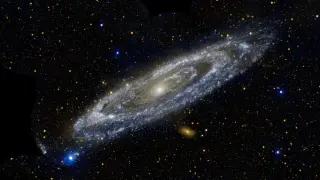
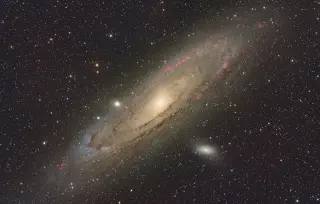
A new analysis of Hubble Space Telescope data reveals that the Andromeda Galaxy (M31) has significantly slowed its rate of star formation over the past 500 million years, with a sharp decline in the last 40 million years. Researchers mapped approximately 200 million stars across two-thirds of Andromeda’s disk, finding that current star formation is roughly one-fifth of a solar mass per year, down from one solar mass per year half a billion years ago. The slowdown is most pronounced on the side of Andromeda facing the compact satellite galaxy M32, which is suspected to have interacted with Andromeda’s disk. While the exact cause remains unproven, M32 is considered the leading suspect. Future observations by the Nancy Grace Roman Space Telescope are expected to provide a more complete picture of this galactic evolution.