Tag

Memory Bandwidth

All articles tagged with #memory bandwidth

d-Matrix Unveils Raptor 3D-DRAM: A High-Bandwidth Path for Generative Inference
technology1 day ago

d-Matrix Unveils Raptor 3D-DRAM: A High-Bandwidth Path for Generative Inference

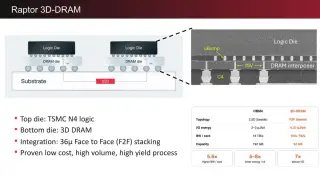
At Hot Chips 2026, d-Matrix unveils Raptor, a 3D-DRAM accelerator that stacks a logic die on a DRAM layer to deliver ultra-high bandwidth for generative AI inference. With a 1-Hi 32GB per card and a dense bank/channel layout, it uses stream-blocking and stream-flipping to achieve around 100 TB/s I/O and 0.37 pJ/bit, claiming ~32.6 GB/s per mm2 and 2.96 mW per GB/s versus HBM4. The system targets roughly 1,000 tokens/sec per user for frontier 3T-class models at 1M context, but faces intertwined challenges in bank-to-channel mapping, I/O power, and thermal reliability that will influence real-world viability.

Intel Xeon 6 Boosts DDR5 to 8000 MT/s, With 8800 MT/s MRDIMMs En route
technology1 month ago

Intel Xeon 6 Boosts DDR5 to 8000 MT/s, With 8800 MT/s MRDIMMs En route

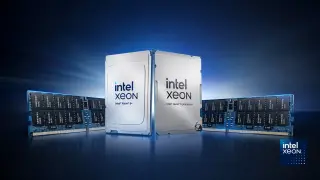
Intel’s Xeon 6 platform will be the first to support 8000 MT/s DDR5 RDIMMs, delivering up to 20% more memory bandwidth and about 3–6% gains across workloads with 1DPC 8000 MT/s RDIMM on select SKUs, with a BIOS/UPLR rollout targeting Aug–Sep this year. Additionally, 2nd Gen MRDIMMs will reach 8800 MT/s on Xeon 6 systems (notably 6900P Granite Rapids) in Q1 2027 for high-core-count AI/HPC workloads, and the roadmap points to DDR5 speeds up to 12,800 MT/s next year and 17,600 MT/s by 2029–2030 as DDR6 nears.}

Apple's M6 chip arrives with higher bandwidth and a 12-core GPU, but no Pro lineup
technology1 month ago

Apple's M6 chip arrives with higher bandwidth and a 12-core GPU, but no Pro lineup

Apple's M6 is expected later this year with a redesigned GPU and memory bandwidth up to 200 GB/s (from 153 GB/s on the M5), boosting on‑device AI and overall performance. It will reportedly be released only as a base-model chip with no Pro/Max/Ultra variants, while the M7 could push bandwidth to 240 GB/s in 2027; testing has begun in updated base MacBook Pro models, with a potential late-2026 launch.

Steam Machine energy boosts with a second memory stick, delivering up to 20% more in some tasks
technology1 month ago

Steam Machine energy boosts with a second memory stick, delivering up to 20% more in some tasks

Valve ships Steam Machines with a single 16GB DDR5-5600 module, keeping the system in single-channel mode; GamersNexus benchmarks show adding a second identical stick to enable dual-channel can yield up to ~20% gains, especially in CPU-heavy tasks and certain games (e.g., Baldur’s Gate 3, Resident Evil 4, Outer Worlds 2), while some titles see little difference. Valve previously suggested negligible impact, but all units ship with one module and only gain the bandwidth benefits once a second stick is added.

A20 Pro leak hints at memory boost, new packaging and a bigger NPU for iPhone 18 Pro
technology1 month ago

A20 Pro leak hints at memory boost, new packaging and a bigger NPU for iPhone 18 Pro

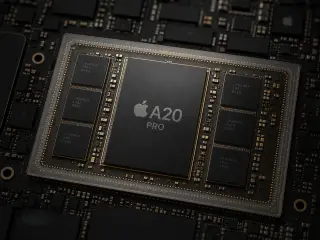
A packaging layout leak for Apple’s A20 Pro suggests the iPhone 18 Pro lineup will gain a 96-bit memory interface (up from 64), potentially 12 GB of RAM with LPDDR6 or LPDDR5X, and a wafer‑level multi‑chip packaging design that places memory dies in the same package to improve thermals. The chip is also expected to sport a larger NPU and CPU/GPU improvements on TSMC’s N2 process.

M6 MacBook Pro on the horizon with Apple's first 2nm chip
technology2 months ago

M6 MacBook Pro on the horizon with Apple's first 2nm chip

Bloomberg reports Apple plans a base 14-inch MacBook Pro this year powered by a standalone M6 chip built on a 2-nm process (TSMC’s N2) with higher memory bandwidth (~200 GB/s), an updated Neural Engine, and AI-optimized GPU, while M6 Pro/Max are not in this generation and higher-end chips are saved for the M7 in 2027. Some entry-level Macs may also get the M6, but Bloomberg says the Mac mini and iMac will likely stick with M5 chips for now; the MacBook Air was updated in March 2026 and may not receive a new chip until 2027.

PS6 Rumor Teases 30GB RAM, But Price Tag Could Soar
technology6 months ago

PS6 Rumor Teases 30GB RAM, But Price Tag Could Soar

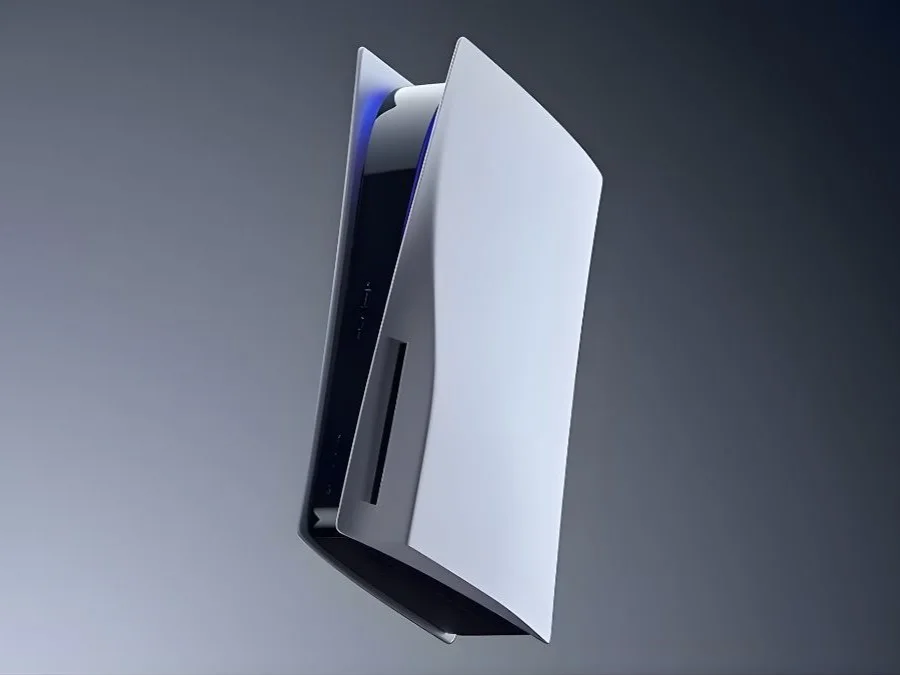
A leak from Kepler L2 claims the PS6 could ship with 30GB of GDDR7 RAM on a 160-bit bus (640GB/s), a big jump from the PS5’s 16GB. But rising RAM costs amid a memory shortage could push the console’s MSRP higher, with some chatter suggesting up to a $100 increase for the 30GB configuration. The leak points to a 2026 arrival, with manufacturing in mid-2027 and a full launch in Fall 2027 or early 2028, though details should be treated as speculative.

AMD Files Patent for Enhanced DDR5 Memory with Double Bandwidth
technology11 months ago

AMD Files Patent for Enhanced DDR5 Memory with Double Bandwidth

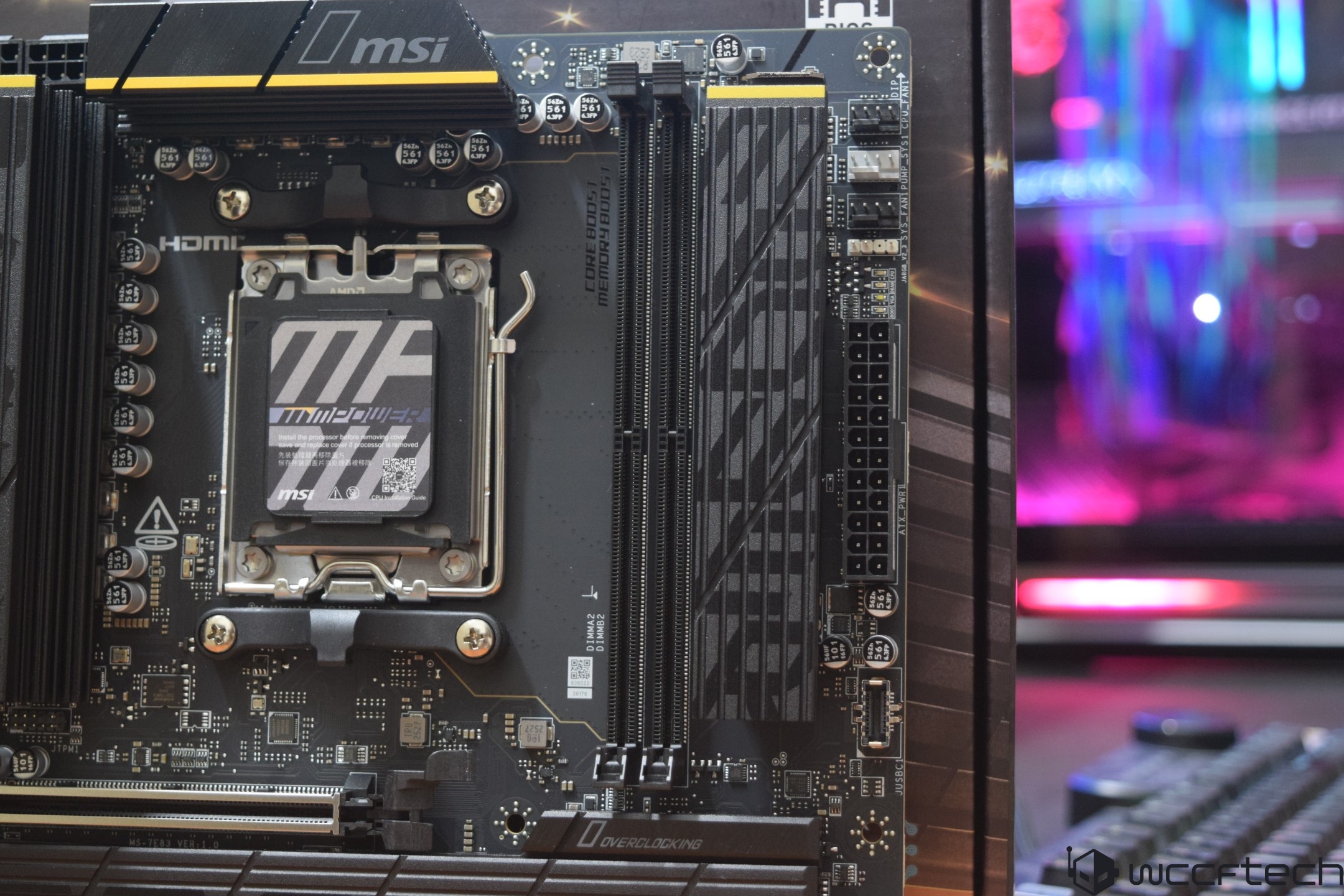
AMD has developed a new patent that doubles memory bandwidth by using a high-bandwidth DIMM (HB-DIMM) approach, which integrates additional chips to multiplex and re-time data streams, rather than improving DRAM silicon itself. This technique is especially beneficial for AI and bandwidth-intensive workloads, though it may increase power consumption and cooling needs.

Apple's M3 Pro Chip: Improved Performance and Surprising Affordability
technology2 years ago

Apple's M3 Pro Chip: Improved Performance and Surprising Affordability

Apple's latest M3 Pro chip in the new MacBook Pro models boasts faster performance and improved power efficiency. However, it has 25% less memory bandwidth compared to the M1 Pro and M2 Pro chips used in previous generations. The M3 Pro chip features 150GB/s memory bandwidth, while the M3 Max offers up to 400GB/s. Additionally, the M3 Pro chip has a different core configuration compared to its predecessor, with 6 performance cores, 6 efficiency cores, and 18 GPU cores.

Comparing Apple's M3 Pro Chip to Previous Generations: Performance Cores, Memory Bandwidth, and More
technology2 years ago

Comparing Apple's M3 Pro Chip to Previous Generations: Performance Cores, Memory Bandwidth, and More

Apple's latest M3 Pro chip in the new MacBook Pro models has 25% less memory bandwidth compared to the M1 Pro and M2 Pro chips used in previous generations. Despite this, the M3 Pro chip is touted as the fastest and most power-efficient Apple silicon yet, offering up to 40% faster performance than the M1 Pro. The M3 Pro chip also features changes in core ratios and a slightly weaker Neural Engine compared to its predecessors. The real-world impact of these changes on performance remains unclear, but Apple's new Dynamic Caching memory allocation technology aims to optimize memory usage.