
Tag

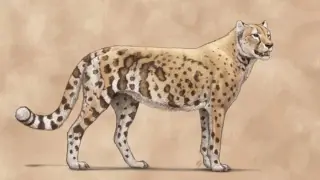
Miracinonyx Trumani

All articles tagged with #miracinonyx trumani

Ancient 'American Cheetah' Reclassified as Puma Relative With Regional Diets
science29 days ago

Ancient 'American Cheetah' Reclassified as Puma Relative With Regional Diets

New DNA and isotopic analyses of Miracinonyx trumani show it wasn't a cheetah but a sister species to the modern puma, with two distinct populations: a northern, pescatarian-adapted group and a southern, more typical carnivore group. The findings extend its known range by about 20 degrees latitude and reveal flexible predation and circadian adaptations, with the lineage declining as climate changed at the end of the last ice age.

Quantum Breakthrough, Frog Sex Reversals, Invasive Pines, and a Puma-Cheetah Kin
science1 month ago

Quantum Breakthrough, Frog Sex Reversals, Invasive Pines, and a Puma-Cheetah Kin

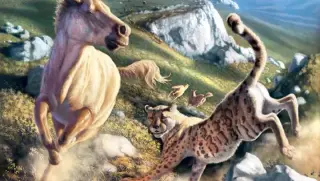
Researchers demonstrate that the quantum version of the equivalence principle holds using a Quantum Galileo Interferometer, suggesting quantum mechanics and gravity can coherently coexist; studies on agile frogs show sex reversal does not stop mating but their offspring may be more vulnerable to viral diseases; pine trees planted in the Southern Hemisphere grow much faster and resist drought, yet threaten native ecosystems; genetic analysis reveals the extinct American ‘cheetah’ Miracinonyx trumani is actually a sister species to pumas, with surprising range and diet diversity including Arctic fish-eaters.

Ancient DNA Reframes North America's 'American Cheetah' as a Puma Relative
science1 month ago

Ancient DNA Reframes North America's 'American Cheetah' as a Puma Relative

New high-coverage nuclear genomes from Miracinonyx trumani reveal it is closest to the living puma, not the African cheetah, indicating convergent evolution of its cheetah-like form; isotope data show Wyoming individuals hunted generalist prey while Yukon specimens relied on salmon and inland fish; the species had low genetic diversity across populations and a vast range from Arctic tundra to the lower 48 before a slow decline tied to climate change; the study was published in Current Biology on Sept. 4, 2026.