Russia’s Orthodox Church sent a fragment of Grand Prince Dmitry Donskoy’s right hand to front-line troops in Donetsk to boost morale and provide spiritual strength amid Moscow’s invasion of Ukraine.
Fragments of Grand Prince Dmitry Donskoy’s right hand were sent by the Moscow Patriarchate to the Donetsk front to lift Russian troops’ spirits, a symbolic move tying today’s war effort to a celebrated medieval victory over the Mongols; the relic, uncovered during Kremlin cathedral renovations, was praised by Putin as a historic foundation of Russian history.
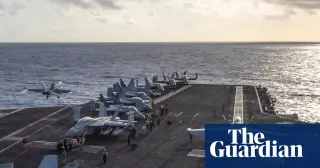
Sailors aboard the USS Abraham Lincoln describe a punishing, months‑long deployment with no clear end in sight, saying the grueling mission took a toll on morale and prompted some to reconsider a long career in the Navy, according to interviews cited by The Wall Street Journal.
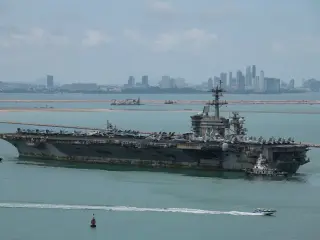
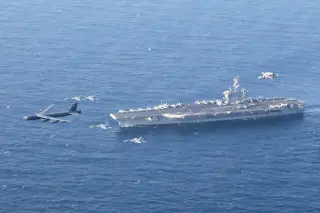
The nuclear-powered aircraft carrier USS Abraham Lincoln and its 5,000-strong crew arrived at Laem Chabang Port in Thailand for a rest and recovery break after about nine and a half months at sea, amid a demanding Middle East deployment and reports of supply issues, deteriorating mental health, and low morale on board.
The aircraft carrier USS Abraham Lincoln will briefly visit Thailand on its way back to San Diego after more than 250 days at sea supporting operations against Iran, in a routine stop for rest and logistics with no planned exercises. The deployment has drawn scrutiny over living conditions and morale aboard the ship, including reports of shortages and mental health concerns among about 5,000 sailors, and at least one sailor facing disciplinary action amid controversy over protests about paternity leave and welfare. The Navy says it remains committed to sailors’ health and provides mental health resources, while the Lincoln’s Middle East mission has already seen the carrier relieved by the USS George Washington and redirected home.
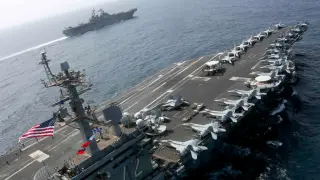
A Bahrain attack prompted the Navy to shift logistical support to Diego Garcia, placing the USS Abraham Lincoln about 2,100 miles from its nearest resupply hub and stripping the crew of regular liberty. The ship has been at sea for more than 260 days without a port call, fueling concerns about morale and living conditions, even as lawmakers pressure for answers. The Navy says shortages were prioritized and addressed, and the Lincoln is being relieved by the USS George Washington to head back to San Diego.
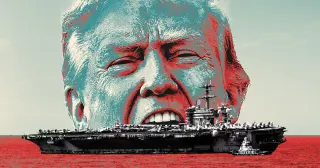
Trump dismissed concerns from families of sailors aboard the USS Abraham Lincoln about shortages and deteriorating morale during an extended Middle East deployment tied to the Iran war. The ship has been at sea for roughly 244 days with limited port visits, and a replacement ship (USS George Washington) is expected to take over, with a return to San Diego in coming weeks. Officials say priority supplies are maintained and deny misrepresentation, while lawmakers press for oversight amid reports of low morale and a sailor going overboard.
Navy officials, including acting secretary Hung Cao and top admirals, met with about 200 USS Abraham Lincoln families in San Diego to address concerns about sailors’ mental health during an unusually long Middle East deployment. Families described emotional strains, reports of suicidal thoughts, and a sense of broken trust, while the Navy said sailors have access to mental-health workers, chaplains and doctors and is sending more professionals. The Lincoln, with roughly 5,000 crew, has been at sea for more than eight months after being redirected to the Middle East in January, facing food and water shortages and reduced port calls as morale remains low; Navy leaders pledged continued listening and adequate resources to ensure mission safety and success.
Id Software lead programmer Chris Hays says morale at the studio is at an all-time low after Xbox mass layoffs, criticizing industry executives for being out of touch with the realities of game development and noting the human impact on teams.
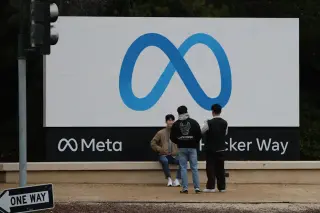
Meta CEO Mark Zuckerberg said AI agent progress is slower than expected even as Meta pours tens of billions into AI talent and infrastructure. He expects some benefits in 3-6 months but emphasized balancing speed with trust and morale, including pausing the keystroke-training program until it can resume as opt-in, and noting morale challenges alongside about 8,000 layoffs (~10% of staff).
Meta’s post-2022 drive for speed and AI progress used mass layoffs, role reassignments, and keystroke monitoring, which severely hurt morale and trust. Executives, including Andrew Bosworth and Mark Zuckerberg, have publicly acknowledged mistakes and begun modest reforms, but analysts say real change requires credible accountability and sustained leadership—amid worker protests and unionization efforts that keep the culture debate in the spotlight.
Meta is ending its plan to compel 7,000 engineers into an Applied AI training unit and will now defer to individual choice, offering preferential placement in other parts of the company due to staffing shortages. The reversal follows backlash to the program and a broader morale crisis highlighted by CTO Andrew Bosworth, and comes after May layoffs that reduced about 8,000 jobs.
Meta’s workforce morale is plunging after thousands of layoffs aimed at funding AI, with CTO Andrew 'Boz' Bosworth acknowledging it as among the worst in 20 years; remaining employees are often reassigned to train AI models, and Zuckerberg’s hackathon attempt to lift spirits fell flat among staff.
Meta’s morale is sagging after last month’s layoffs of about 8,000 employees (roughly 10% of the workforce), with remaining staff taking on heavier workloads to train AI models. An internal memo from Mark Zuckerberg promised a company-wide AI hackathon to lift spirits, but workers pushed back, citing burnout and ongoing desk-sharing under a hot-desks scheme. Zuckerberg said there would be no further layoffs this year, underscoring the disconnect between leadership optimism and employee reality as Meta competes to advance AI.
Meta's CTO Andrew ‘Boz’ Bosworth reportedly told staff that morale is among the worst in about 20 years following May’s mass layoff of roughly 8,000 employees and a broad AI-focused reorganization; he acknowledged the AI restructuring was poorly explained and pledged more transparency and support, while Meta boosted budgets for travel, events, and snacks as employees were reassigned to AI roles to accelerate its AI push.