Tag

Moss

All articles tagged with #moss

Ancient Moss Hints at Brain-Like Electrical Networking
science15 days ago

Ancient Moss Hints at Brain-Like Electrical Networking

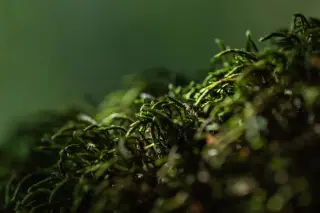
A study of the feather moss Brachythecium rutabulum records long-term electrical activity in dense mats, uncovering fast, intermediate, and slow spike regimes and evidence of directional signal propagation. While not a human brain, the moss shows a rich electrophysiological repertoire that could underpin information processing and inspire biohybrid sensing applications, challenging the view of moss as a simple organism.

Cordyceps expands its life cycle into mosses, not just insects
science19 days ago

Cordyceps expands its life cycle into mosses, not just insects

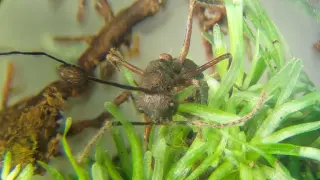
DNA analysis shows the same Cordyceps fungus infecting both ants and surrounding mosses, suggesting a moss-based life stage that could help the pathogen endure host scarcity and explain why infected ants bite mosses at death; the study from the Brazilian Amazon found the fungus inside mosses as well, indicating a closer plant–fungus link in its lifecycle and a broader ecological role than previously understood.

Zombie-fungus lurks in Amazon mosses, hinting at a plant-linked life cycle
science25 days ago

Zombie-fungus lurks in Amazon mosses, hinting at a plant-linked life cycle

DNA analysis from the Amazon shows the zombie-ant fungus (Ophiocordyceps) can live inside mosses as an endophyte, not just in ants. Metabarcoding of moss samples revealed the same fungus in mosses near infected ants and even more than 10 meters away, suggesting a hidden plant-associated life stage and a more complex ecological cycle that connects plants, fungi and insect hosts.

Moss Waves Hint at a Living Biocomputer Substrate
science1 month ago

Moss Waves Hint at a Living Biocomputer Substrate

Researchers led by computer scientist Andy Adamatzky measured electrical activity in mats of the common moss Brachythecium rutabulum, recording fast spikes, slower rhythms, and neuron-like spike trains that propagate across the cushion over days. The patterns imply moss cushions function as a dynamic, interconnected excitable system rather than a collection of unrelated cells, raising the possibility that moss could be used as a low-power substrate for biohybrid sensing and unconventional computation. However, the study has limitations—no inert-control recordings and natural variability in wild-collected moss—and more work is needed to determine whether these signals meaningfully encode information; the work was published in Royal Society Open Science.

Moss on Console Lacks the VR Touch That Enchanted Me
games1 month ago

Moss on Console Lacks the VR Touch That Enchanted Me

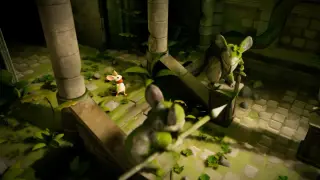
Valentine recalls Moss’s emotional VR moment at E3 2017—being the Reader and guiding Quill with tactile, in-world interactions that forged a deep bond—before noting the newer Moss: The Forgotten Relic on PC and consoles preserves the story and puzzles but loses the VR intimacy; healing Quill is now a button press rather than a personal gesture. While expanding Moss to more platforms is welcome for accessibility, the console version cannot fully recapture the original magic, leaving the experience more as a traditional game than a unique VR relationship.

Desert moss hosts surprising fungal partners, reshaping plant history
science1 month ago

Desert moss hosts surprising fungal partners, reshaping plant history

Researchers found mycorrhizal fungi inside desert moss, with branching structures in the moss leaves suggesting a potential moss–fungi symbiosis. The fungal communities inside moss differed from surrounding soil, implying a deliberate association rather than contamination. If confirmed, this could reshape moss biology and illuminate how plants first moved from sea to land.

Desert Moss Hides Fungal Partners Inside Its Tissues
science2 months ago

Desert Moss Hides Fungal Partners Inside Its Tissues

UC Riverside researchers found fungi inside desert moss tissues, including arbuscule-like structures, suggesting a potential mycorrhizal relationship not previously documented in mosses; if confirmed, it could reshape ideas about moss biology and the early evolution of land plants, with implications for dryland restoration—though a true symbiosis has not yet been proven.

Moss Survives Nine Months in Space, Regrows on Earth
science4 months ago

Moss Survives Nine Months in Space, Regrows on Earth

The moss Physcomitrium patens’ sporophyte was mounted on the ISS exterior for about 283–286 days, enduring vacuum, radiation and extreme temperatures. Returned via SpaceX Dragon in Jan 2023, ~86% of exposed spores germinated versus 97% of Earth controls, with a ~20% drop in chlorophyll a, but growth still occurred. The results suggest hardy pioneer organisms could help seed space ecosystems for Moon/Mars missions, potentially aiding oxygen production and soil formation; models even estimate survival up to about 5,600 days in similar conditions.

Moss Becomes Key Evidence in Burr Oak Grave Robbery Case
science5 months ago

Moss Becomes Key Evidence in Burr Oak Grave Robbery Case

A 2009 Burr Oak Cemetery scandal over desecrated graves led investigators to rely on tiny moss fragments found with the remains to time the reburials; a 2015 conviction followed, and a 2026 paper in Forensic Sciences Research explains how moss metabolism and chlorophyll degradation showed the moss was buried for less than six months, placing the crime within the workers’ timeframe and strengthening the evidence against them.

Tiny Moss, Big Verdict: How a Clump Solved a Burr Oak Grave Robbery
science5 months ago

Tiny Moss, Big Verdict: How a Clump Solved a Burr Oak Grave Robbery

A fingertip-sized clump of common pocket moss (Fissidens taxifolius) found with exhumed remains at Burr Oak cemetery helped determine the crime occurred within 12 months. By comparing moss metabolism and museum specimens, researchers showed the burial was far more recent than the defendants claimed, a key factor in convicting four workers who exhumed more than 100 remains to resell plots. The study, from the Field Museum and FBI, highlights moss as a practical tool in forensic investigations.