Tag

Nuclear Pore Complex

All articles tagged with #nuclear pore complex

HIV-1 weaponizes T-cell signals to open nuclear pores and infect resting cells
science24 days ago

HIV-1 weaponizes T-cell signals to open nuclear pores and infect resting cells

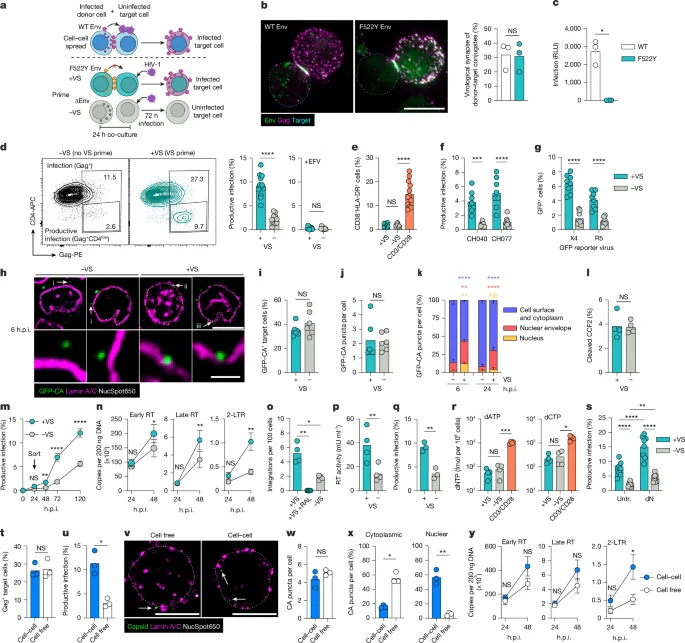
resting CD4+ T cells are normally resistant to cell-free HIV-1 due to a bottleneck at capsid nuclear import at the nuclear pore, but during cell–cell spread, HIV-1 triggers CD4–LCK signaling that activates CDK1, remodeling nucleoporins and the NPC to boost nuclear import and license infection; this cell–cell spread–driven mechanism explains why resting T cells can be infected in vivo and why cell-free virus is less effective.

Disorder Rules the Nuclear Pore’s Dynamic Gate
biology2 months ago

Disorder Rules the Nuclear Pore’s Dynamic Gate

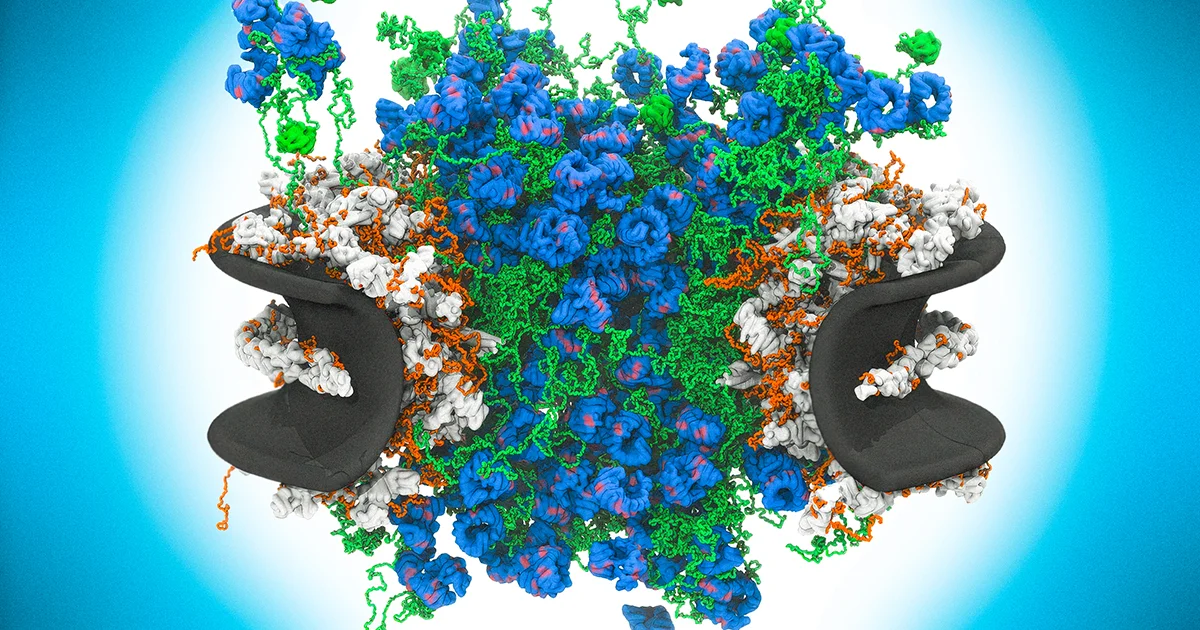
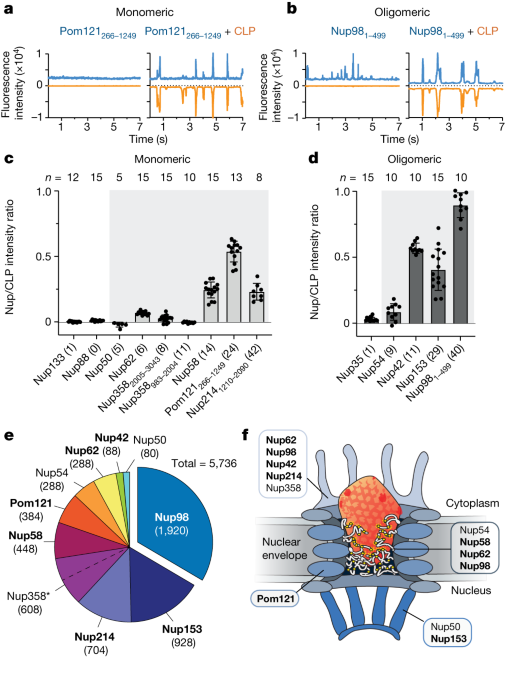
New high-speed imaging and modeling show the nuclear pore’s center is a dynamic, disorder‑driven environment where FG‑nucleoporins and transport proteins form a moving central plug; this flexible 'virtual gate' controls which molecules enter the nucleus, challenging the idea of a static gel and linking pore dysfunction to disease, with implications for drug delivery.

"Mimicking Karyopherin Engagement: HIV Capsids and Nuclear Pore Transport"
science2 years ago

"Mimicking Karyopherin Engagement: HIV Capsids and Nuclear Pore Transport"

The HIV capsid, crucial for viral infection, has been found to interact with FG-nucleoporins (FG-Nups) of the nuclear pore complex (NPC) through weak but specific interactions, similar to karyopherins. The capsid's ability to bind to FG-Nups, which form the selectivity barrier of the NPC, allows it to overcome the size restriction and enter the nucleus. This interaction is mediated by an FG-binding pocket on the capsid, and mutations affecting this pocket disrupt the binding. Additionally, the capsid can enter phase-separated FG-Nup condensates, demonstrating its ability to engage with the NPC autonomously. These findings shed light on the mechanism of HIV nuclear entry and provide insights into potential targets for antiviral therapies.

Delving into the Depths: Unraveling the Mysteries of the Nuclear Pore Complex
science-and-technology2 years ago

Delving into the Depths: Unraveling the Mysteries of the Nuclear Pore Complex

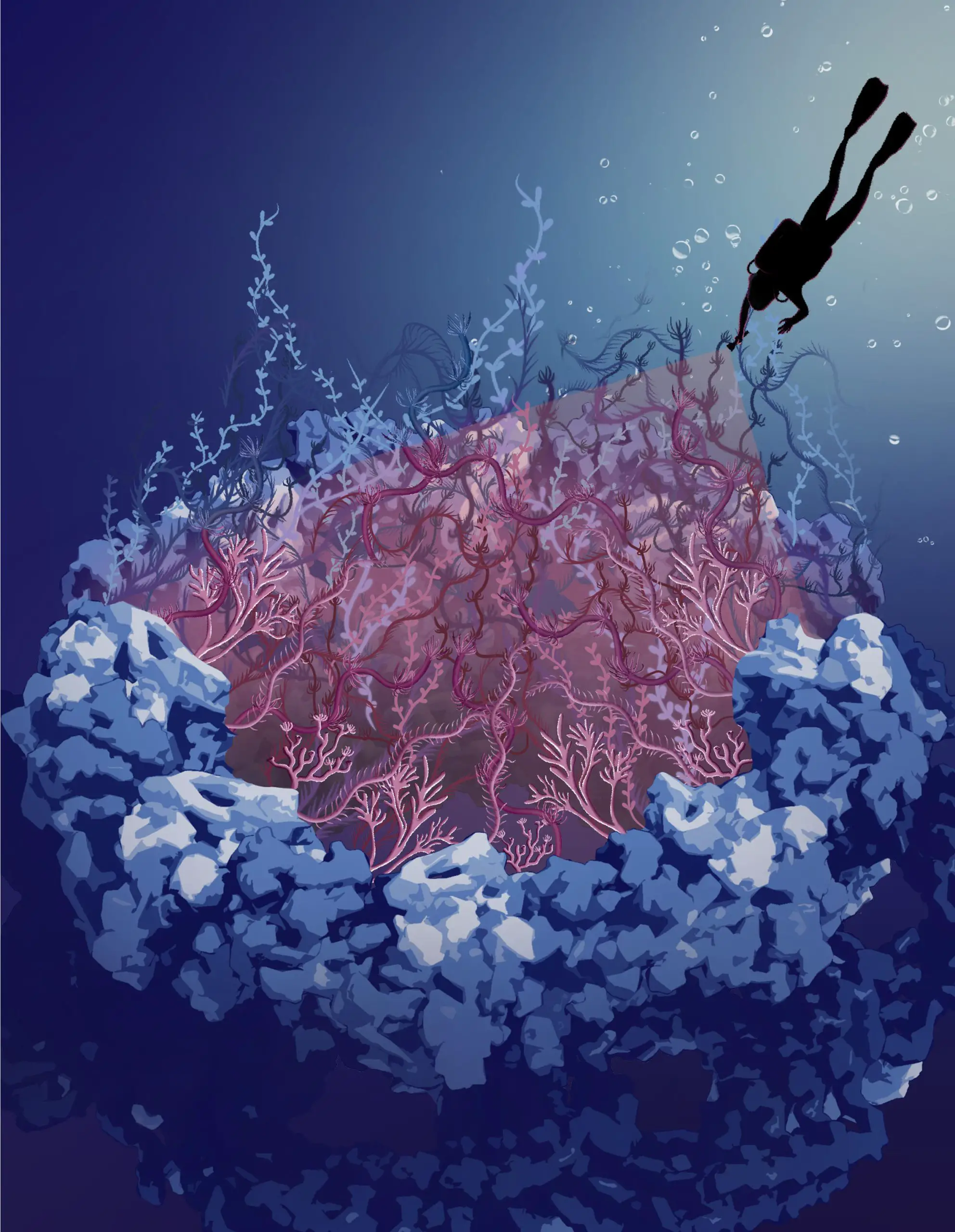
Scientists from the Max Planck Institute of Biophysics and Johannes Gutenberg University Mainz have made a breakthrough in understanding the structure and function of nuclear pores, which play a crucial role in safeguarding DNA and cellular transport. Using a combination of synthetic biology, fluorescence microscopy, and computer simulations, the researchers visualized the behavior of intrinsically disordered proteins (IDPs) within the nuclear pore complex. They discovered that these IDPs form a dynamic, spaghetti-like barrier that allows essential cellular factors to pass through while blocking viruses and other harmful pathogens. This new understanding could lead to the development of drugs or vaccines to prevent viral infections and promote healthy aging.