Tag

Polysomnography

All articles tagged with #polysomnography

Sleep foundation model uncovers five risk groups beyond apnea severity
health1 month ago

Sleep foundation model uncovers five risk groups beyond apnea severity

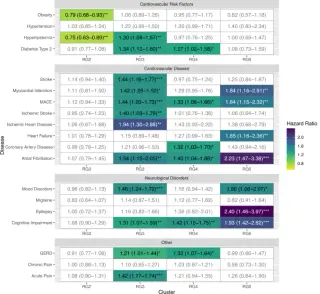
A transformer-based sleep foundation model trained on 10,000 high‑resolution PSG studies linked to EMRs learns rich sleep-physiology embeddings that identify five prognostic risk groups with markedly different mortality, cardiovascular, and neurologic outcomes, outperforming conventional AHI-based severity. External validation in the Sleep Heart Health Study confirms generalizability, suggesting embedding-based risk stratification could enable precision sleep medicine and targeted monitoring, while acknowledging limitations and the need for prospective trials.

Paradox: Women Sleep Objectively Better Yet Perceive It Poorly
science2 months ago

Paradox: Women Sleep Objectively Better Yet Perceive It Poorly

A Swedish study of 476 adults (238 women, 238 men, ages 29–85) found that women objectively sleep better—fewer awakenings, longer total sleep, higher sleep efficiency, more deep sleep—yet they rate their sleep quality as poorer than men, who tend to underestimate their awakenings. The difference in self-reported sleep quality grows with age, though excluding men with very brief awakenings removes the gap. A limitation is the single-night measurement. Funded by Swedish foundations; published in Sleep Advances (2026).

SleepFM AI predicts 130 diseases from one night’s sleep
science7 months ago

SleepFM AI predicts 130 diseases from one night’s sleep

Stanford researchers unveil SleepFM, a foundation AI trained on nearly 600,000 hours of sleep data and long-term health records to forecast risk for about 130 diseases (and all-cause mortality) using only a single night of sleep captured via polysomnography; the model outperforms existing predictors (C-index >0.8 in many cases) and could someday be paired with wearables for real-time health monitoring, though current data come from sleep-clinic populations and may not generalize.