Tag

Foundation Model

All articles tagged with #foundation model

A $1,500, 1B-Parameter Breakthrough: Sapient Trains Efficient Reasoning AI
technology1 month ago

A $1,500, 1B-Parameter Breakthrough: Sapient Trains Efficient Reasoning AI

Sapient researchers trained a 1B-parameter HRM-Text foundation model from scratch for about $1,500 using a novel Hierarchical Recurrent Model that separates slow strategic reasoning from fast execution, and trains on instruction-response data instead of raw text. The result is competitive with larger open models on key benchmarks while using far less compute and data, suggesting enterprises can deploy compact, domain-tailored reasoning engines paired with external knowledge sources rather than relying on expensive, internet-scale pretraining. HRM-Text is presented as a proof-of-concept for affordable enterprise AI—not a plug-and-play ChatGPT replacement, but a lean core for task-specific reasoning with configurable retrieval and deployment workflows.

Smartwatch data plus routine labs power scalable insulin-resistance screening
healthcare3 months ago

Smartwatch data plus routine labs power scalable insulin-resistance screening

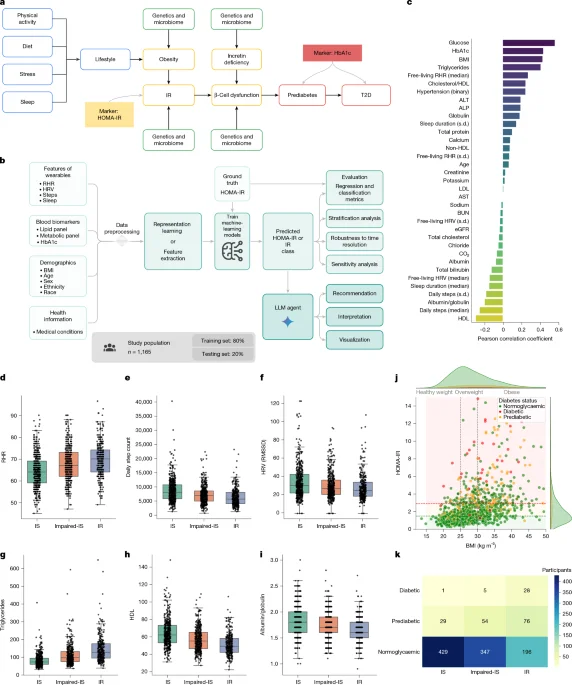
The WEAR-ME study (n=1,165) shows that combining wearable time-series data with demographics and routine blood biomarkers can predict insulin resistance (HOMA-IR ≥2.9) with AUROC around 0.80. Using a wearable foundation model to derive richer representations further improves performance, achieving AUROC ~0.82 in cross-validation, and up to ~0.88 when fasting glucose and a lipid/metabolic panel are included. An independent validation cohort confirms gains with wearable data, and an LLM-based insulin-resistance literacy agent is demonstrated to contextualize results and provide personalized guidance. The work proposes a scalable, noninvasive screening approach to identify at-risk individuals for early lifestyle interventions to prevent type 2 diabetes, while noting limitations in data missingness, generalizability, and the need for longitudinal validation.

Prima: a health-system-scale MRI foundation model reshaping neuroimaging
technology5 months ago

Prima: a health-system-scale MRI foundation model reshaping neuroimaging

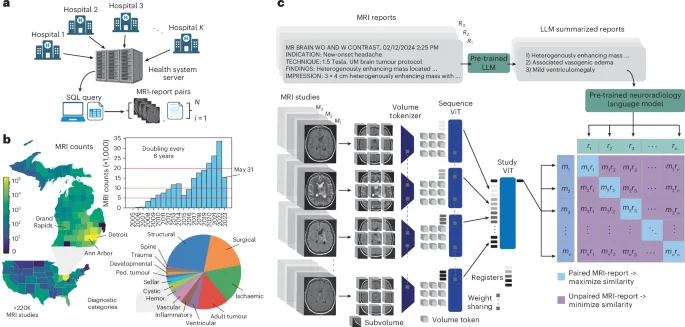
A team trains Prima, a health-system-scale AI foundation model for MRI, using over 220,000 studies. In a one-year, system-wide study (29,431 MRIs across 52 neurologic diagnoses), Prima achieves a mean AUC of 92.0%, outperforming state-of-the-art models, and offers explainable predictions, radiologist worklist prioritization, and clinical referral recommendations. The model demonstrates algorithmic fairness across sensitive groups and leverages a hierarchical ViT with a VQ-VAE-based volume tokenizer and CLIP objective, aided by LLM-assisted report summarization. Data originates from the University of Michigan with MIT-licensed code; data sharing is governed by IRB and institutional agreements. Overall, the work showcases health system-scale AI training as a pathway to faster, fairer AI-driven neuroimaging in clinical care.

GluFormer: A universal model for decoding glucose patterns across diverse populations
technology5 months ago

GluFormer: A universal model for decoding glucose patterns across diverse populations

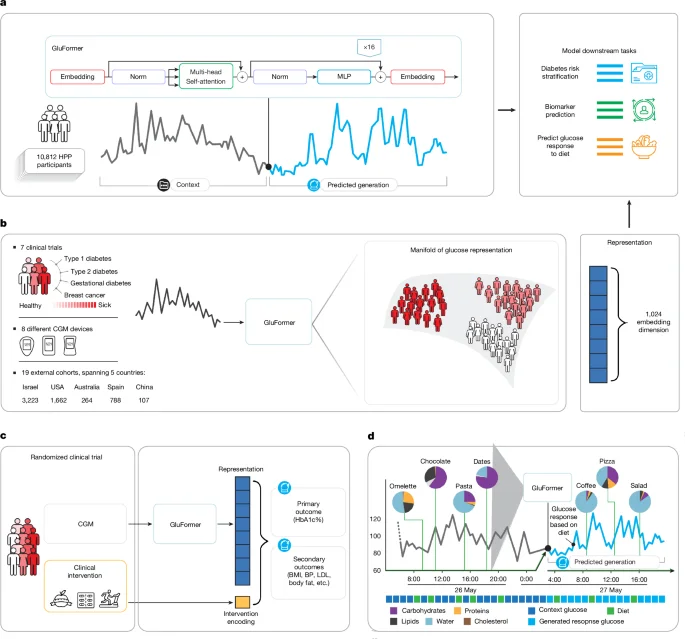
Researchers introduce GluFormer, a self-supervised, autoregressive foundation model trained on over 10 million CGM measurements to learn transferable glucose representations across 19 external cohorts spanning 5 countries and multiple devices. The learned representations improve forecasting of glycemic metrics, stratify prediabetes progression better than baseline HbA1c, and identify higher long-term diabetes and cardiovascular mortality risk than HbA1c in follow-up data. A multimodal extension incorporating dietary data can simulate plausible glucose trajectories and predict individual glycemic responses to food, suggesting GluFormer as a generalizable tool to advance precision metabolic health.

AI Model Uses Sleep Data to Predict Long-Term Disease Risks
health-and-medicine6 months ago

AI Model Uses Sleep Data to Predict Long-Term Disease Risks

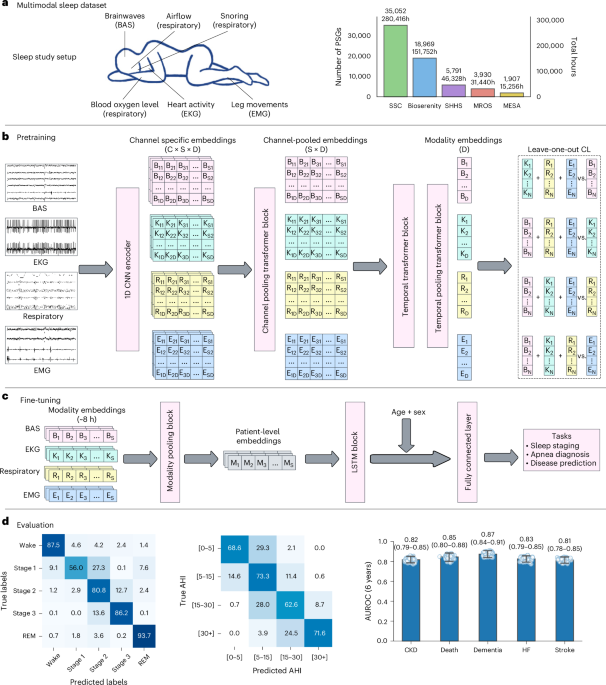
The article introduces SleepFM, a large-scale foundation model trained on over 585,000 hours of sleep data from 65,000+ participants, which captures complex sleep physiology across multiple modalities and demonstrates strong predictive power for a wide range of diseases, outperforming traditional models and showing robust generalization across datasets and time.