Digital Foundry argues the Switch 2’s modern hardware (SSD, ray tracing, ML/upsampling) and strong first‑party software help it stay relevant through the 2030s, narrowing the gap with next-gen rivals like PS6 and Project Helix and making a Switch 3 less urgent for now.
Sony’s FY25 results flag AI‑driven RAM shortages that could slow PS5 hardware sales through the next few years, with the company likely underproducing or adjusting prices. PS6 timing remains undecided, potentially supported by cross‑gen games and a two‑tier/hardware‑financing approach. GTA 6 could buoy PS5 momentum if supply holds, while Sony expands AI partnerships, live‑service bets, and China opportunities as it navigates a profitable but transitional PlayStation era.
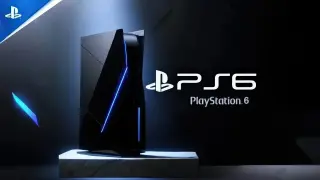
Sony says it has not decided PS6’s launch timing or price and will observe market conditions, even exploring new selling models due to memory costs from shortages. Rumors point to a 2027 launch with a handheld, but consumers favor later years, and pricing is debated, with some speculating around PS5 Pro levels or up to $1,000.
Sony says it hasn’t decided when to launch the PlayStation 6 or at what price, pointing to ongoing global component shortages and rising RAM costs; analysts have floated a potential 2028 arrival, while Sony weighs cost-cutting and business-model changes as it continues to invest in next-gen platforms.
Sony says it has not decided when to launch the PlayStation 6 or its final price due to rising memory costs and a broader memory shortage, and it is considering changing its business models to cope with the crunch, with memory supply expected to remain tight into FY2027.
MP1st reports early PS6 details: cloud streaming infrastructure is moving to PCIe Gen5 NVMe with cross-gen asset work for PS5/PS6 and an emphasis on social apps; a next-gen Unreal Engine 5 horror shooter with motion capture is in development (with Firesprite's rumored Project Heartbreak); Sony is expanding AI via PSSR and ML hiring, signaling AI-driven visuals across future hardware, plus speculative SAVANT haptics for a new controller.
Leaked AMD-doc rumors suggest the PS6 could offer roughly a 3x uplift over PS5 in overall performance, with ray tracing 6–12x faster; rasterization gains may be more modest. Price is hotly debated, with estimates around $700–$800 and a possible 1TB storage/no-disc option, targeting a late-2027/early-2028 launch.
A Digital Foundry YouTube poll of over 50,000 responses shows 41% would pay $699, $799, or more for PlayStation 6, with $599 (34%) and $499 (25%) also popular options. A separate 711-person poll of website readers leaned higher, with 51% willing to pay $699 or $799+. Industry chatter suggests BOM costs around $750 per unit, and prices will hinge on features like performance, backwards compatibility, and drives, with official specs still pending.
Analysts say the PS6 could launch around $1,000, signaling a potential shift to four-figure consoles, a trend tentatively foreshadowed by the PS5 Pro’s $899.99 price and the base PS5 at $599.99. Experts like Joost van Dreunen, Serkan Toto, and Mat Piscatella say rising hardware costs and a shift away from subsidizing hardware toward software revenue could push next-gen prices higher, while others warn a $1,000 entry could dampen adoption. Macro pressures such as inflation, AI-driven component costs, and long supplier contracts complicate cost reductions, and Sony faces tough pricing and cross-gen strategy decisions under new leadership in a challenging economy.
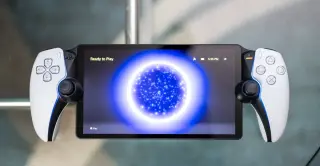
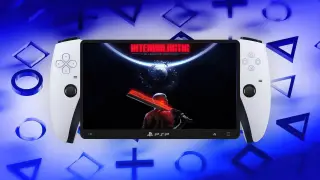
A credible leaker and another tipster suggest Sony plans both a PS6 home console and a PS6 handheld, potentially launching in 2027. Details are unclear on whether the handheld will run a full PS6 library or a scaled version, its power, price, or docking approach, though ideas like a low‑power mode hint at a portable PS experience akin to Switch/Deck. The rollout could be affected by RAM shortages and economic conditions, with the exact strategy and software support yet to be revealed.
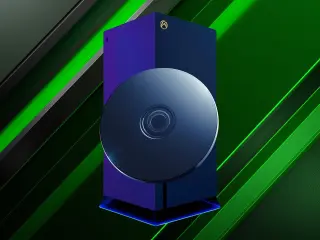
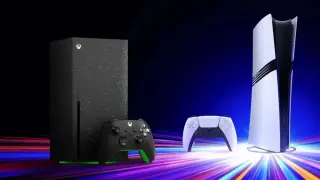
Rumors suggest Xbox Helix could share its library withPS6, fueling questions about a shift away from strict exclusives; despite execs saying exclusives aren’t coming back, Helix’s niche, PC-like nature and rumors of a $1,200 price complicate the strategy, with PlayStation’s exclusivity approach and PS6 timing adding to the debate.
Leaked specs, via Moore’s Law is Dead, sketch a PS6 with a handheld Canis and a home console built on AMD Zen 6 CPUs and RDNA 5 GPUs on a 3nm process. Canis reportedly has 6 CPU cores and 16 RDNA 5 Compute Units with 192-bit LPDDR5X memory (~135mm²). The PS6 home console allegedly features up to 10 Zen 6 cores, a 52–42 CU RDNA 5 GPU at 2.6–3GHz, a 160-bit memory bus and 30–40 GB of GDDR7 for up to 640 GB/s bandwidth. Leaks claim 2.5–3x PS5 rasterization and 6–12x ray tracing, with PS6 initially lagging Microsoft’s Next Xbox. These are unconfirmed leaks.
A Moore's Law is Dead leak claims the PS6 Orion will offer roughly 2.5–3× PS5 raster power and 6–12× PS5 RT performance, via a RDNA5 GPU around 34–40 TFLOPs and 52–54 CUs. The handheld PS6 Canis APU is said to use four Zen 6c cores and 16 RDNA5 CUs at 1.6–2 GHz with LPDDR5X memory. Mass production is reportedly set to begin by 2027, with possible launch-time pricing or supply constraints, and no expected delay to 2029 per sources.
Digital Foundry views the PS5 Pro’s second-gen PSSR as delivering a dramatic uplift in image quality (with ray-traced GI and reflections) and a system-level toggle that could upgrade many existing games, potentially extending the cross-gen period; while PS6 is anticipated to bring a larger leap with ML/RT tech from Project Amethyst, the PS5 Pro acts as a testing ground for Sony’s evolving ML/RT pipeline that may carry into the next generation.
A global memory shortage tied to AI-driven demand could push Sony’s PS6 beyond its 2027 target, with Phison CEO Pua Khein-Seng warning the crunch could last up to 10 years and affect devices from phones to consoles. He argues AI GPUs requiring large SSDs could consume a significant portion of NAND capacity, driving prices higher. Sony says it has secured components through 2026, but the outlook beyond that remains uncertain, leaving a PS6 delay plausible even if some still expect a launch around the current window.