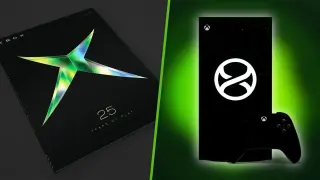
Xbox VP Jason Ronald clarified in a 25th-anniversary magazine that Project Helix is a console capable of playing PC games, not a PC that plays console games. The device will use neural rendering to maintain affordability and visual fidelity despite component shortages, with a projected 2028 launch.

Microsoft has detailed its next-generation console, Project Helix, emphasizing a console-first experience that supports PC games without becoming a PC. The device will rely heavily on neural rendering to maintain affordability and visual fidelity, with a release potentially delayed until 2028 due to component shortages.
Xbox VP Jason Ronald confirmed in a 25th-anniversary interview that Project Helix is a console capable of playing PC games, not a PC that plays console games. The device will use neural rendering to improve visual fidelity without increasing hardware costs, aiming to maintain affordability despite component shortages. No release date or price was announced, though rumors suggest a 2028 launch.
Microsoft has clarified that its next-generation console, Project Helix, is designed as a console that plays PC games, not a PC that plays console games. In a 25th-anniversary interview, Xbox VP Jason Ronald emphasized that the device will unify game libraries across four generations of Xbox history while offering deep customization for power users. The platform will utilize neural rendering to achieve high visual fidelity without requiring excessive computational power, aiming to maintain affordability despite rising component costs. The console is currently scheduled for a 2028 release, following a handheld device expected in 2027.
Xbox VP Jason Ronald confirmed during the 25th Anniversary celebrations that Project Helix is a console capable of playing PC games, not a PC that plays console games. The device will feature a custom AMD Magnus chip with hybrid memory and aims to unify four generations of Xbox libraries instantly. While no release date or price was announced, rumors suggest a 2028 launch due to component shortages.
Fortune reports internal Microsoft clashes over Project Helix's operating system, with Xbox threatening to cancel a handheld if forced to use Windows 11. The 2028 console is projected to cost $1,200-$1,800, while a new Xbox-branded handheld with a custom OS is expected in late 2027.
Former Xbox executive Mike Ybarra argues that a projected $1,200 to $1,800 price for the next-generation Xbox console, Project Helix, is commercially unviable. While Fortune reports Microsoft is targeting a 2028 launch with these high costs due to component shortages, Ybarra contends that mass-market consoles require lower entry prices. Microsoft leadership acknowledges affordability challenges, suggesting potential subsidies or tiered subscription models to mitigate costs, though internal conflicts over the console's operating system persist.
Fortune reports that Microsoft’s next-generation console, Project Helix, is projected to cost between $1,200 and $1,800 upon its 2028 release. The report highlights internal conflicts between Windows and Xbox teams over the device's operating system, as well as strategic shifts toward tiered subscriptions and potential hardware subsidies to mitigate high costs.
AMD and Microsoft have confirmed that FSR 4.1, an AI-driven upscaling technology, will arrive on Xbox Series X|S consoles and ROG Ally handhelds. While no specific release date was provided, the update aims to improve visual fidelity and performance on current-generation hardware. This move follows Sony’s recent introduction of similar upscaling for PlayStation 5 and precedes the launch of the next-generation Xbox, Project Helix, which is expected to utilize a new 'FSR Diamond' technology.
Fortune reports that Microsoft’s next-generation Xbox console, codenamed Project Helix, is projected to cost between $1,200 and $1,800 without subsidies. The release is split into two phases: a handheld device in the 2027 holiday season and the main console in the 2028 holiday season. Internal conflicts over the handheld’s operating system have led to a senior executive threatening to cancel the project, while rising memory costs and AI-driven component shortages are driving the steep price increase.
Microsoft is reportedly planning to release its next-generation console, Project Helix, during the 2028 holiday season with a projected price range of $1,200 to $1,800. A handheld version is expected in late 2027. Internal conflicts over the handheld’s operating system and potential subsidies complicate the launch strategy.
AMD and Microsoft have confirmed that FSR Upscaling 4.1 will arrive on Xbox Series X and Series S consoles, though no specific release date has been provided. The update, which leverages machine learning for improved image quality, is already available for Radeon RX 6000-series GPUs, Ryzen AI Max processors, and select handhelds via the Adrenalin Edition 26.10.1 driver. During the announcement, Xbox CTO Scott Van Vliet teased that the next-generation console, Project Helix, will utilize a new 'FSR Diamond' technology featuring multi-frame generation. While the consoles use RDNA 2 architecture, which lacks dedicated AI hardware, the update aims to provide a significant visual leap over previous FSR versions, particularly for the lower-powered Series S.
Microsoft is reportedly delaying its next-generation Xbox console, codenamed Project Helix, to the holiday season of 2028, while launching a next-gen handheld device in the holiday season of 2027. Fortune reports the console could cost between $1,200 and $1,800 without subsidies, and Xbox CEO Asha Sharma is planning layoffs this month.
Microsoft has posted a job listing for an 'Xbox Games Supply Strategist' focused on physical releases, suggesting the next-gen Xbox may retain physical media support despite industry trends toward digital-only.
Xbox CEO Asha Sharma stated at an internal town hall that the division must balance its focus on major franchises with the creation of new intellectual property to ensure long-term survival. While Microsoft is doubling down on high-profile titles like Call of Duty and Halo, Sharma warned that relying solely on past successes is unsustainable. This strategic pivot occurs alongside the confirmation that next-generation hardware, Project Helix, will prioritize a home console before introducing portable devices, reflecting a broader effort to stabilize the division after significant layoffs and restructuring.