Scammers flood inboxes with mass spam alerts to bury legitimate bank fraud notices, making unauthorized credit-card charges harder to spot; the rising 'email bombing' tactic underscores the need to verify alerts and review account activity regularly.
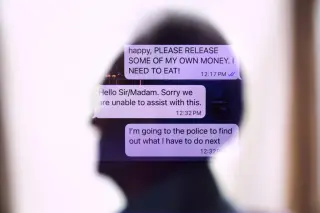
An AP/FRONTLINE investigation finds the United States lacks a coordinated national strategy to reimburse scam victims, leaving many with ongoing losses, tax bills on stolen funds, and little chance of recovery. While scam losses run into tens of billions annually and crypto crimes rise, other countries (UK, EU, Australia, Singapore) increasingly require reimbursements or stronger protections, and U.S. efforts—Congress proposals, DOJ strike forces, and agency actions—have yet to deliver a cohesive, adequately funded solution. Victims describe feeling abandoned by police and banks, with only a few cases of partial recovery, underscoring a broad gap between the scale of the problem and U.S. policy response.
Texts from alleged victims reveal Daejon Love, a man who posed as a San Francisco 49ers player, communicating about money and fabricating NFL credentials. The case accuses him of scamming at least 26 women out of about $1.3 million, with victims describing a “darkness” behind the impersonation and more potential victims suspected to be involved.
Google warns of a fake Chrome update prompt that can appear on normal websites and push malicious downloads, linked to a hijacked extension (Enable Right Click & Copy - Smart Unlock + OCR) that researchers say was weaponized after acquisition; a broader campaign tied to 19 Chrome/Edge extensions targets users with credential theft and other malware. To stay safe, never update Chrome from a webpage prompt—check for updates via Chrome’s About page, review and remove suspicious extensions and their permissions, enable Enhanced Protection, run full antivirus scans, and consider data-removal services to reduce personal information exposure; restart the browser after removing extensions and monitor for further signs of hijacking.
The family of 63-year-old Alisa Goods, who vanished in Las Vegas, says someone posing as her has texted and called demanding Bitcoin; police say the messages could be spoofing, and the investigation remains active.
USA TODAY debunks the viral claim that a 1982-D Small Date penny could be worth $18,000–$25,000, noting only two such coins have been publicly confirmed (2016 and 2019). The rarity stems from a transitional year when the Mint shifted from copper to zinc and created several penny varieties; the genuine 1982-D Small Date weighs 3.1 g, while common 1982 pennies weigh 2.5 g. With 10.7 billion pennies minted, unicorns like this are vanishingly rare, and many online listings misrepresent weight or mint details. Buyers should beware of scams on sites like eBay and prefer major auction houses with NGC holders; the safest bet for a “small date” is rolling 1982-D coins or mint bags, though the odds of finding one remain extremely slim.
Central Ohio continues storm recovery after Aug. 11’s widespread damage, which the Weather Service preliminarily classed as a derecho with winds up to 82 mph. About 135,000 customers lost power at the peak, and roughly 76,000 remained without power as of Aug. 12; restoration is targeted for noon Aug. 13 in southwest Columbus and Aug. 14 in other areas. Officials warned residents about scam contractors exploiting recovery, urging written estimates and payment by credit card. First responders handled a record volume of calls (about 1,100) plus 1,800 to the 311 center, with Columbus dispatching all police and fire units at once but reporting no city injuries. Flooding forced evacuations in Muskingum and Perry counties, and emergency declarations were issued there. A lightning strike at the Grafton Correctional Institution left 7 inmates hospitalized (16 initially). Weather officials noted radar can miss tornadoes; while some damage resembled straight-line winds rather than a tornado. Cleanup efforts continued in suburbs with new damage maps and debris programs.
An investigation finds Research Gold’s claim of 100% human-written medical research work is false: supposed PhD methodologists are AI-generated or using real researchers’ identities without consent, with AI-generated profiles and responses; at least one real researcher is seeking a takedown after learning her identity was used; the firm quoted a $1,900 price for a systematic review and appeared to respond with AI-authored messages. The report highlights broader concerns about AI’s role and potential fraud in scholarly publishing.
New York Attorney General Letitia James warned of a nationwide scam in which criminals use fake pop-ups and impersonate law enforcement to coerce older adults into withdrawing funds and delivering gold bars; victims are told to hand over cash and not discuss the breach. The scheme, which has led to losses of more than $100 million in New York over two years and has appeared in other states, relies on urgency and secrecy. The public is urged not to give remote access, not to call numbers from messages, to contact their banks, and to report suspicious activity to authorities.
AI deepfake scams can impersonate loved ones, but a prearranged codeword plus a calm verification protocol can help. Experts recommend a memorable, personally meaningful password and rehearsing with family so panic doesn’t override judgment. Watch for red flags—pressure to act quickly, requests for untraceable funds, and attempts to control who you speak to. Regular practice and mental preparation are key, alongside awareness that online fraud losses rose in 2025, with AI-enabled scams totaling billions.
Olof Kyros Gustafsson, aka 'El Silencio' and head of Escobar Inc., was sentenced to four years in a U.S. federal prison for running a scheme that defrauded Pablo Escobar fans by selling Escobar-branded flamethrowers and gold Samsung Galaxy Fold phones that never arrived; instead of delivering products, he issued Certificates of Ownership and other promotional materials to block refunds, hid proceeds in overseas accounts (U.S., Sweden, UAE), and was extradited from Spain after pleading guilty to fraud and money laundering, with at least $1.3 million in forfeiture and a $25,000 fine.
Washington Post columnist Michelle Singletary notes impostor scams have already defrauded Americans of about $1.8 billion this year, sharing a real-case where a church member nearly wired $48,500 to a fake IRS account. The piece then outlines red flags and practical steps to protect yourself: verify wire requests with your bank through official channels, resist urgent pressure to transfer money, and involve trusted allies (like church staff or family) to verify before acting.
Tap-to-pay scams are on the rise, with cases like a Michigan donation that turned into a $1,000 charge. To avoid losses, read the screen before paying, verify the amount and recipient, watch for hidden fees, slow down, keep the device in your own hands, and walk away if anything feels off. Consider turning off tap-to-pay when not in use, use credit cards for stronger protections, and request receipts to verify donations.
Over three days in Clallam County, Washington, scammers posing as Microsoft and FTC employees swindled residents of more than $670,000, including an 84-year-old who handed roughly $420,000 in gold after being told banks were under investigation; authorities urge pausing, verifying with trusted contacts, and avoiding payment with gold or gift cards or giving remote access.
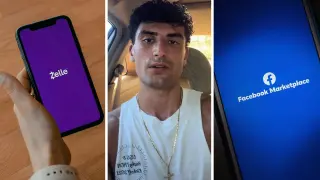
An ICU nurse’s viral TikTok reveals a Facebook Marketplace couch sale trick: scammers claim a $300 Zelle payment was flagged as fraudulent and push the buyer to send another $300 after a spoofed Zelle email, with transfers being irreversible. The incident underscores a broader rise in peer‑to‑peer fraud; Zelle warns to only send money to people you know, and Facebook suggests using Facebook Pay (which offers protections) instead of Zelle for Marketplace transactions.