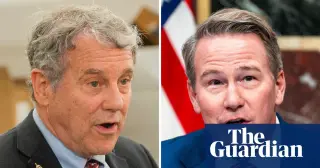
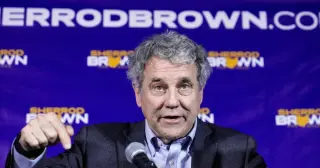
Ohio's 2026 Senate race between Sherrod Brown and Jon Husted hinges on two distinct voter groups: disengaged Black men in Cleveland and disillusioned white working-class voters in Mahoning County. Data shows significant non-voting among Black residents, while Trump's approval is dropping in Rust Belt areas due to unmet economic promises.
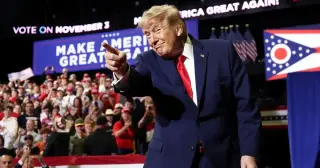
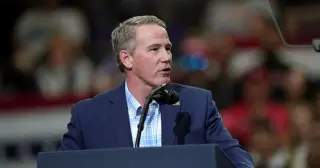
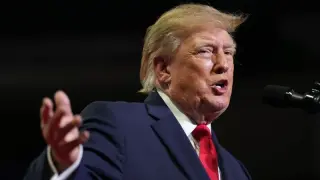
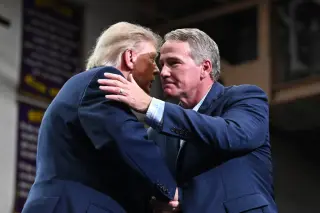
President Donald Trump campaigned in Youngstown, Ohio, on Monday to support Republican Senate nominee Jon Husted and gubernatorial candidate Vivek Ramaswamy. While Trump claimed the state has permanently shifted to the right, Democrats argue that economic dissatisfaction and foreign policy mismanagement are eroding Republican support in working-class counties. The rally drew a smaller crowd than previous visits, with Trump promising new industrial investments and criticizing his Democratic opponents.
The 2026 Ohio Senate race between Republican Jon Husted and Democrat Sherrod Brown is the most expensive in the nation, with over $400 million spent on advertising. Despite a significant Republican spending advantage, Brown leads polls by nearly 4%. The contest centers on affordability, data center costs, and the Iran conflict, with Husted citing recent high-profile visits as momentum while Brown blames the war for rising prices.
A bipartisan backlash against the rapid expansion of AI data centers is reshaping the 2026 Ohio Senate race. While President Trump champions the infrastructure as vital for national security, local voters and even some Republicans are opposing the projects due to rising energy costs and environmental concerns. This shift has intensified the contest between incumbent Republican Sen. Jon Husted and former Democratic Sen. Sherrod Brown, with data centers becoming the central issue in a previously reliable red state.
President Trump campaigned in Youngstown, Ohio, to support vulnerable Republican candidates in tight Senate and gubernatorial races. Despite a smaller crowd than previous visits, the rally featured aggressive attacks on Democrats and immigration, while early voting data suggests a surge in Democratic participation.
President Trump campaigned in Youngstown, Ohio, on October 12, 2026, to support Republican Senate nominee Jon Husted in a tight race against former Senator Sherrod Brown. The rally featured attacks on immigrants and Democrats, with Trump praising Husted’s appearance while facing protests and empty seats in some sections.
Early voting data in Ohio indicates a significant shift toward Democratic participation, particularly in counties that strongly supported Donald Trump in 2024. While the overall electorate is 27 points more Democratic than at this stage in 2024, the Republican lead in the state's most conservative areas has narrowed from 30 points to just five. This trend supports a positive midterm environment for Democrats, including former Senator Sherrod Brown, who leads his opponent in polls, though analysts caution that final results remain uncertain due to late Republican voting patterns.
Ohio Democrat Sherrod Brown blamed a Meta advertising error for losing thousands of votes and dollars, while the Senate blocked a bill to restore $810 million in federal funding and a data center cost measure. Republicans also failed to pass an AI deepfake law and a stock trading restriction, as Democrats cited insufficient protections. The Senate is set to recess for midterms, with no consensus on a spending bill.
Senate Democrats are debating whether to advance the Ratepayer Protection Act, a bill championed by embattled Ohio Republican Sen. Jon Husted. While the measure passed the House with broad bipartisan support, Senate Democrats view it as a strategic move to rescue Husted’s reelection campaign against Sherrod Brown. The bill would require states to consider frameworks ensuring data centers pay for their own energy costs, but critics argue it lacks mandatory enforcement. The vote is expected to influence midterm campaign narratives regarding energy affordability and corporate accountability.
The crypto industry is escalating its political spending ahead of the 2026 midterms, with super PAC Fairshake committing at least $30 million to defeat Democratic Senator Sherrod Brown in Ohio. This move follows the unanimous Senate rejection of the Clarity Act, a key regulatory bill for digital assets. While Fairshake maintains a bipartisan stance, the heavy spending against a prominent Democrat risks alienating the party, potentially jeopardizing future legislative cooperation. The industry holds over $120 million in reserves, but internal debates continue over whether to prioritize partisan attacks or maintain bipartisan support to revive stalled legislation.
Crypto-backed super PAC Fairshake is deploying $30 million to defeat Democrat Sherrod Brown in the Ohio Senate special election, marking its largest 2026 expenditure. The move follows the Senate’s failure to pass the CLARITY Act, which Brown opposed as Banking Committee chair. Brown’s campaign accuses the industry of punishing Democrats for blocking industry-friendly legislation, while Fairshake seeks to secure a regulatory framework for digital assets.
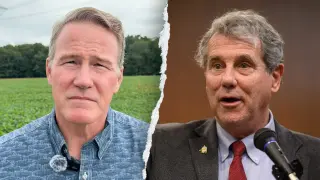
Sherrod Brown is seeking a second chance in the Ohio Senate race against Jon Husted, a contest defined by economic anxiety, data center disputes, and a shift in the state’s political landscape. Brown, a 73-year-old former senator, faces a tougher environment than in 2024, with high gas prices and trade tensions fueling voter discontent. While Democrats need to net four Senate seats to regain control, Ohio remains a challenging target where no Democrat has won a statewide office since 2008. The race is heavily funded, with both sides spending tens of millions, and features attacks over transgender issues and energy costs. Brown’s campaign emphasizes economic hardship, while Husted positions himself as a pragmatic alternative to Brown’s long tenure. The outcome could hinge on whether voters prioritize economic relief or party loyalty, particularly in working-class areas that have shifted toward Republicans in recent years.
Former Sen. Sherrod Brown won Ohio’s primary and will face unopposed Republican Jon Husted in November, setting up one of the cycle’s costliest Senate races as Democrats seek to flip the seat; Brown leads in fundraising and cash on hand, and both parties have booked enormous ad reservations, underscoring Ohio as a key battleground for control of the Senate.
Democrat Sherrod Brown and Republican Jon Husted won Ohio’s primaries, advancing to a high-profile November Senate race to fill the remainder of the term left by JD Vance. Husted ran unopposed; Brown faced a single challenger. The contest is expected to attract substantial outside spending as Democrats aim to flip seats and expand their Senate presence, with Ohio also featuring a key gubernatorial race and a vulnerable Rep. Marcy Kaptur race.
Former Sen. Sherrod Brown won the Democratic nomination in Ohio’s special Senate race, clearing the path to a costly general election showdown against Republican Jon Husted. Brown, making a comeback after a 2024 loss, was recruited by Senate Democratic Leader Chuck Schumer and enters a race anticipated to be among the most expensive in the country. Brown held an early fundraising edge, but outside money is expected to flood the race. Both candidates released their first TV ads: Husted’s spot emphasizes his background and job growth while drawing contrasts with Brown, with the ad noting Epstein-linked donations; Brown’s ad does not feature him. The Ohio contest is viewed as a key pickup opportunity for Democrats in their bid to regain Senate control.