South Korea's Kospi index fell 7.4% on October 13, 2026, hitting its lowest level since late July. The decline was driven by a sharp sell-off in memory chip stocks, including Samsung Electronics and SK Hynix, amid fears of Chinese competition and a broader rotation of capital away from Korean equities toward diversified AI supply chains in Taiwan.
South Korea's Kospi index dropped 7.4% on October 13, hitting its lowest level since late July. The decline was driven by a sharp sell-off in memory chip stocks, including Samsung Electronics and SK Hynix, amid fears of Chinese competition and a broader rotation of capital away from Korean equities toward diversified AI supply chains in Taiwan.
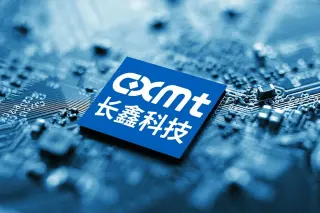
Shares of Samsung and SK Hynix declined after reports indicated that Chinese chipmaker ChangXin Memory Technologies (CXMT) is making progress in developing next-generation memory technology. This development has raised concerns among investors about increased competition in the global memory chip market, particularly as Korean semiconductor stocks have faced significant foreign capital outflows this year.
Micron Technology and SK Hynix shares declined overnight following reports that Chinese chipmaker ChangXin Memory Technologies (CXMT) is advancing next-generation DRAM technology. Micron’s stock fell 4.19% to $985.87, while SK Hynix also saw a drop, reflecting market concerns about increased competition from Chinese producers in the memory chip sector.
Foreign investors have withdrawn $131 billion from South Korean equities in 2026, the largest outflow among major Asian markets, as enthusiasm for AI-related investments cools. The benchmark Kospi index has fallen 22% in the second half of the year, reversing its status as the world's top-performing market in the first half. Trading turnover in the $4.3 trillion equity market has dropped 70% from its late-May peak. Samsung Electronics and SK Hynix, which account for over half the index's weighting, are central to this volatility. While Samsung reported a nearly ninefold increase in quarterly operating profit, its shares still declined, signaling deepening investor concerns about the sustainability of the semiconductor boom. Corporate buyback programs worth 55 trillion won are nearing completion, and retail participation has waned, with margin loans falling to 33 trillion won from a June peak of 38.6 trillion won. Capital is rotating toward Taiwan, whose Taiex index gained 70% this year, outperforming the Kospi by 23 percentage points last quarter due to a more diversified AI hardware ecosystem.
Samsung Electronics reported a record third-quarter operating profit of 107.4 trillion won ($80.1 billion), up 782% year-over-year, driven by surging AI memory demand. Despite the historic high, shares fell 2.4% as results missed the top end of analyst forecasts. Revenue reached 195 trillion won, marking the fourth consecutive quarter of record profits. Detailed results are due October 29.
Micron Technology prepares for its fiscal fourth-quarter earnings report on September 30 amid strong signals from peers indicating a prolonged memory shortage. Nvidia’s CFO described memory pricing as 'extreme' and rising, while SK Hynix predicts supply-demand balance will not occur until 2030. These developments suggest Micron’s high-bandwidth memory (HBM) pricing tailwind may persist, despite concerns about cyclical downturns in 2027.
Intel shares jumped 4% after reports that SK Hynix is in early talks to produce memory chips at Intel’s Ohio complex. However, no deal is signed, the facility is years from opening, and South Korea’s export controls on high-bandwidth memory may limit the product mix. Intel’s Foundry unit still faces significant losses, making the long-term viability of this partnership uncertain.
SK Hynix and Intel are in early, exploratory talks regarding potential U.S. memory chip production, a move that could challenge Micron Technology's dominance in the American market. According to Reuters, discussions involve either SK Hynix leasing part of Intel's Ohio facility or forming a joint venture with major cloud firms. While SK Hynix confirmed the talks are ongoing, it stated that no specific plans or decisions have been finalized. Intel shares rose 5% and SK Hynix shares climbed 2% on the news. This development follows Micron's recent surge in value due to AI-driven memory demand, though analysts note that Chinese competitor YMTC also poses a growing threat to Micron's global market share.
SK Hynix and Intel shares climbed in premarket trading after Reuters reported that the memory giant is in exploratory talks to manufacture chips in the U.S. via Intel. While SK Hynix confirmed it is reviewing options to boost global competitiveness, the company stated no specific plans or decisions have been finalized. Intel’s stock rose 5%, while SK Hynix’s Nasdaq-listed shares gained approximately 2%, reflecting market optimism about a potential foundry partnership that could benefit Intel’s manufacturing business and advance U.S. semiconductor production goals.
SK hynix CEO Kwak Noh-Jung stated that the global memory shortage will persist through 2030, extending previous forecasts. The shortage is driven by AI demand for customized HBM, which consumes more wafer capacity than standard DRAM. A new $4 billion Indiana packaging facility will begin operations in 2028, but will not increase wafer production.
Global DRAM prices have surged 401% year-over-year, with one kilogram of memory chips now valued at roughly 620 grams of 24-karat gold. This spike is driven by major manufacturers shifting production to high-bandwidth memory for AI data centers, causing shortages in consumer electronics. The cost increase has led to higher retail prices for computers and generous bonuses for chipmaker employees.
SK Hynix breaks ground on a $4 billion Indiana packaging plant—the first U.S. facility for memory packaging—to position Indiana as a key source of high-bandwidth memory (HBM) by 2030, with chips manufactured in Asia and shipped to Indiana for packaging. The project is supported by CHIPS Act funds and state incentives, will create about 1,000 direct jobs plus thousands more in construction and partners, and is part of a broader U.S. expansion alongside ongoing capacity growth in Korea.
SK Hynix’s shares surged more than 12% in Seoul after the company accelerated a 40 trillion won share repurchase and cancellation program and aims to lift shareholder returns to over 50% of cumulative free cash flow for 2025–2027, signaling confidence in mid-to-long-term growth despite current memory-sector headwinds. The move follows a plan to invest 54 trillion won to build new memory-chip plants, as other Asian tech stocks rose on market-wide gains and softer U.S. yields supported risk appetite.
SK Hynix approved roughly 54 trillion won ($38B) to build two new memory fabs in South Korea (DRAM Yongin Y2 and NAND Cheongju M17) to meet AI-driven demand, sending the stock about 5% lower as Seagate (-7%) and Micron (-2%) slide; the Roundhill Memory ETF is down around 2%. The company argues the capex supports a structural memory shortage in 2027, but investors worry about potential oversupply next year, with a shareholder-return update likely delayed to Q3 2026.