Apple’s long-running plan to design and own its processor cores for iPhone and other devices has sharpened hardware-software integration and given the company a durable competitive edge, with newer chips like the A20 Pro expanding AI capabilities and reinforcing its leadership in chip design.
Broadcom stock has fallen about 30% from its June peak ahead of third-quarter results, as Barron’s notes the company could face up to $29 billion in lease obligations if data-center lessees default. Google’s deal with Marvell to design other chips for its AI infrastructure adds headwinds to Broadcom’s future sales, even as Broadcom remains a major AI data-center supplier. Analysts expect roughly 70% earnings growth this year and next, and a strong quarterly report could reset investor sentiment despite lease risks and competitive pressure.
Nvidia uses record chip profits to finance and accelerate the AI ecosystem, funding hundreds of billions in AI infrastructure and acquiring Hugging Face for $13B as it positions itself as an end-to-end AI factory platform. The move aims to sustain a self-reinforcing cycle where more compute spurs more demand for Nvidia’s chips, though critics warn the flywheel could be circular as rivals build their own chips. Nvidia’s data-center business remains the engine, accounting for the vast majority of revenue, with projections of substantial growth ahead.
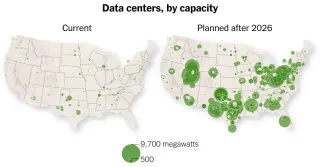
A global surge of AI-focused data centers is unleashing a power surge for artificial intelligence. The number of AI chips in use is expected to approach 200 million by 2028 (from about 20 million today), with hundreds of new data centers coming online and chip production accelerating to support both training and real-time inference. This shift, driven by the Scaling Laws idea that more compute yields disproportionately better AI, positions the U.S. as the current power leader while China narrows the gap and Europe lags on infrastructure. Global AI infrastructure spending is forecast to top $1 trillion by 2029, underscoring a race to dominate the underlying compute fuel for future breakthroughs—and sparking concerns about energy use, environmental impact, and the potential disruption to jobs and politics.
The Trump administration has invested roughly $27 billion across about 30 equity deals in companies from Intel to quantum startups, with stakes spread across four agencies (Commerce, Defense, DFC, Energy). There is no consolidated public ledger, and many holdings sit in opaque term sheets or agency books, making transparency a challenge. The Intel stake is the largest, valued around $42 billion, while other stakes—often in private firms—lack SEC filings. The Development Finance Corporation is the closest thing to a formal equity framework, but overall the portfolio operates with little oversight—reminiscent of past programs like TARP—leaving taxpayers with limited, hard-to-track returns.
Scientists tracking Carnaby’s black cockatoos in Western Australia’s Wheatbelt over three breeding seasons found pesticides in about 80% of seed samples from feeding sites near grain silos, with some samples hundreds of times above legal limits and 26 pesticides detected including neurotoxic chemicals. GPS data showed birds repeatedly visiting contaminated feeding areas, linking exposure to CHiPS (Carnaby’s Hindlimb Paralysis Syndrome). The study calls for a review of Australian pesticide regulations and suggests simple industry changes, like better grain handling and spill cleanup at silos, to reduce wildlife exposure.
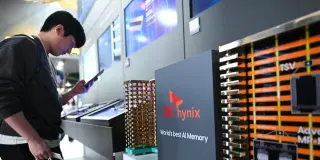
SK Hynix's U.S.-listed ADRs jumped in early trading after a 14% drop the prior session, aided by Korea’s market holiday that kept the underlying stock closed and encouraged U.S. bargain-hunting. ADRs traded at roughly a 27% premium to the Seoul shares, reflecting the size of the U.S. investor base, and Barron’s notes the stock’s forward P/E is low relative to Micron, offering a cheaper way to play the memory-chip upcycle.
TSMC is set to report its Q2 results before the U.S. market opens, with analysts expecting a sharp year‑over‑year profit rise and the company’s $165 billion in U.S. investment; the guidance will be a crucial gauge of whether AI‑chip demand can keep lifting the chip sector and whether U.S.-made chips can sustain margins against Taiwanese peers.
Meta shares surged about 6% on Friday and roughly 15% for the week as optimism grows around its AI strategy, following releases of Muse Image and Muse Spark 1.1 and plans for in-house Iris AI chips; investors see potential monetization through ads, subscriptions, and a cloud offering, with capex guidance raised as Meta accelerates its push into AI infrastructure and data centers.
Bloomberg reports two high-end Macs launching this fall: a touchscreen MacBook Ultra with OLED, a new design, and M5 Pro/Max chips, plus a refreshed MacBook Pro with an M6 chip; Apple is also reportedly skipping M6 Pro/Max in favor of moving quickly to an M7 lineup.
Industry executives say the surge in AI-driven demand for memory and storage chips is lifting component costs, forcing price hikes on electronics. Apple’s Tim Cook warned iPhone prices will be higher, and other companies (including Dell, Microsoft's Xbox unit, Ford) have signaled rising costs for components, suggesting broader price increases across devices in the near term.
A Trump Truth Social post claiming Apple will design and build chips with Intel in the U.S. caused Intel shares to jump about 11%, but neither Apple nor Intel has confirmed any deal or disclosed terms. The move highlights Intel’s turnaround and potential marquee foundry customers, but with no official confirmation and a lofty valuation, investors should wait for concrete news before acting.
Trump asserted on Truth Social that Apple and Intel have closed a deal to design and manufacture chips in the United States, though neither company has confirmed the news; prior reporting described a preliminary agreement for Intel to produce Apple processors at U.S. fabs in Oregon, Arizona, and Ohio, with TSMC remaining a major supplier. Production tests were expected in 2026 with full production later, and the US government reportedly holds a 10% stake in Intel tied to CHIPS Act funding.
Asian stocks retreated as investors locked in tech profits and chipmakers led losses in Japan and South Korea, with the Nikkei 225 and KOSPI dropping on chip-related concerns while markets weighed BOJ rate-hike expectations and awaited U.S. payroll data.
Intel unveils an expanded AI portfolio including rack-scale inference around Xeon and SambaNova SN-50, a disaggregated setup using Xeon, SambaNova RDUs and NVIDIA Blackwell GPUs, and Vector Core Compute cloud; it also announced strategic partnerships with Foxconn, Siemens, Hitachi, Echo Neurotechnologies and Greenstone Biosciences to deliver vertical AI solutions for data-center and enterprise workloads.