
Anthropic IPO and Hawkish Fed Signals Drive Mixed Market Reaction
Markets rallied on Anthropic's IPO, lifting tech stocks, while Fed Governor Waller's hawkish comments pressured commodities and boosted the dollar.

All articles tagged with #stocks
Markets rallied on Anthropic's IPO, lifting tech stocks, while Fed Governor Waller's hawkish comments pressured commodities and boosted the dollar.
Earnings season stays extraordinary as Broadcom posts an 86% revenue jump and a near-double EPS surge, driven by hyperscaler demand for AI chips; Dell and Nvidia also boost outlooks, while HPE reports strong AI server demand and a rising backlog. Management foresees multi-year AI semiconductor demand running into the trillions in dollars, with Broadcom flagging roughly $350 billion to ship to key hyperscaler customers in the next two years. The window on AI spending remains wide open, and investors are eyeing tech conferences (including Goldman Sachs’ Communacopia) for more signs, with potential OpenAI and Anthropic IPOs on the horizon.

Yahoo Finance argues Lululemon’s stock decline stems from a bungled leadership transition: CEO Heidi O’Neill’s start date was pushed to Sept. 8, leaving interim co-CEOs to steer through inventory issues and missteps that have eroded market share to newer brands. The company posted weak Q2 results and slashed full-year guidance, forecasting a 10%–11% revenue drop and a 20% plunge in leggings sales, contributing to a roughly 20% drop on the day and a 42% decline this year as analysts warn a long turnaround may be needed.
September kicks off with historically weak seasonality for both US stocks and crypto after an August rally: the S&P 500 rose over 2% to record highs while Bitcoin and Ethereum surged about 25% and 32% respectively. Historically, September can bring declines for the S&P 500 and for crypto, though recent Septembers have shown momentum. With macro headwinds like inflation running above target and upcoming midterm risk, traders should expect renewed volatility as policy signals and earnings drive markets.
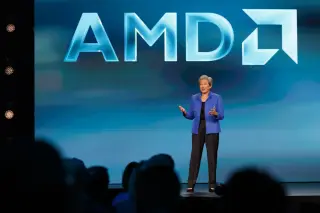
A Raymond James analyst upgrades AMD to Strong Buy with a $641 target, implying about 40% upside from current levels, citing AMD’s AI chips, Instinct MI450 GPUs and Helios data-center systems as catalysts amid strong data-center demand. AMD also posted a solid Q2 beat (non-GAAP EPS of $1.66, revenue $11.5 billion) and projects robust server CPU sales growth into 2027, with key deals including Microsoft Azure AI deployment and a large investment in Anthropic that could bolster AI deployments against Nvidia.

History shows the one winning move in bear markets is to keep buying during declines rather than panic-sell. By buying at lows (as seen in 2022 with Amazon and Nvidia), patient investors have captured substantial gains as markets recover, so the advised strategy is to stay invested and keep cash ready for opportunities.

Chevron Corporation is approaching its next ex-dividend date, marking nearly four decades of consecutive annual increases. This long-standing payout history distinguishes it from many peers in the energy sector, which have often adjusted dividends during commodity downturns. The company’s integrated business model, spanning upstream production and downstream refining, provides a buffer against price volatility. While broader markets trade near record highs, energy names like Chevron offer stability through disciplined capital allocation and conservative debt management. This consistency makes it a focal point for income-focused investors seeking reliability over rapid growth.

Despite trillions in defense spending and big backlogs, major defense contractors have fallen as investors doubt that higher budgets will quickly lift earnings, while a wave of VC-backed defense startups aims to capture future Pentagon dollars—potentially rewarding early bets before a sustained, contract-driven windfall materializes.

Paramount and Warner Bros. Discovery won’t close their $110 billion merger until at least June 1, 2027 or until the antitrust lawsuit’s merits are resolved, sending both stocks lower after hours as opponents cheer the delay and observers see a protracted, costly path ahead.

Tesla and SpaceX shares fell in the week ahead of SpaceX's 13th Starship test flight, with Tesla down about 18% and SpaceX around 7%, erasing roughly $130 billion of Elon Musk’s wealth; Tesla cited weaker Q2 results and heavy capex, while weather delays postponed the Starship V3 launch as SpaceX pursues a fully reusable rocket for Starlink and future crewed missions.
Stock futures edged higher as oil prices retreated, easing inflation concerns; Intel rose after a better‑than‑expected earnings report, while SpaceX faced another Starship testing delay, and Verizon, Oracle, SAP, Tenet, and Amex helped illustrate today’s market leadership and breadth—showing a mix of gains in tech and financials with mixed moves in other sectors.

U.S. stock futures slipped modestly as investors weighed Alphabet’s higher 2026 AI-capex forecast and rising oil prices after Middle East tensions, with the Dow, S&P 500, and Nasdaq edging lower in regular trading. A busy earnings slate ahead includes Dow components and rail firms, while Asia-Pacific markets opened higher on the day.
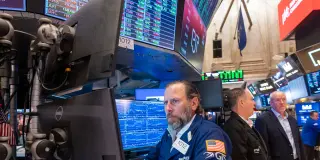
Stocks were mostly range-bound ahead of key earnings from Alphabet, Tesla, and IBM as AI and oil themes influenced trades. Super Micro Computer jumped 24% after doubling its Q4 gross-margin guidance, leading the day, while Dell Technologies (+10%) and Hewlett Packard Enterprise (+4.5%) rose as Intel dipped. Energy names climbed on higher oil prices, lifting Chevron and Exxon Mobil, and Nvidia and Western Digital posted modest gains. On the downside, ServiceNow fell about 5.7% and Pegasystems sank ~16% on AI-market concerns, with GE Vernova down about 7.5%. AT&T rose ~2.6%.

Nebius stock jumped about 17% after Nvidia disclosed a 9.3% stake in the Amsterdam-based neocloud, underscoring Nvidia’s growing role in funding AI infrastructure and Nebius’s roughly 250% rally over the past year. Nvidia had previously pledged $2 billion to Nebius, and the two will collaborate on AI infrastructure deployment, fleet management, inference and AI factory design. Nebius has landed major deals, including a long-term agreement with Meta to spend up to $27 billion on Nebius’ AI infrastructure, helping it reach a market cap around $46 billion.
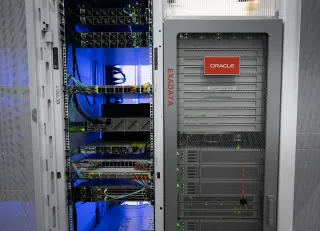
Oracle's stock has fallen more than 50% since June, trading around a forward P/E of 15.5x, as investors weigh whether the AI-growth story is already priced in amid data-centers spending and stiff cloud competition. The company remains in demand for cloud infrastructure and AI compute, but execution risk, margins, and a debt downgrade keep the outlook uncertain, even as many analysts stay broadly bullish.