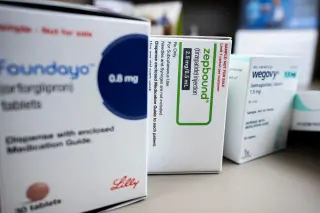
Novo Nordisk and Hims ended their dispute and formed a partnership in which Hims will sell Ozempic and Wegovy at Novo’s price, while Novo Nordisk dropped its lawsuit; the deal aims to curb compounded GLP-1 copycats and ease access as FDA scrutiny and price reductions reshape the market, though affordability and access remain uneven for many patients.
Hims & Hers Health Inc. shares jumped in premarket trading after media reports that Novo Nordisk plans to sell obesity drugs through Hims & Hers' telehealth platform as part of a potential partnership between the two companies.
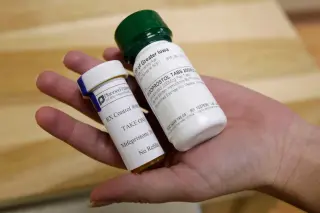
The FDA issued 30 warning letters to telehealth companies for misleading marketing of compounded GLP-1 products, the second wave in a crackdown on direct-to-consumer pharmaceutical ads. The letters allege claims of sameness with FDA-approved products and branding that obscures sourcing. Compounded drugs are not FDA-approved and are not the same as generics, as the FDA does not review their safety or efficacy before marketing.
Hims & Hers Health reported mixed Q4 and full-year 2025 results: EPS of $0.08 beat consensus of $0.04 but down 27% year-over-year, while Q4 revenue rose 28% to $617.8 million but missed estimates of $619.2 million. U.S. revenue climbed 17% to $554.15 million, with international revenue up about 825% as it expands globally. Monthly revenue per average subscriber rose 11% to $83. For 2026, the company guided Q1 revenue of $600–$625 million and adjusted EBITDA of $35–$55 million, with full-year revenue of $2.7–$2.9 billion, aiming for longer-term targets of $6.5 billion in revenue and $1.3 billion in Adjusted EBITDA by 2030; stock moved lower in after-hours trading amid the mixed results.
America’s use of anxiety medications jumped from 11.7% of adults in 2019 to 14.3% in 2024—roughly 38 million people—driven by easier telehealth access and pandemic-related stress. SSRIs like Lexapro, Prozac, and Zoloft are frontline treatments for disorders such as generalized anxiety and panic, with studies showing meaningful relief for many despite side effects; experts caution that they are most effective when paired with therapy, and note benzodiazepines carry dependence risks. Public figures, including RFK Jr., have questioned expanding SSRI use and potential links to behavior or pregnancy outcomes, fueling a broader debate about medicalization, safety, and access. The rise is greatest among young adults, women, and those with higher education or LGBTQ+ identification, while talk therapy and broader mental-health support also grew during this period.
Telehealth company eMed is partnering with CVS Caremark to let employers offer GLP-1 obesity meds to workers via online prescriptions with comprehensive weight-management support; employers can subsidize the drugs to varying degrees, with prices touted as the market’s most cost-effective option. Aon piloted a similar program for its staff, and CVS sees the move as expanding access through its PBM network for up to 30 million Americans. The program combines online cash purchases with secondary coverage to help keep workplace health costs in check, backed by continuous clinical support and monitoring to improve adherence and outcomes.
A lawsuit filed by Strive Specialties alleges Eli Lilly and Novo Nordisk blocked telehealth partners to curb compounded GLP-1 therapies, potentially impacting about 1.5 million U.S. patients who rely on cheaper, personalized versions of Wegovy/Ozempic. The plaintiffs say these agreements limit prescriber choice and patient access, while the drugmakers argue the deals target mass-produced copies. Novo Nordisk has highlighted the past Hims & Hers partnership ended after compounded Wegovy issues, and Lilly labeled the suit a bid to divert attention from Strive’s own conduct. The case underscores ongoing tensions between compounded vs. branded GLP-1 drugs, access, and pricing in the weight‑loss market.
Medicare will end broad telehealth coverage on Jan. 31, 2026, generally requiring beneficiaries to be in a medical facility in a rural area for telehealth visits, with exceptions for ESRD home dialysis, acute-stroke evaluations, and certain home-based behavioral health services. Through Jan. 30, 2026, telehealth remains nationwide; after the deadline, many seniors may need in-person visits or rely on a Medicare Advantage plan that continues coverage in some cases.
Lawmakers from both parties are negotiating a broader health package tied to a government funding bill, aiming to renew expired ACA subsidies, but GOP opposition makes a clean subsidy extension unlikely. Separately, a Senate PBM overhaul appears to be gaining momentum, while abortion-funding audits and other divisive issues keep prospects for a deal uncertain—suggesting any agreement may not include subsidies.
Vermont has received a $195 million federal grant from the Rural Health Transformation program to improve rural healthcare, including workforce development and telehealth expansion, as part of ongoing health reform efforts, with the funds to be rapidly utilized for initiatives like staffing and telehealth services.
Overdose deaths in the U.S. are declining due to expanded access to medications, telehealth, and community programs, but this progress is at risk if Congress does not act to preserve and expand these policies in 2026.
Starting in January, UnitedHealthcare will cease paying physicians for remote monitoring of chronic conditions like hypertension, citing insufficient evidence of efficacy, which impacts many members and follows recent criticism over coverage decisions; exceptions include monitoring for heart failure and hypertensive disorders during pregnancy.
Telehealth has evolved from a tool for accessible medical consultations to a major marketing platform for direct-to-consumer drug sales, with ads for various medications like erectile dysfunction and weight loss drugs becoming ubiquitous in city environments, reflecting a shift towards drug-first approaches in digital healthcare.
The government shutdown will not stop core health programs like Medicare and Medicaid, but it may disrupt services such as telehealth for seniors and impact funding for community health centers and public health surveillance. The continuation of Obamacare subsidies is uncertain, which could lead to higher premiums and reduced enrollment. Overall, the shutdown poses risks to public health services and vulnerable populations if it persists.
The U.S. government shutdown began on October 1 due to failed budget negotiations, affecting healthcare services like telehealth and hospital-at-home programs, with significant furloughs at HHS and potential disruptions in healthcare oversight and funding. Healthcare leaders are concerned about program lapses and workforce impacts, with no immediate resolution expected until Congress reconvenes.