Laughter's steady rhythm traces the evolution from apes to human speech
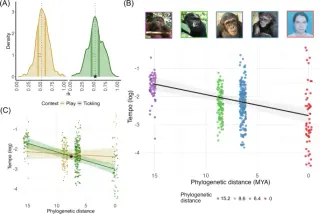
A cross-species study of laughter in orangutans, gorillas, bonobos, chimpanzees, and humans finds laughter isochronous across extant great apes, with tempo accelerating and variability increasing over roughly 15 million years of hominid evolution. Tickling-induced laughter is more regular than play, and humans show the most context-sensitive tempo changes, indicating progressive gains in vocal control that likely paved the way for speech and language.