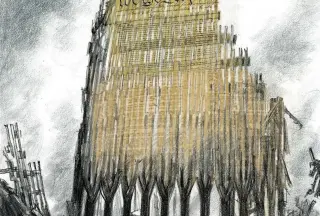
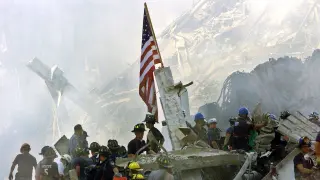
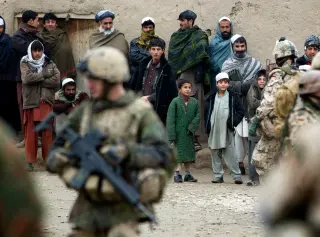
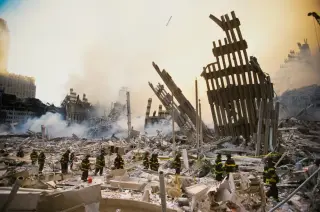
Marking the 25th anniversary of the September 11 attacks, media outlets have curated lists of films and documentaries that capture the era's emotional and political fallout. While narrative films like '25th Hour' and 'United 93' explore grief and heroism, documentaries from PBS and others trace the long-term consequences of the 'war on terror,' including surveillance, torture, and the Iraq War.
Marking the 25th anniversary of the September 11 attacks, major outlets are evaluating the legacy of the post-9/11 era. While the US successfully prevented another large-scale domestic attack, critics argue the 'War on Terror' was strategically unwinnable and has resulted in massive human and financial costs. The consensus is that while military objectives were partially met, the ideological and political goals were largely failed, leading to a more fragmented global threat landscape and deep domestic polarization.
Twenty-five years after the September 11 attacks, the US has spent trillions and lost hundreds of thousands of lives in a global campaign that experts say was never winnable. While domestic security has improved, the war has displaced millions, fueled new extremist networks, and reshaped American society in ways that persist today.
On the 25th anniversary of the September 11 attacks, global discourse has shifted from mourning the 2,977 victims to scrutinizing the long-term consequences of the US-led War on Terror. While the initial response was characterized by unity, the subsequent two decades of military campaigns in Afghanistan, Iraq, and beyond have resulted in millions of deaths, mass displacement, and significant domestic policy shifts. Critics argue that the narrative of righteous victimhood has obscured the human cost of these conflicts, while others acknowledge the security gains achieved against al-Qaeda.
Twenty-five years after the September 11 attacks, a comprehensive review of the subsequent US-led wars reveals a catastrophic human and economic cost. According to the Costs of War project at Brown University, these conflicts have resulted in approximately 4.5 to 4.7 million deaths and displaced over 38 million people. While the initial response to 9/11 was viewed as heroic and unifying, the long-term legacy is characterized by isolation, massive debt, and unresolved security threats. The financial burden is estimated at $8 trillion, with significant portions still unpaid for veteran care. Critics argue that the post-9/11 era institutionalized panic, leading to policies that weakened the US globally and failed to address other critical global challenges.
Marking the 25th anniversary of the September 11 attacks, major media outlets are reflecting on the event's enduring impact. PBS FRONTLINE has curated a collection of 25 documentaries and podcasts detailing the intelligence failures, wars, and surveillance programs that followed. Meanwhile, film critics debate why Hollywood has failed to produce a definitive cinematic masterpiece about the day, noting that while many films alluded to the era's anxiety, none have fully captured its complexity. Deadline highlights how the attacks reshaped the entertainment industry, from the rise of the show '24' to the personal losses of industry figures.
Netflix's new documentary, 'Turning Point: Generation 9/11,' explores how the 2001 attacks shaped the world for those too young to remember them. Directed by Brian Knappenberger, the film focuses on the long-term impacts of the War on Terror, surveillance, and social division rather than the events of the day itself.
The article examines how Dick Cheney's aggressive pursuit of presidential power and his disdain for constitutional checks helped shape the modern presidency, ultimately paving the way for Donald Trump's rise and approach to governance, despite Cheney's later opposition to Trump.
The article discusses how President Trump is integrating military tactics from the war on terror into the fight against drug cartels in Latin America, including designating criminal groups as terrorist organizations and conducting military strikes, exemplified by a recent attack on a Venezuelan drug boat and increased military presence in the region.
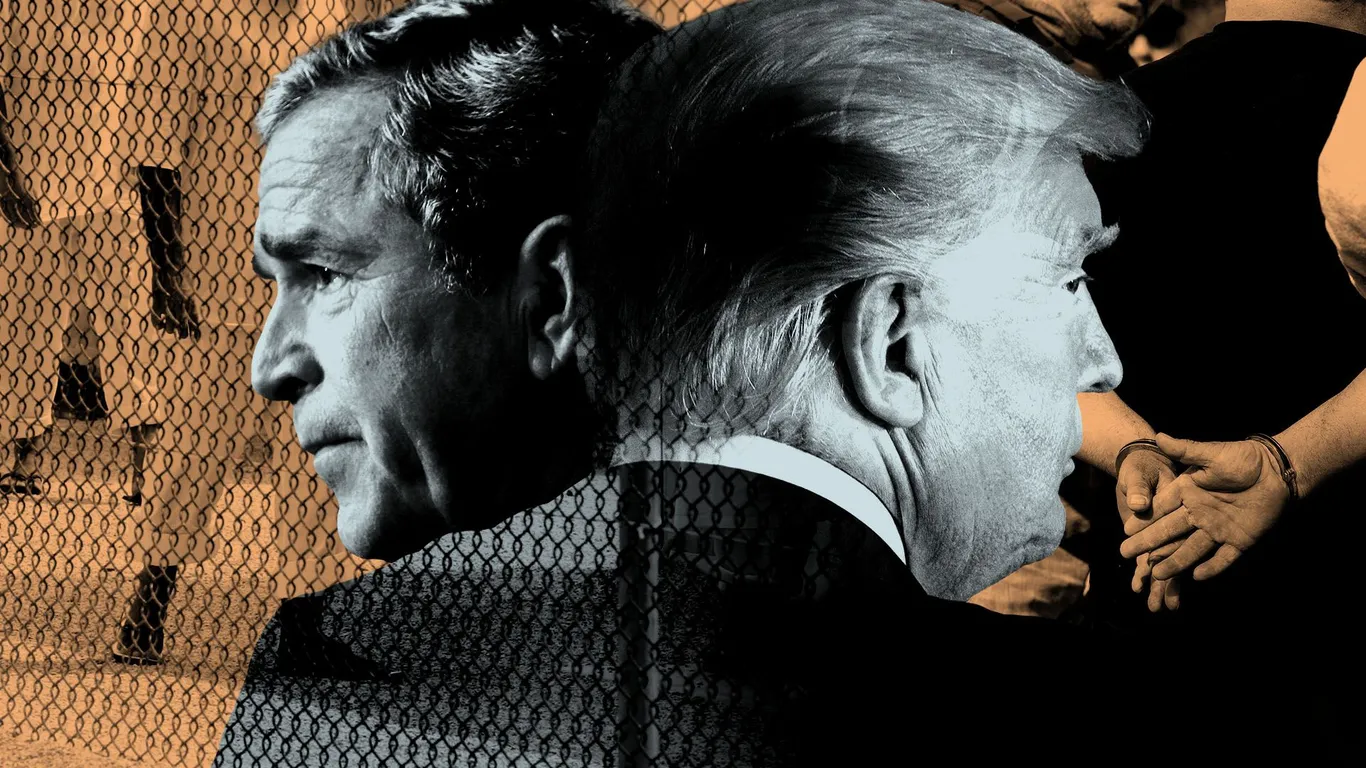
The article compares Donald Trump's post-9/11 policies to those of George W. Bush, highlighting similarities in surveillance, military actions, detention practices, and legal strategies, while noting broader scope and more aggressive deportation efforts under Trump.
In the early 2000s, Southeast Asia faced a significant threat from Jemaah Islamiyah (JI), a group linked to al-Qaeda and responsible for multiple terror attacks. However, through targeted counterterrorism efforts, including the enactment of antiterrorism legislation, arrests, and the creation of specialized units, governments in the region, particularly Indonesia, effectively curtailed the regional threat. The success can be attributed to a combination of factors, including political will, intelligence sharing, deradicalization programs, and the fracturing of JI due to internal disputes. While JI remains active, its focus has shifted to non-violent activities. However, the threat of terrorism in Southeast Asia persists, with other groups like Jamaah Ansharut Daulah (JAD) emerging. The region remains vigilant, as the emergence of new leaders or changes in the global environment could quickly alter the landscape.
The US Senate has voted to repeal the legal authorisation for the 2003 Iraq War, as well as a 1991 Iraq AUMF that coincided with the Gulf War, in a move hailed by critics who have long called for legislators to address the legal architecture of Washington’s post-September 11, 2001, “war on terror”. The move represents the first time since the 1970s that the Senate has voted to revoke an authorisation for presidential use of force. The House of Representatives is expected to face a steeper battle, but observers agree that the repeal has a reasonable chance.