Tag

Fossil

All articles tagged with #fossil

Crab-Clawed Amber Insect from 100 Million Years Ago Redefines Insect Evolution
science8 days ago

Crab-Clawed Amber Insect from 100 Million Years Ago Redefines Insect Evolution

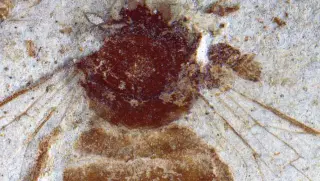
A 100-million-year-old true bug preserved in Myanmar amber reveals front legs ending in crab-like claws, a rare feature found in only a few insect groups. Using micro-CT, researchers assign a new genus and species, Carcinonepa libererrantes, and infer a predatory lifestyle in a Cretaceous forest; the claws illustrate convergent evolution across distant lineages, highlighting the diversity of ancient ecosystems.

66-Million-Year-Old Dino Bone Reveals Surviving Collagen
science10 days ago

66-Million-Year-Old Dino Bone Reveals Surviving Collagen

A Liverpool-led study of a 66-million-year-old Edmontosaurus sacrum detected remnants of collagen and the amino acid hydroxyproline in a remarkably preserved fossil, using multiple analytical methods to rule out contamination. The findings suggest some original biomolecules can persist for tens of millions of years, offering new clues about dinosaur biology and evolution beyond bone structure.

Ancient Fossil Rewrites Octopus History: It Was a Nautiloid All Along
science16 days ago

Ancient Fossil Rewrites Octopus History: It Was a Nautiloid All Along

A 300-million-year-old fossil long celebrated as the world’s oldest octopus (Pohlsepia mazonensis) has been reidentified as a nautiloid relative after synchrotron imaging revealed a radula with tooth-like structures that rule out an octopus. The discovery also preserves the oldest known nautiloid soft tissue and pushes octopus origins to the Jurassic, prompting a reevaluation of cephalopod evolution.

Tiny 16-Centimeter Fossil Sheds Light on Ancient Rhynchocephalians Near a Jurassic Nest
science22 days ago

Tiny 16-Centimeter Fossil Sheds Light on Ancient Rhynchocephalians Near a Jurassic Nest

A near-complete 16 cm fossil of Opisthiamimus gregori, a rhynchocephalian, was found in Wyoming’s Morrison Formation near an Allosaurus nest. Researchers used micro-CT scans to create a detailed 3D reconstruction, suggesting an insectivorous diet and revealing jaw-tooth mechanics that can help classify other fossils and better understand this once-diverse group that declined long ago.

Germany’s 56-Million-Year Cannabis Fossil Rewrites the Plant’s Origins
science1 month ago

Germany’s 56-Million-Year Cannabis Fossil Rewrites the Plant’s Origins

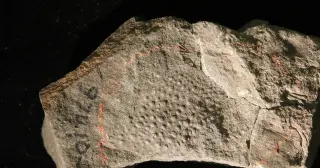
A 56-million-year-old cannabis leaf imprint from Saxony-Anhalt, Germany, may be the oldest cannabis fossil yet, dating to the Lower Eocene and pushing back the plant’s origin by about 30 million years. The preserved leaf resembles modern cannabis, suggesting early Cannabaceae diversity in varied environments, though it’s unclear if the ancient plant had psychoactive traits due to the absence of trichomes. The find challenges the traditional Tibetan-Plateau origin timeline, and researchers are re-examining European collections for more fossils.

Oldest Mammal-Ancestor Egg Fossil Confirms Egg-Laying
science1 month ago

Oldest Mammal-Ancestor Egg Fossil Confirms Egg-Laying

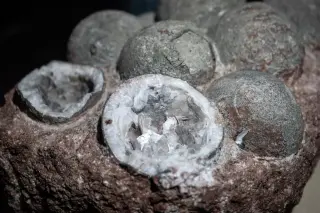
A fossil egg containing a Lystrosaurus embryo dating to about 250 million years ago provides the first direct evidence that mammal ancestors laid eggs. Synchrotron CT imaging at ESRF revealed the embryo was pre-hatching and the lower jaw had not fused, suggesting the hatchling was precocial. The egg was likely soft-shelled and relatively large for its owner, enabling survival in the post-extinction climate and helping Lystrosaurus dominate early ecosystems after the End-Permian mass extinction.

Forgotten Fossil Rewrites Crocodylomorph Ancestry with a Ferocious Bite
science1 month ago

Forgotten Fossil Rewrites Crocodylomorph Ancestry with a Ferocious Bite

A long-forgotten Ghost Ranch fossil, long misidentified as an early crocodile relative, is re-examined with microCT imaging to reveal Eosphorosuchus lacrimosa, a 200-million-year-old crocodylomorph with a powerful bite and unique skull features, suggesting early crocodylomorphs were more diverse and ecologically varied than previously believed.

Ancient fossil labeled oldest octopus debunked: a nautiloid, not an octopus
science1 month ago

Ancient fossil labeled oldest octopus debunked: a nautiloid, not an octopus

A 300-million-year-old fossil once hailed as the world’s oldest octopus has been reclassified as a nautiloid after new analyses, including synchrotron imaging and detailed geochemistry. The researchers found a radula with many rows of teeth inconsistent with octopuses, explaining why the fossil looked octopus-like as it decomposed. Discovered at the Mazon Creek site near Chicago, Pohlsepia mazonensis’ true identity underscores how advanced technologies are reshaping paleontology by revealing hidden anatomy that old methods missed.

New imaging rewrites 'oldest octopus' claim: fossil is a nautiloid relative
science1 month ago

New imaging rewrites 'oldest octopus' claim: fossil is a nautiloid relative

A 328-million-year-old fossil once hailed as the oldest octopus, Pohlsepia mazonensis, has been reclassified after researchers used cutting-edge techniques including synchrotron imaging to uncover features inconsistent with octopuses (such as multiple radula teeth). The findings show it is actually a decomposed nautiloid, a relative of modern nautiluses, highlighting how new technologies are advancing paleontology and revising our view of ancient cephalopods.

Oldest octopus claim debunked: fossil identified as a nautiloid relative
science1 month ago

Oldest octopus claim debunked: fossil identified as a nautiloid relative

A fossil once named as the world’s oldest octopus (Pohlsepia mazonensis) has been reclassified as a nautiloid relative (Paleocadmus pohli) after synchrotron imaging revealed a mollusk radula inconsistent with octopuses. Guinness World Records will remove the octopus title, highlighting how modern techniques can overturn long-held fossil identifications and reshape our view of cephalopod evolution.