Tag

Gondwana

All articles tagged with #gondwana

Discovery of 20-meter Brazilian sauropod hints at an ancient Europe-to-South America highway
science18 days ago

Discovery of 20-meter Brazilian sauropod hints at an ancient Europe-to-South America highway

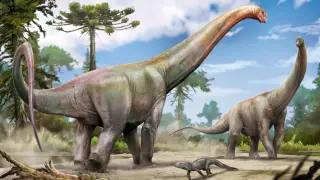
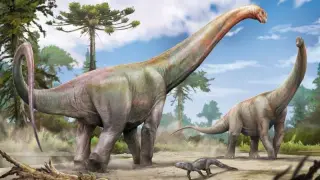
A new long-necked sauropod, Dasosaurus tocantinensis, from Maranhão, Brazil, dating to about 120 million years ago, was found eight meters underground at a construction site; at roughly 20 meters long, it is the largest known Brazilian dinosaur from the region and is closest to a Spanish species, Garumbatitan morellensis, implying a European lineage that dispersed to South America via Africa around 140–120 million years ago and suggesting earlier intercontinental faunal exchange; the discovery expands northeastern Brazil’s dinosaur record and highlights construction sites as windows into ancient ecosystems, though dating uncertainties remain and researchers plan further excavations with the site owner.

Twisted-Jaw Tetrapod from Gondwana Illuminates Early Plant-Eating Life
science-paleontology1 month ago

Twisted-Jaw Tetrapod from Gondwana Illuminates Early Plant-Eating Life

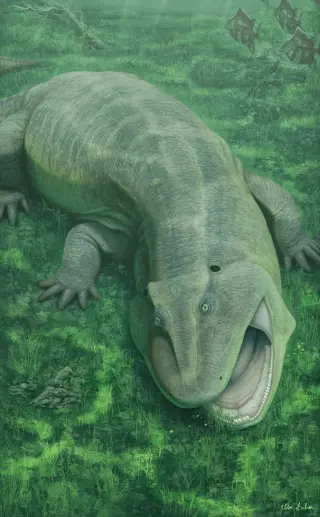
Researchers describe Tanyka amnicola, a 275-million-year-old stem tetrapod known from seven to nine jawbones found in Brazil’s Pedra de Fogo Formation. The jaws are twisted with outward-facing teeth and a denticle-covered inner surface, indicating a grinding mechanism for plant matter and suggesting early herbivory among stem tetrapods. The discovery places this “living fossil” in Gondwana’s Permian ecosystems and helps fill gaps in the fossil record, though the full skeleton remains unknown and may have measured up to about 0.9 meters in length.

New Filter-Feeding Pterosaur Discovered in Santana Group
paleontology6 months ago

New Filter-Feeding Pterosaur Discovered in Santana Group

A new filter-feeding pterosaur species, Bakiribu waridza, has been discovered in the Santana Group of Northeast Brazil, representing the first archaeopterodactyloid from this formation and providing insights into the evolution and paleobiogeography of ctenochasmatids in Gondwana. The specimen, preserved as a regurgitalite, exhibits unique dental features, including dense, elongated, and subquadrangular teeth, and suggests a complex trophic interaction involving likely predation by spinosaurid dinosaurs.

Discovery of Earth's Hidden Eighth Continent
science1 year ago

Discovery of Earth's Hidden Eighth Continent

Geologists have completed mapping Zealandia, a submerged landmass considered Earth's eighth continent, covering nearly two million square miles. The research involved analyzing rock samples from North Zealandia, revealing its geological history tied to the ancient supercontinent Gondwana. Despite being mostly underwater, Zealandia's mapping highlights its significance as a geological entity.

Tectonic Plate Shifts Linked to Ancient Mass Die-Off
science2 years ago

Tectonic Plate Shifts Linked to Ancient Mass Die-Off

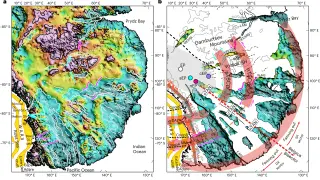
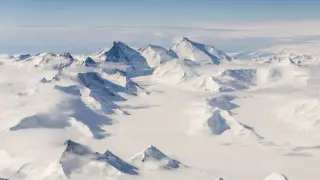
New research suggests that a major extinction event 513 million years ago, known as the Sinsk event, was triggered by tectonic activity around the supercontinent Gondwana, causing the drowning of ancient reefs and altering the oceans. The study, led by sedimentologist Paul Myrow, found links between rock layers in Antarctica and Australia, indicating similar geological dynamics at the time of the extinction. The uplift of mountains and the release of greenhouse gases from large igneous provinces led to a decrease in ocean circulation, resulting in the death of many organisms. This sheds light on the role of tectonics in driving mass die-offs and provides insights into potential parallels with modern climate change.

Ancient Trilobites Unravel Geographic Mystery
science2 years ago

Ancient Trilobites Unravel Geographic Mystery

Ten newly discovered species of trilobites, ancient arthropods that lived nearly 490 million years ago, may hold the key to understanding Thailand's position on the former supercontinent Gondwana. The trilobite fossils, found in tuffs containing zircon crystals, can be used to determine the age of the fossils and the eruption that formed the tuffs. This discovery not only helps date the fossils in Thailand but also provides insights into other parts of the world, such as China and Australia, where similar fossils have been found. The findings contribute to unraveling the complex puzzle of ancient geography and offer valuable information for understanding our planet's history.

Ancient Trilobites in Volcanic Rock Unravel Geography Mystery
science2 years ago

Ancient Trilobites in Volcanic Rock Unravel Geography Mystery

Fossils of 490-million-year-old trilobites discovered in Thailand's Ko Tarutao region could provide insights into the ancient supercontinent of Gondwana. The fossils were found in a layer of volcanic rock called tuff, which contained zircon crystals that allowed researchers to date the eruption and the trilobites. The discovery of 10 new trilobite species and their correlation with other regions could shed light on the geological history of Gondwana. This finding may also help in dating similar fossils in other parts of the world and provide valuable information for understanding evolutionary change and extinctions.

Ancient Bird Tracks Found in Australia Rewrite History
paleontology2 years ago

Ancient Bird Tracks Found in Australia Rewrite History

Researchers have discovered the oldest bird footprints ever found in the Southern Hemisphere in Wonthaggi, Australia, dating back to around 120 million years ago. The tracks provide evidence that birds once lived in the southern polar regions of the supercontinent Gondwana. The findings shed light on how early birds dispersed across landmasses and biomes, suggesting that they may have migrated seasonally to and from other environments. The discovery of these tracks may inspire further exploration for evidence of Cretaceous birds in the Southern Hemisphere.

"Argoland: The Miraculous Rediscovery of a Lost Continent"
science2 years ago

"Argoland: The Miraculous Rediscovery of a Lost Continent"

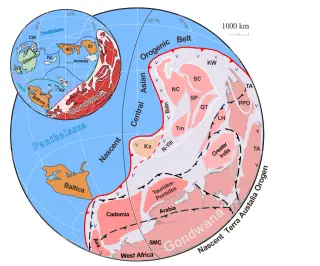
Geologists from Utrecht University have located the long-lost continent of Argoland, which broke off from western Australia and drifted to sea 155 million years ago. The continent, once part of the supercontinent Gondwana, has since broken into several shards and is now located beneath the jungles of Indonesia and Myanmar. The discovery of Argoland, similar to the rediscovery of Greater Adria in 2019, provides valuable insights into Earth science and helps understand processes such as the evolution of biodiversity, climate, mountain formation, and plate tectonics.