Tag

Gluons

All articles tagged with #gluons

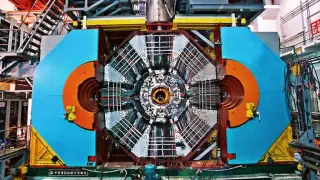
Glueball Clue: New Evidence for a Gluon-Only Particle in Beijing Collisions
science8 days ago

Glueball Clue: New Evidence for a Gluon-Only Particle in Beijing Collisions

Physicists at the BEPCII collider in Beijing report the strongest evidence to date that the X(2370) resonance is a flavor-singlet glueball, a particle composed mainly of gluons. By analyzing meson decays and comparing with arXiv-preprint predictions, the team finds mass, spin-parity, and decay patterns that align with glueball expectations, marking a milestone for quantum chromodynamics and our understanding of the strong force. Further experiments are needed to confirm and refine the glueball’s properties.
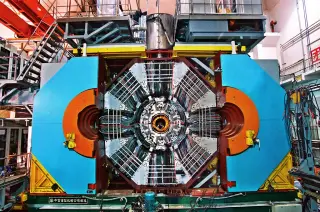
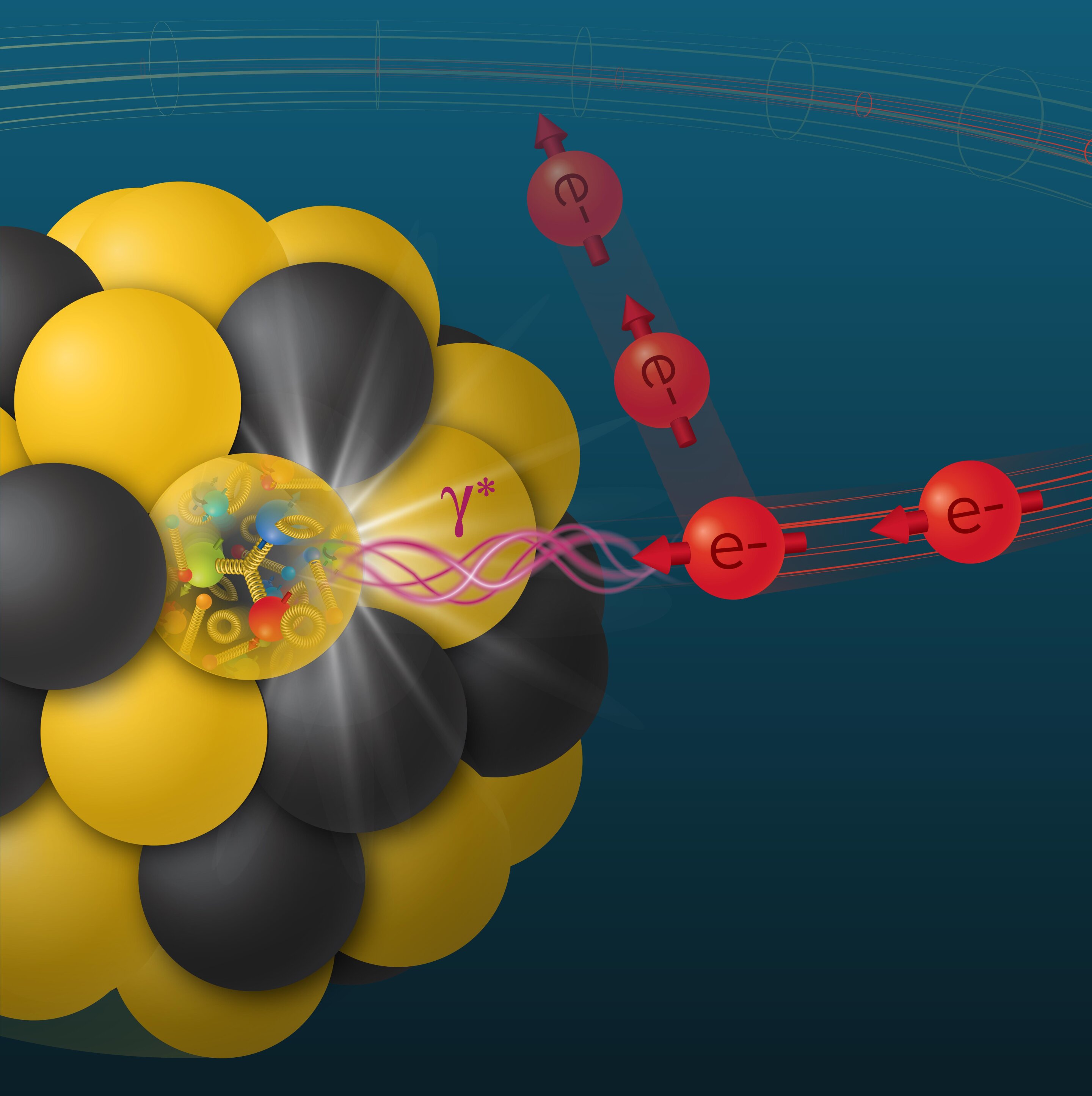
Proton Baryon Number Traced to Gluon Junction, Not Just Quarks
science12 days ago

Proton Baryon Number Traced to Gluon Junction, Not Just Quarks

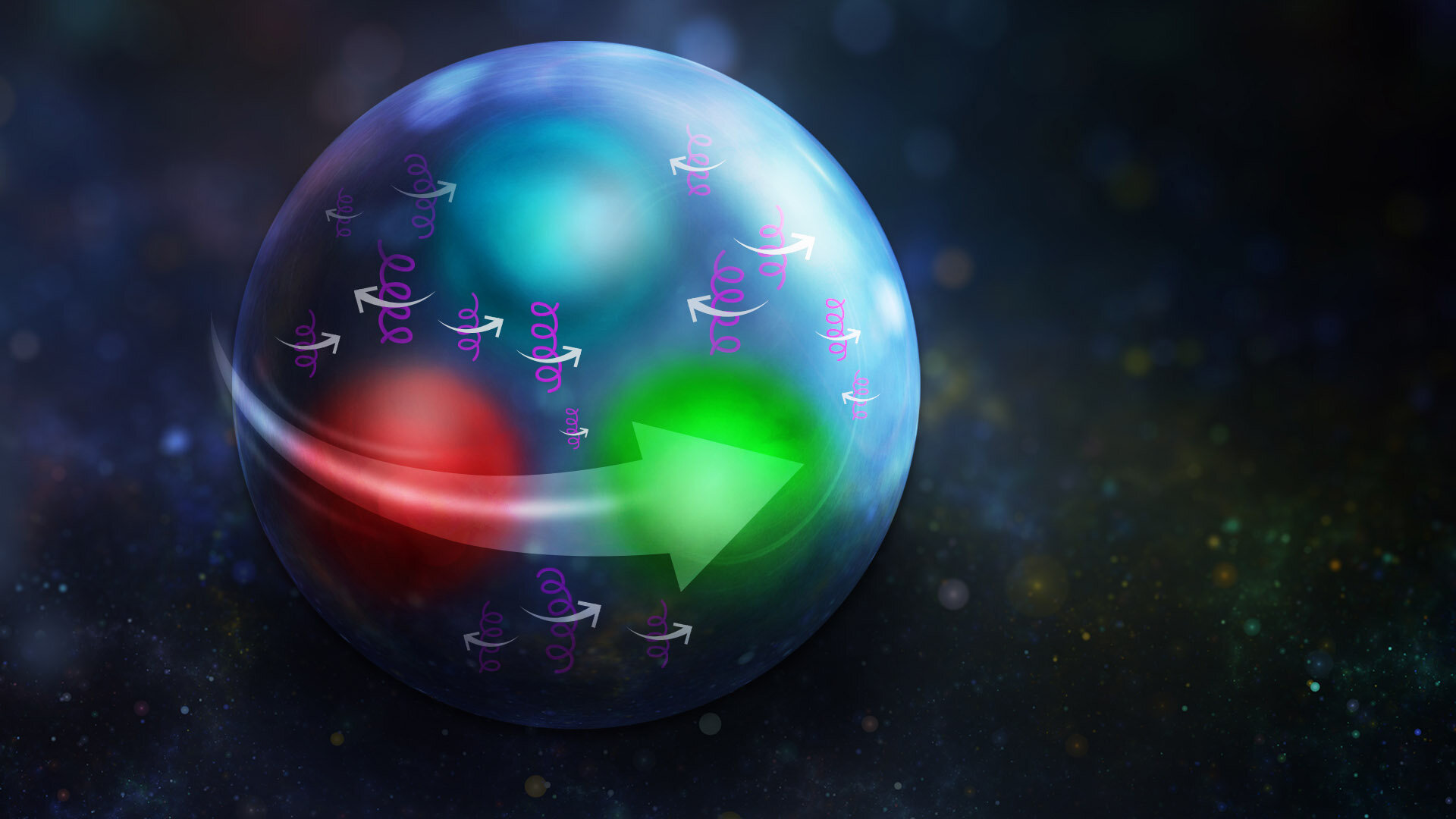
New STAR Collaboration results from RHIC collisions provide strong evidence that baryon number is carried by a gluon-based baryon junction rather than by valence quarks, challenging the long-held quark-centered picture and aligning with Regge theory; isobar and photonuclear collision analyses favor junction transport of baryon number, with further work expected including future Electron-Ion Collider research.

Physicists report strongest evidence yet for the gluon-only glueball
physics13 days ago

Physicists report strongest evidence yet for the gluon-only glueball

A BESIII collaboration study analyzing about ten billion J/psi decays presents strong evidence that the X(2370) meson is predominantly a glueball—a bound state of gluons predicted by quantum chromodynamics. A 2024 spin-parity measurement (0−+) aligned with glueball predictions strengthens the case, though no single smoking-gun proof exists. If confirmed, this would demonstrate gluons interacting with themselves and shed light on the origin of mass in protons.

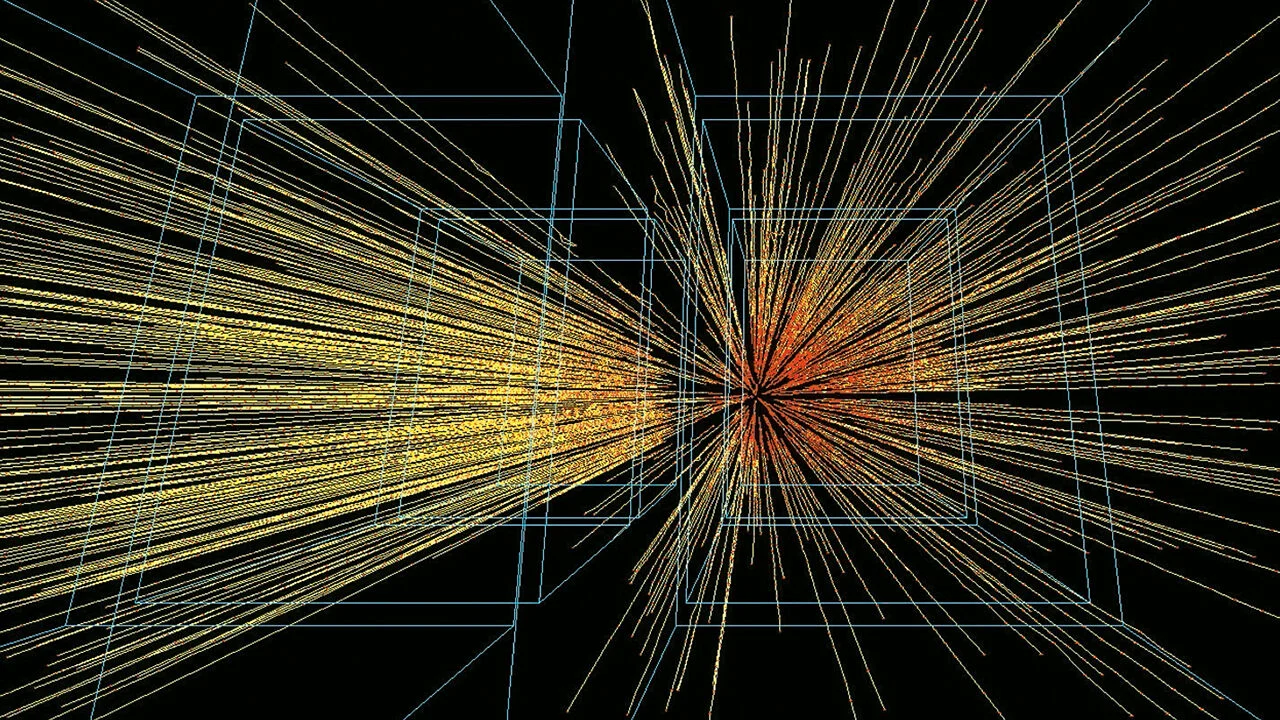
LHC reveals primordial quark-gluon soup behaved like a liquid
science6 months ago

LHC reveals primordial quark-gluon soup behaved like a liquid

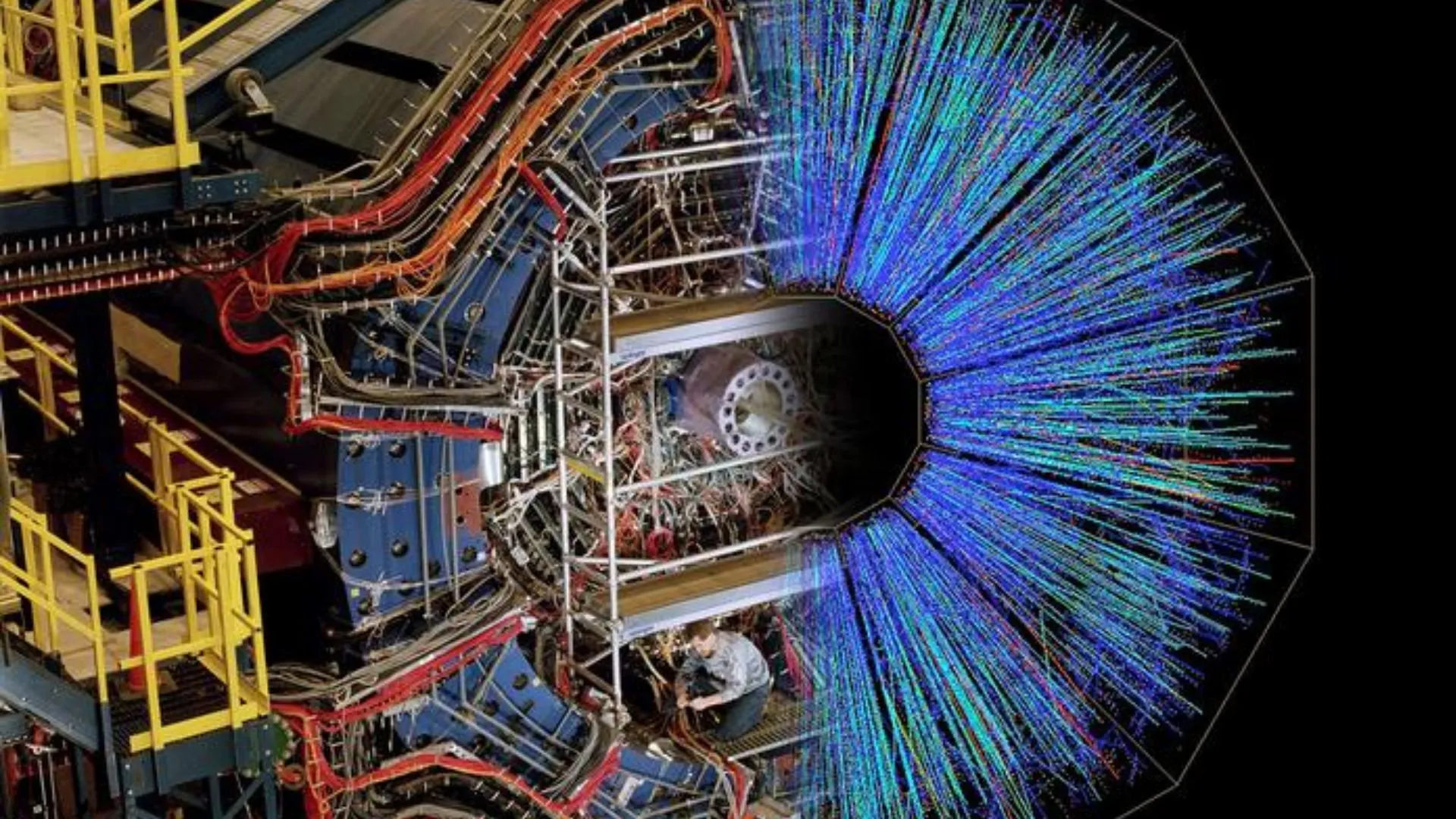
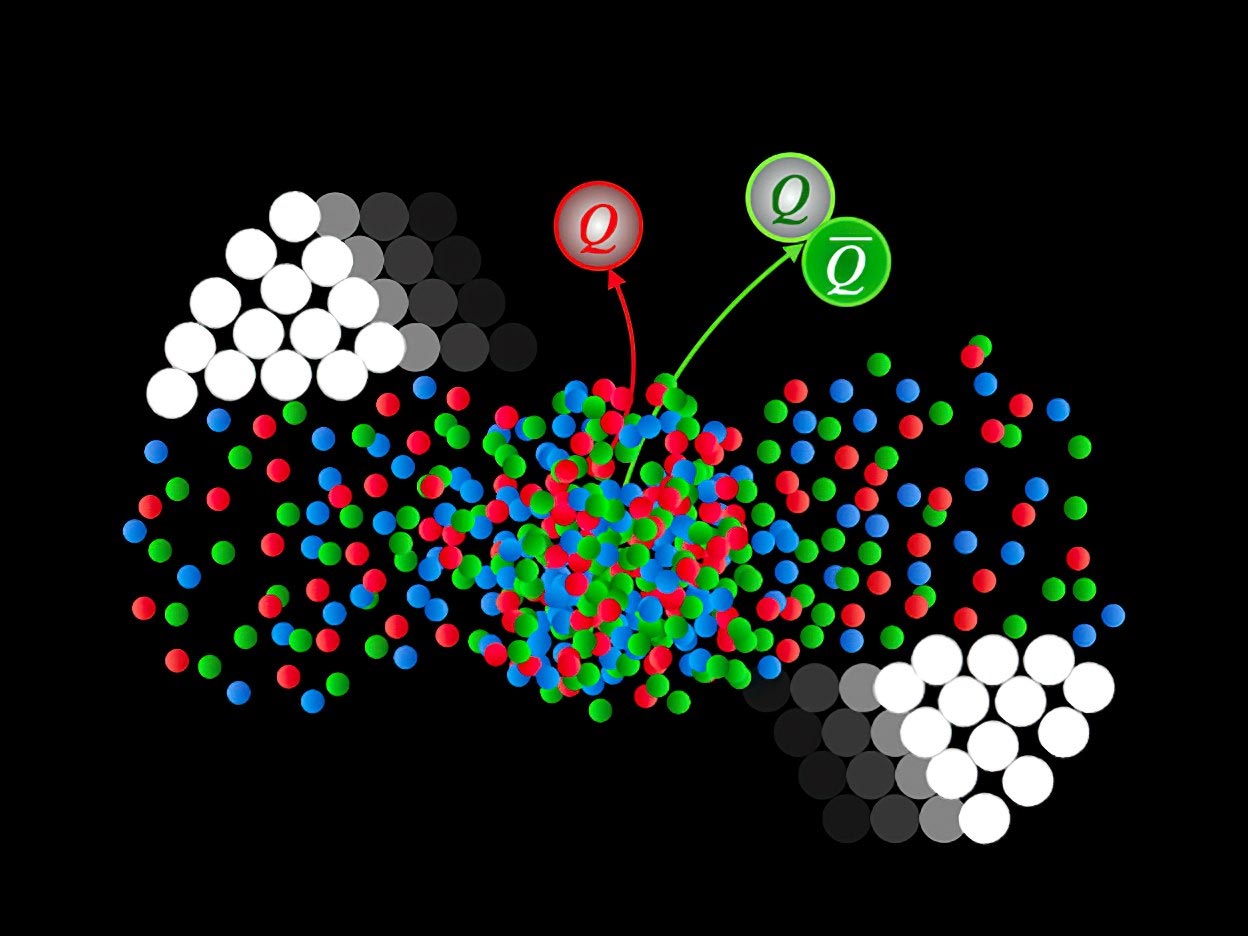
Using the Large Hadron Collider, researchers recreated quark‑gluon plasma and observed that the ultra‑hot primordial soup behaved as a nearly perfect liquid, producing wakes as fast‑moving quarks traversed it. By tagging events with a Z‑boson to isolate single-quark wakes, they found fluid‑like ripples that match hybrid model predictions, offering new insight into the universe’s first microseconds and the properties of the quark‑gluon plasma (Physics Letters B).

Scientists Unveil Quantum Entanglement Map in Protons
science1 year ago

Scientists Unveil Quantum Entanglement Map in Protons

Scientists at Brookhaven National Laboratory have used quantum information science to map quantum entanglement among quarks and gluons inside protons, revealing a complex, dynamic system. This entanglement, occurring at incredibly short distances, affects the distribution of particles resulting from proton-electron collisions. The research, published in Reports on Progress in Physics, provides new insights into proton structure and lays the groundwork for future experiments at the Electron-Ion Collider, which will explore how nuclear environments impact entanglement.

New Predictions for Meson Measurements Unveiled by Scientists
science1 year ago

New Predictions for Meson Measurements Unveiled by Scientists

Scientists at Brookhaven National Laboratory have used supercomputers to predict the distribution of electric charges in mesons, particles made of a quark and an antiquark. These predictions, validated through a method called factorization, align with low-energy measurements and will guide future high-energy experiments at the upcoming Electron-Ion Collider (EIC). The research aims to deepen understanding of how quarks and gluons generate the mass and structure of hadrons, which are fundamental to visible matter.

"New Insights into Proton Spin from Combined Theory and Experiment"
science2 years ago

"New Insights into Proton Spin from Combined Theory and Experiment"

A new study combining experimental data and lattice Quantum Chromodynamics (QCD) calculations has provided deeper insights into the contributions of gluons to the proton's spin. This collaborative effort, led by Joseph Karpie at Jefferson Lab, aims to resolve the decades-old mystery of proton spin and paves the way for a three-dimensional understanding of the proton's structure.

"Unprecedented Discovery: Strongest Magnetic Fields Found in Nuclear Matter"
science2 years ago

"Unprecedented Discovery: Strongest Magnetic Fields Found in Nuclear Matter"

Scientists at the Relativistic Heavy Ion Collider have discovered the strongest known magnetic fields inside nuclear matter, generated by the electric current induced in quarks and gluons. These fields surpass the strength of those found in neutron stars, previously considered the strongest, and are significantly stronger than Earth's magnetic field.

Positive gluon polarization indicated by direct photons.
physics3 years ago

Positive gluon polarization indicated by direct photons.

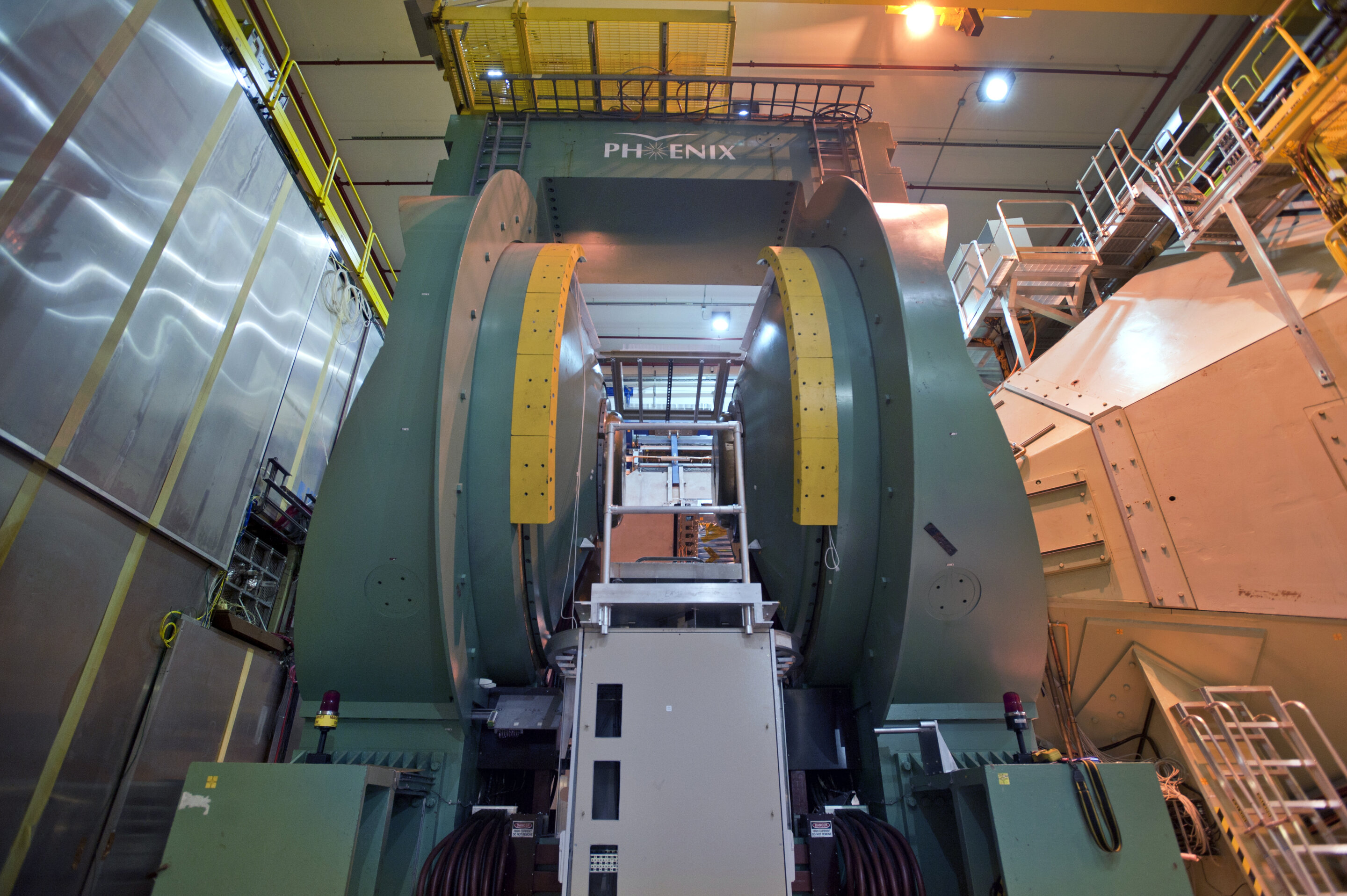
A new publication by the PHENIX Collaboration at the Relativistic Heavy Ion Collider (RHIC) provides definitive evidence that gluon "spins" are aligned in the same direction as the spin of the proton they're in. The result provides theorists with new input for calculating how much gluons contribute to a proton's spin. The new PHENIX result is one of the "golden" measurements proposed as a key motivator for the RHIC spin physics program. It's a comparison of the number of "direct photons" (particles of light) emitted when RHIC collides protons with their spins pointing in opposite directions with the number of direct photons produced when the protons in the two beams are pointing in the same direction.

Unraveling Mysteries of Nuclear Matter and Forces.
science3 years ago

Unraveling Mysteries of Nuclear Matter and Forces.

Scientists have resolved a long-standing issue with a theoretical calculation method known as "axial gauge," which had mistakenly suggested two properties of quark-gluon plasma were identical. The study also made a prediction on gluon distribution measurement, set to be tested in future experiments with the Electron-Ion Collider. The ultimate goal is to understand how complex forms of matter emerge from elementary particles affected by strong forces.

Proton's Mass Radius Shorter Than Charge Radius
science3 years ago

Proton's Mass Radius Shorter Than Charge Radius

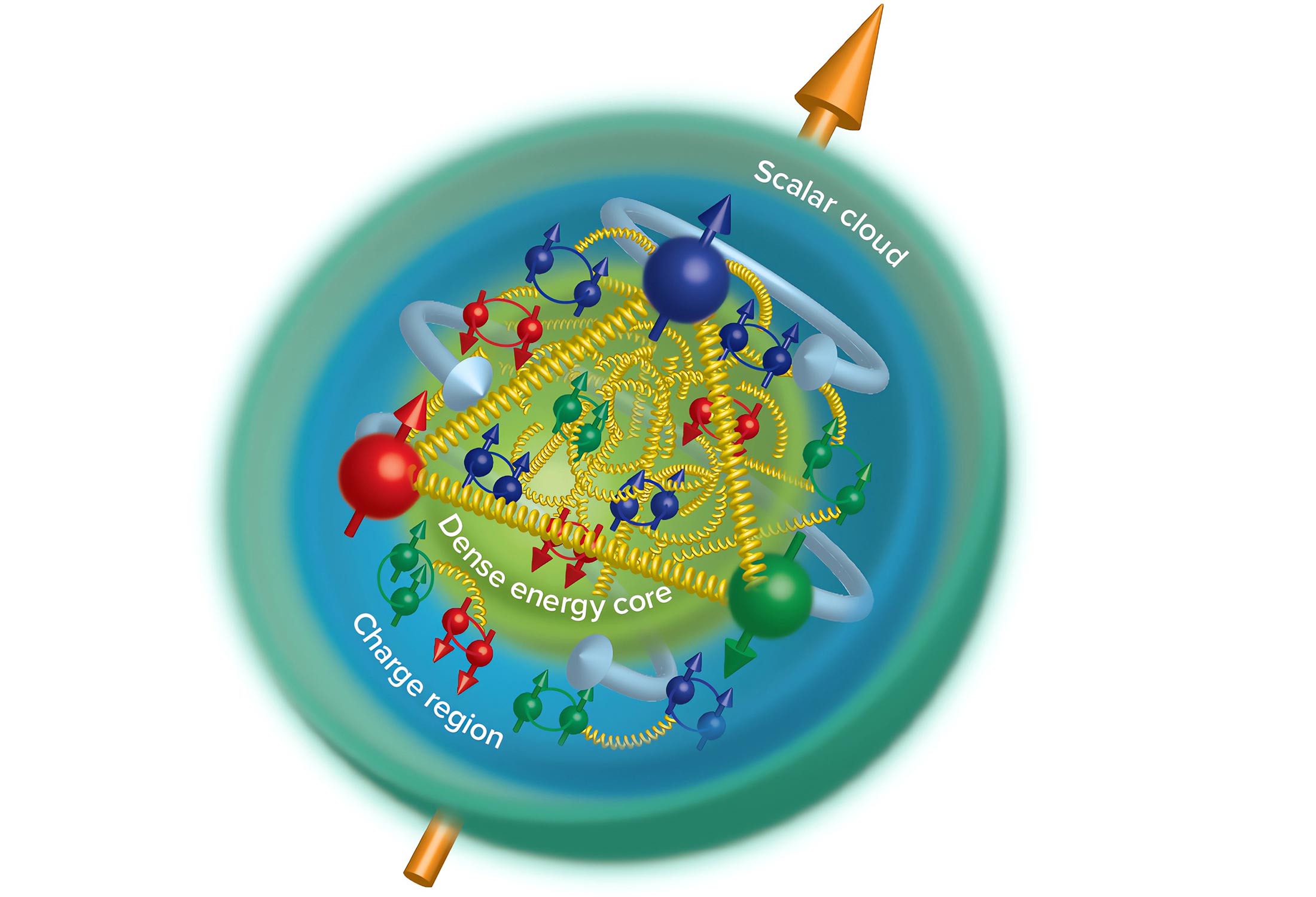
Experimental work has created a value for the proton's mass radius, which describes the distribution of mass within the particle. The proton's mass primarily depends on its gluons, which are difficult to detect. By measuring the production of J/ψ mesons, it's possible to determine something called the gluonic gravitational form factors, which describes where the mass sits in the proton. It turns out the value is significantly different from the proton's charge radius.

Unraveling the Mysteries of Proton Mass and Size Measurements
science3 years ago

Unraveling the Mysteries of Proton Mass and Size Measurements

An experiment at the Thomas Jefferson National Accelerator Facility has revealed the radius of the proton's mass that is generated by the strong force as it glues together the proton's building block quarks. The proton's measured mass doesn't just come from its physical building blocks, its three so-called valence quarks. The experiment may have finally shed some light on the mass that is generated by the proton's gluons by pinpointing the location of the matter generated by these gluons.