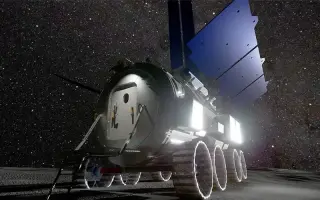
Italy Commits $5 Billion to Send Two Astronauts to the Moon
Italy has announced a $5 billion investment to send two astronauts to the Moon, marking a significant expansion of its lunar exploration ambitions.

All articles tagged with #spaceflight
Italy has announced a $5 billion investment to send two astronauts to the Moon, marking a significant expansion of its lunar exploration ambitions.
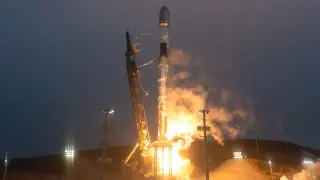
SpaceX launched 27 Starlink satellites from California's Vandenberg Space Force Base on a Falcon 9; the first stage landed on the drone ship ‘Of Course I Still Love You’ about 8.5 minutes after liftoff, and the 27 satellites deployed roughly 62 minutes after launch, boosting the active Starlink fleet to over 11,100. Booster 1093 was on its 17th flight, and this flight marked SpaceX’s 107th Falcon 9 mission of 2026 and the 81st Starlink mission of the year.
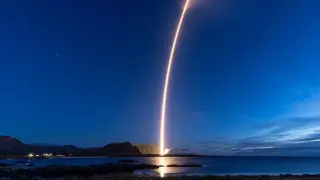
Isar Aerospace's Spectrum rocket achieved Europe’s first fully commercial orbital launch, signaling a private-led shift in the continent’s spaceflight ambitions; the Rocket Report also notes a mysterious Ravn X sighting and skepticism about that project, and rounds up other space news including UK spaceport funding, Firefly–Esrange launches, Vega-C cadence ambitions, Nyx on Ariane 6, The Exploration Company’s Storm engine, and NASA’s Terran R ramp with Relativity Space.
SpaceX's Falcon Heavy launched NASA's Roman Space Telescope on Aug. 30 and its two boosters landed back on Earth at Landing Zones 2 and 40, with Space.com photographer Chelsea Gohd capturing one landing. The Roman Space Telescope is NASA's next observatory, featuring a coronagraph for direct imaging of exoplanets and a wide-field instrument, designed to work with Hubble and JWST, and first images are expected next year.
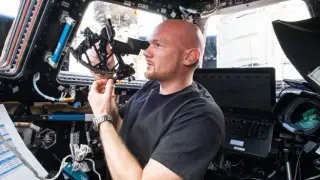
NASA is reviving a 300-year-old sextant as a back-up navigation method for deep-space missions. Tests on the International Space Station showed hand-held sextants can help astronauts determine their position if communications or high-tech systems fail, a capability that could be crucial for Artemis and future Mars trips. On the Orion spacecraft, a high-tech optical navigation system already serves as a backup, but the sextant remains a last-resort option and highlights how ancient star-sighting techniques still underpin modern space navigation.

MIT researchers and Rocket Lab’s privately funded Venus Life Finder mission—an autofluorescence nephelometer probe to study Venus’ clouds—has been delayed due to the Neutron rocket not yet achieving first flight. The launch date is listed as to be confirmed, pending rocket qualification tests and readiness. NASA’s heat shield (HEET) and other components are in place, with follow-on payloads like ORIGIN and even a Venus balloon being explored for future private missions.
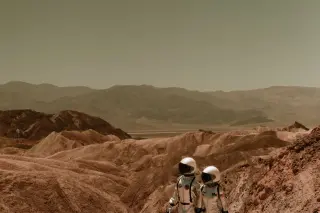
Perseverance cost about $2.7 billion over its life cycle, far less than a crewed Mars mission would require; human missions need a multi-launch, long-duration life-support system with habitats, redundancy, and Earth return, making the total cost highly sensitive to scope and architecture. The $500 billion figure is an old, not fixed NASA price, and hundreds of billions is plausible for a comprehensive, decades-long programme rather than a single voyage.
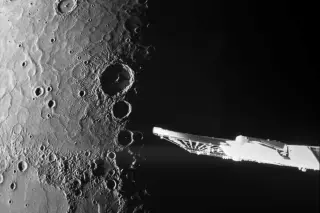
Two European-Japanese spacecraft (BepiColombo) are closing in on Mercury after nearly a decade of travel, setting the stage for high-resolution observations of the planet, including its north pole, and continuing the mission’s scientific exploration.
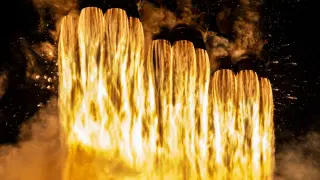
SpaceX's Falcon Heavy roared to life with 27 Merlin engines during the Aug. 30, 2026 launch of NASA's Nancy Grace Roman Space Telescope, sending the observatory toward a stable point at Lagrange Point 2 for early online operations and future science on dark energy and exoplanets; Space.com designated the image as the Space Photo of the Day for Sept. 2, 2026.
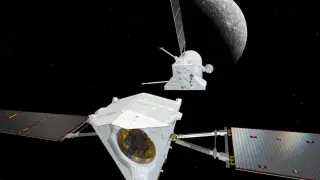
After an eight-year journey hampered by a power glitch, ESA/JAXA's BepiColombo will separate its two Mercury orbiters from the transfer module and enter independent polar orbits around Mercury, with MPO eventually ejecting MMO and continuing on; the arrival will be livestreamed by ESA on September 3.

NASA plans Artemis 3 for 2027 to achieve the next crewed lunar landing, building on the successes of Artemis 1 and Artemis 2 and leveraging the Orion crew vehicle and SLS, as teams continue accelerating the U.S. program to return humans to the Moon.

President Trump interrupted NASA’s post-launch briefing for the Nancy Grace Roman Space Telescope to congratulate the agency and claim funding, a moment that echoes his earlier attempts to cancel or slash funding for NASA’s science missions; Congress shielded Roman from cuts, and Trump later signed an order establishing a U.S. Space Academy.

SpaceX’s 2017 concept of New York–Shanghai travel in 39 minutes via a spacebound Starship has moved from fantasy toward reality: a later Starship test flew through space, endured re-entry and landed, showing the middle of the journey is feasible. However, a full passenger service requires offshore terminals, reliable, repeatable reuse, regulatory approvals, and proven life-support and evacuation systems—so the 39‑minute figure remains the rocket portion, not a booked door‑to‑door trip.

SpaceX plans a $100 billion launch site on the Gulf Coast near Pecan Island, Louisiana, spanning about 125,000 acres with five launch complexes and two pads each to accelerate Starship flights and enable orbital data centers and lunar/Mars missions. Construction could start next year with the first rockets from the base targeted for 2029, backed by a competitive state incentives package and Governor Jeff Landry’s backing. The project expands SpaceX’s footprint beyond Texas and aligns with Elon Musk’s broader ambitions, though it faces environmental concerns and some local opposition.
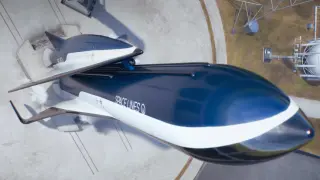
Germany's DLR proposes the RLV C5, a European next‑gen rocket that would use a SpaceLiner booster with built‑in wings and mid‑air capture, powered by liquid hydrogen and oxygen to deliver up to about 74% of its mass to low‑Earth orbit—far higher than SpaceX's Starship. The concept, outlined in a May 2025 paper and based on publicly logged telemetry, is still conceptual and would face development hurdles and Europe’s ability to outpace SpaceX's rapid iteration; Europe’s current players like Arianespace (Ariane 6), Isar Aerospace, and MaiaSpace are active but have not matched Starship’s performance.