
Brief High-Fat Diet Exposure at Disease Onset Creates Long-Lasting Inflammatory Memory
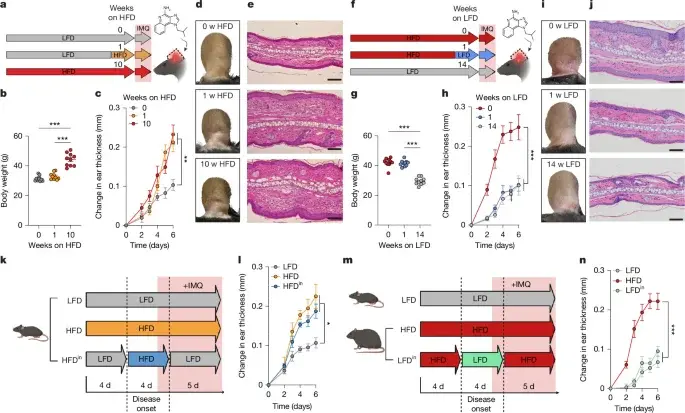
A new study reveals that consuming a high-fat diet for just four days during the onset of acute skin inflammation can permanently alter immune responses, leading to severe disease recurrence even after returning to a healthy diet. This 'inflammatory memory' is driven by neutrophils and specific T-cells, suggesting that brief dietary choices at critical moments may have lasting health consequences.
Key points
- A transient four-day high-fat diet exposure at the start of skin inflammation exacerbates disease severity to levels comparable to chronic obesity.
- The effect is time-sensitive; switching to a low-fat diet during this same window prevents the amplified inflammation in obese mice.
- Neutrophils recruited by the high-fat diet activate the NLRP3-IL-1β axis, which licenses pathogenic TH17 cells.
- After recovery, a population of tissue-resident memory T-cells persists, causing exaggerated inflammation upon disease recurrence.
- Similar mechanisms were observed in lung inflammation, indicating this dietary imprinting is not limited to the skin.
Background
Recent research has highlighted the complex interplay between diet, immunity, and chronic disease. For instance, earlier studies noted that combined diet and exercise can induce diabetes remission, while other research identified blood antibody patterns that may forecast inflammatory bowel disease years before symptoms appear. Additionally, creatine supplementation was found to shield brain neurons from gut inflammation in rats. These findings collectively underscore the significant role of metabolic and dietary factors in shaping immune responses and disease trajectories, providing a backdrop for the new discovery that brief dietary exposures can create durable inflammatory memory.
Why it matters
This research challenges the notion that only long-term obesity or chronic dietary habits significantly impact immune function. By demonstrating that a short, four-day window of high-fat diet consumption at the onset of inflammation can durably reprogram the immune system, the study suggests that brief physiological states can become embedded in local immune memory. This has profound implications for understanding the development of chronic inflammatory diseases like psoriasis and could inform new therapeutic strategies focused on dietary interventions at specific disease stages to prevent long-term complications.
What to watch
Future research will likely focus on translating these findings from mouse models to human clinical trials. Scientists may investigate whether similar dietary windows exist for other inflammatory conditions and explore potential interventions to block the neutrophil-NLRP3-IL-1β axis during critical periods. Additionally, further studies could examine the long-term consequences of this inflammatory memory on other organ systems and whether specific dietary or pharmacological approaches can reverse these changes.
Want the full story? Read the original reporting
Read on Nature