
REM Sleep Reveals an Energy-Allocation Paradox in Brain Metabolism
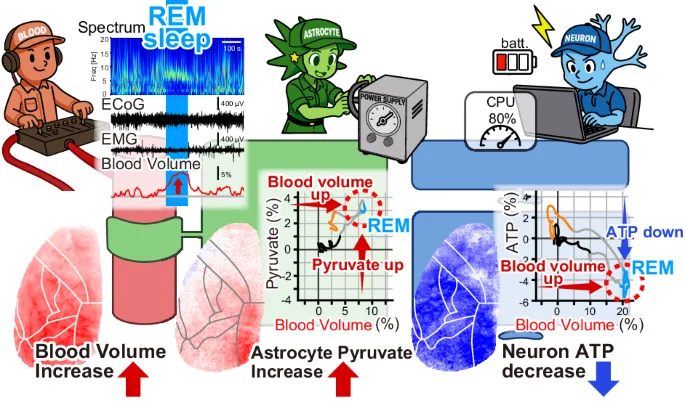
Using wide-field imaging through the intact mouse skull, the study tracks brain blood volume, astrocytic pyruvate, and neuronal ATP across sleep states and finds that energy delivery and consumption are reorganized by brain state: during NREM, theta activity predicts subsequent BBV with anterior-to-posterior vascular waves, while REM sleep triggers a cortex-wide BBV surge and astrocytic pyruvate rise but a paradoxical drop in neuronal ATP. This dissociation suggests a state-dependent energy reallocation that prioritizes synaptic remodeling and memory-related processing over immediate ATP restoration, revealing a tripartite metabolic network (neurons, astrocytes, vasculature) that flexibly distributes substrates to meet distinct information-processing demands.
Reading Insights
1
36
96 min
vs 97 min read
99%
19,306 → 99 words
Want the full story? Read the original article
Read on Nature