
Ancient Parchment Reveals 3,700-Year History of Sheeppox Virus
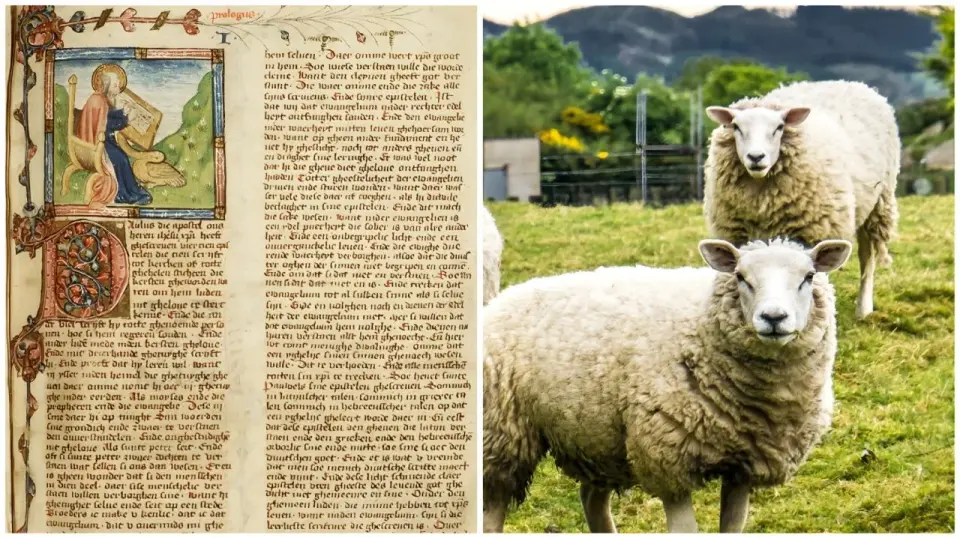
Researchers at University College Dublin have reconstructed the evolutionary history of the sheeppox virus over 3,700 years by extracting DNA from medieval parchment and Bronze Age sheep teeth. Published in Science Advances, the study identifies 21 ancient viral genomes, revealing that the virus diverged from related capripoxviruses between 11,500 and 3,700 years ago. The findings suggest that medieval manuscripts serve as biological archives of livestock disease, with viral traces found in famous texts like the York Gospels and the Corpus Glossary. The research highlights the virus's genetic stability over millennia and its continued impact on modern livestock, such as recent outbreaks in Greece.
Key points
- Researchers recovered 21 ancient sheeppox virus genomes from medieval manuscripts and Bronze Age sheep teeth, spanning from 1700 BCE to the Early Modern period.
- Viral DNA was detected in parchment from notable manuscripts, including the York Gospels and the Corpus Glossary, indicating infected animals were used for parchment production.
- Genetic analysis shows sheeppox virus diverged from goatpox and lumpy skin disease viruses between 11,500 and 3,700 years ago, coinciding with the expansion of sheep domestication in Europe.
- The sheeppox virus has remained genetically stable over the last 3,500 years, unlike smallpox, suggesting early genetic changes were critical for host adaptation.
- The study confirms that libraries and archives worldwide may contain preserved genetic traces of past animal disease outbreaks, offering new resources for virological research.
Background
This study builds on recent advances in ancient DNA analysis, such as the TRACE method used to uncover hidden human ancestral lineages, and follows earlier coverage of viral outbreaks like Ebola and mosquito-borne diseases. It aligns with broader archaeological efforts to understand medieval life, including studies on the Bayeux Tapestry and Roman economic systems, by using material culture to reconstruct biological history.
How outlets are covering it
Archaeology News Online emphasizes the practical implications of parchment as a biological archive, noting that libraries hold vast amounts of potential viral DNA. Ars Technica highlights the interdisciplinary nature of the research, citing co-author Kevin G. Daly on the importance of collaborative science in uncovering 'surprising discoveries.' Nautilus focuses on the genetic stability of the sheeppox virus, contrasting it with smallpox, and suggests this stability may aid future pathogen control. Archaeology Magazine provides a concise overview, stressing the high mortality and economic impact of sheeppox on livestock. All sources agree on the core findings but differ in emphasis: Archaeology News Online and Ars Technica stress the archival potential of manuscripts, while Nautilus focuses on evolutionary biology and disease control.
Why it matters
The discovery that medieval parchment preserves viral DNA opens new avenues for understanding the history of infectious diseases and their impact on agriculture and society. By tracing sheeppox back 3,700 years, researchers can better understand viral evolution and host adaptation, potentially informing modern strategies to combat livestock diseases. The finding also underscores the value of historical archives as biological repositories, encouraging interdisciplinary collaboration between archaeologists, virologists, and historians to uncover hidden histories of disease.
What to watch
Researchers plan to expand their analysis to other medieval manuscripts and archives worldwide to uncover more ancient viral genomes. Future studies may focus on the genetic stability of sheeppox virus and its implications for modern livestock health, as well as exploring cross-species transmission events suggested by viral traces in calfskin and goatskin parchment. The findings may also lead to new methods for preserving and analyzing biological data from historical artifacts.
- DNA traces on medieval parchment reveal 3,700-year history of deadly sheeppox virus Archaeology News Online Magazine
- Medieval manuscripts are "biological time capsules" for deadly sheeppox virus Ars Technica
- Hidden DNA in medieval gospels reveals history of deadly livestock virus Phys.org
- News - Sheep Pox Virus Tracked With Medieval Parchment Archaeology Magazine
- Deadly Livestock Virus Found Lurking in Ancient Texts nautil.us
Want the full story? Read the original reporting
Read on Archaeology News Online Magazine