
Sweet potatoes vs. yams: how to tell the two apart and why labeling confuses many
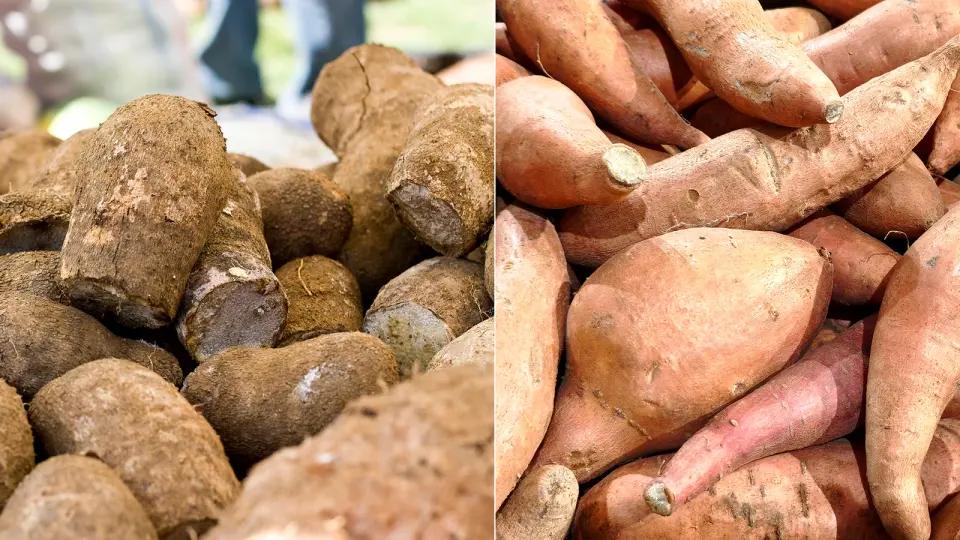
Yams and sweet potatoes aren’t closely related: yams (Dioscorea) are monocots from the Dioscoreaceae family, while sweet potatoes (Ipomoea batatas) are dicots in the morning-glory family. They differ in growth (yams form underground tubers, sweet potatoes form storage roots), yield per plant (sweet potatoes ≈4–10 tubers vs. yams ≈1–5), and maturation (3–5 months for sweet potatoes vs. 6 months to a year for yams). Appearance and texture also diverge: sweet potatoes are shorter, blockier with smoother skins and moist flesh (often orange and beta-carotene-rich); yams are longer, rougher-skinned, starchier with variable flesh colors. Nutritionally, orange-fleshed sweet potatoes are high in beta-carotene and vitamins, while yams offer more potassium and fiber but less beta-carotene. Some wild yams contain toxins that require cooking. In the U.S., many “yams” are actually sweet potatoes due to historical marketing, while true yams are more common in international markets (even the purple yam, ube, is a Dioscorea).
Want the full story? Read the original reporting
Read on Live Science