
"Dust: Unveiling the Mysteries of the Early Universe"
TL;DR
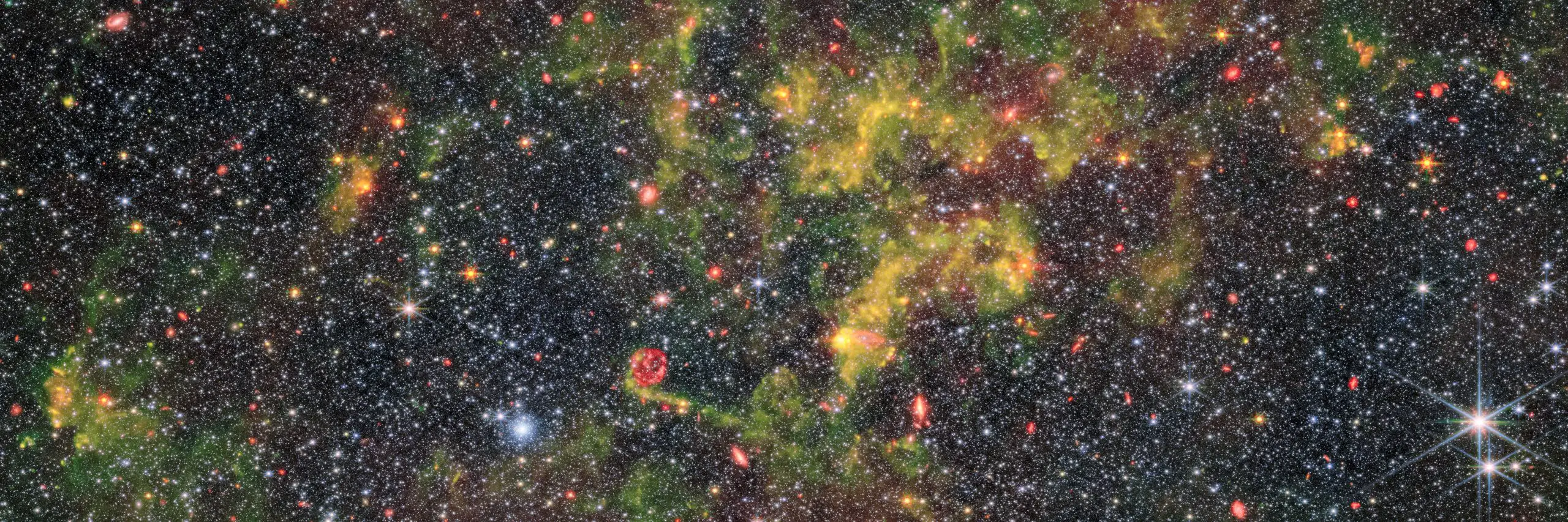
The James Webb Space Telescope's observation of the irregular galaxy NGC 6822 provides valuable insights into early Universe processes such as stellar evolution and the life cycle of interstellar dust. NGC 6822, discovered in 1884 by E. E. Barnard and later studied by Edwin Hubble, is the nearest galactic neighbor to the Milky Way that is not a satellite. With its low metallicity, NGC 6822 offers a glimpse into the conditions of the early Universe and helps scientists understand the formation of stars and the evolution of dust in low-metallicity environments.
Topics:scienceastronomy#astronomy#early-universe#interstellar-dust#james-webb-space-telescope#ngc-6822#stellar-evolution
Want the full story? Read the original reporting
Read on SciTechDaily