Tag

Stellar Evolution

All articles tagged with #stellar evolution

Some Black Holes May Be Born From Earlier Black Hole Mergers
science1 day ago

Some Black Holes May Be Born From Earlier Black Hole Mergers

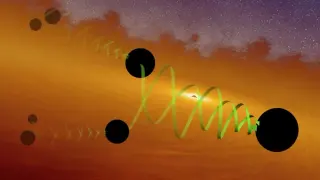
A new analysis of 155 binary black-hole mergers detected by LIGO/Virgo/KAGRA finds about 14% could be second-generation black holes formed from prior mergers, suggesting hierarchical mergers occur in dense stellar environments and can create unusually massive BHs in the 40+ solar-mass range, challenging simple stellar-collapse narratives and raising questions about their true origins.

Earth Could Outsmart the Sun's Final Farewell, New Study Finds
space3 days ago

Earth Could Outsmart the Sun's Final Farewell, New Study Finds

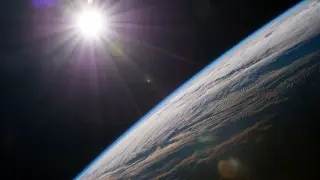
New models of how aging stars interact with nearby planets suggest Earth could avoid being engulfed as the Sun swells into a red giant. The study finds that weaker tidal forces and mass loss from the Sun could allow Earth (and Mars) to migrate outward, while Mercury and Venus are still doomed to be swallowed. The outcome depends on uncertain mass-loss rates during the Sun’s final stages; with current data, Earth’s survival is possible but not guaranteed, and more observations of sun-like giants are needed, the team reports in Astronomy & Astrophysics.

Earth May Outlive the Sun: A Delicate Cosmic Tug-of-War Could Spare Our World
space13 days ago

Earth May Outlive the Sun: A Delicate Cosmic Tug-of-War Could Spare Our World

New stellar-evolution models and observations of a nearby dying star suggest Earth could survive the Sun’s giant phases if solar mass loss dominates over tidal forces, allowing Earth to move outward rather than be engulfed. Mercury and Venus are still expected to meet a fiery end, but the outcome hinges on how much mass the Sun will lose—an uncertainty researchers are currently trying to resolve, with future missions like PLATO expected to help. A Letter to the Editor in Astronomy & Astrophysics outlines these calculations and the remaining questions about Earth’s ultimate fate.

When a Star Eats a Primordial Black Hole: Explosive or Quiet Endings
space1 month ago

When a Star Eats a Primordial Black Hole: Explosive or Quiet Endings

New research models how a star capturing a primordial black hole (PBH) would evolve, finding that capture is most likely in three-body systems and leads to two possible fates: a rapid, disk-driven explosion (a Hawking-star) that destroys the star, or a slower, quasi-steady consumption that leaves a massive, high-spin remnant. The explosive path would produce multimodal electromagnetic signals (X-ray flash, UV/blue transient, possibly a low-luminosity GRB) while the quiet path could emit gravitational waves in the future. Observing these outcomes could constrain how much PBHs contribute to dark matter.

Giant Star WOH G64 Shifts to Yellow Hypergiant, Foreshadowing a Supernova
science2 months ago

Giant Star WOH G64 Shifts to Yellow Hypergiant, Foreshadowing a Supernova

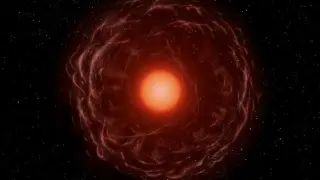
Astronomers report that the star WOH G64 in the Large Magellanic Cloud has transitioned from a red supergiant to a yellow hypergiant, with ongoing mass loss and heating—a potential sign it is nearing a supernova. The change may result from interactions with a companion or a pre-supernova wind, representing a short-lived but crucial phase in the evolution of a very massive star.

Astronomers Spot the Tiniest Packed Quadruple Star System
space-and-spaceflight4 months ago

Astronomers Spot the Tiniest Packed Quadruple Star System

Using NASA’s TESS data from 2019–2024, astronomers identified TIC 120362137 as the most compact 3+1 quadruple star system: an eclipsing binary eclipsed by a third star, plus a distant fourth star with a 1,045.5‑day orbit—the shortest outer period observed in such a configuration. The inner three stars are packed within Mercury’s orbital distance while the outer companion sits near Jupiter’s orbit. The team’s models suggest the inner trio will merge into a white dwarf in ~300 million years, leaving a double white-dwarf system with a ~44‑day orbit.

Record-breaking four-star system packs inner trio inside Mercury’s orbit
astronomy4 months ago

Record-breaking four-star system packs inner trio inside Mercury’s orbit

Astronomers using NASA’s TESS have found TIC 120362137, the most compact known 3+1 quadruple star system: a tightly bound inner triple is orbited by a distant fourth star, with the outer companion about the distance of Jupiter from the Sun, while the inner trio would fit inside Mercury’s orbit. This rare architecture helps scientists study how such systems form and stay stable, and simulations predict the system will eventually merge into two white dwarfs in a ~44-day orbit, a scenario described in Nature.

Giant Star Turns Yellow, Hinting at a Possible Supernova
science4 months ago

Giant Star Turns Yellow, Hinting at a Possible Supernova

Astronomers monitoring the red supergiant WOH G64 in the Large Magellanic Cloud report a rapid evolution into a yellow hypergiant, with a temperature rise of about 1,000 C and significant shrinking. This rare color and size change may signal an impending supernova, though researchers offer two possible explanations—binary interaction with a companion or a prior eruptive episode—and the star’s exact fate remains uncertain.