
"James Webb Space Telescope Discovers Baby Quasars and Mysterious Red Supermassive Black Holes"
TL;DR Summary
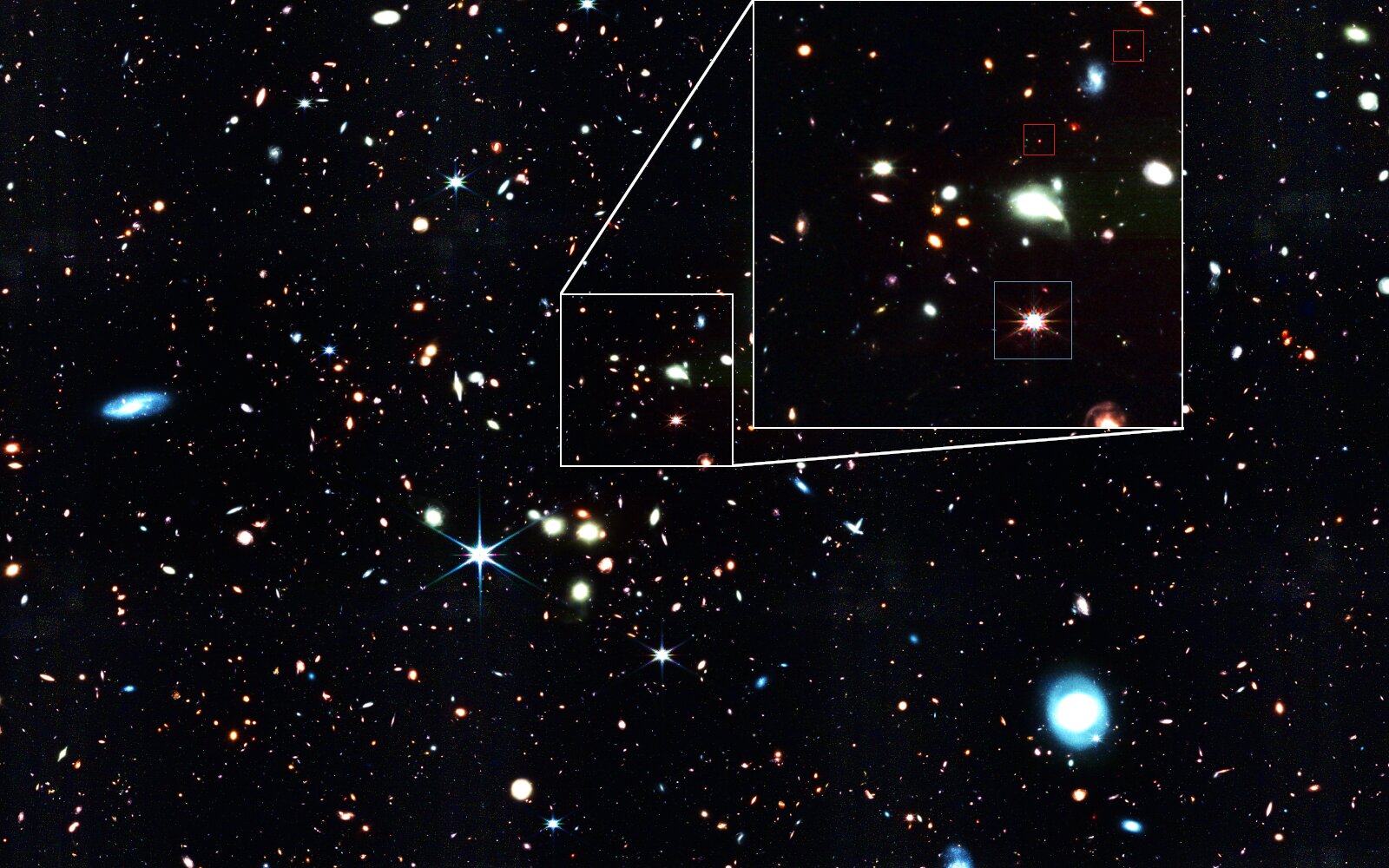
The James Webb Space Telescope has discovered a high number of faint "little red dots" in the distant universe, which are believed to be small versions of extremely massive black holes. These objects, observed using the telescope's Near Infrared Camera, could potentially change our understanding of the formation of supermassive black holes and their role in distant galaxies. The findings, led by astrophysicist Jorryt Matthee, suggest that these "baby quasars" may provide insights into the genesis of supermassive black holes and help answer some of the biggest questions about the universe.
Topics:science#astronomy#astrophysics#james-webb-space-telescope#quasars#supermassive-black-holes#universe
- 'Baby quasars': James Webb Space Telescope spots little giants in the deep past Phys.org
- How do some black holes get so big? The James Webb Space Telescope may have an answer Space.com
- Mysterious red supermassive black hole detected by astronomers ISRAEL21c
- ‘Little giants’: Baby supermassive black holes traced by NASA telescope Interesting Engineering
Reading Insights
Total Reads
0
Unique Readers
12
Time Saved
6 min
vs 7 min read
Condensed
93%
1,365 → 91 words
Want the full story? Read the original article
Read on Phys.org