
James Webb Telescope Redefines Our Understanding of the Early Universe
TL;DR Summary
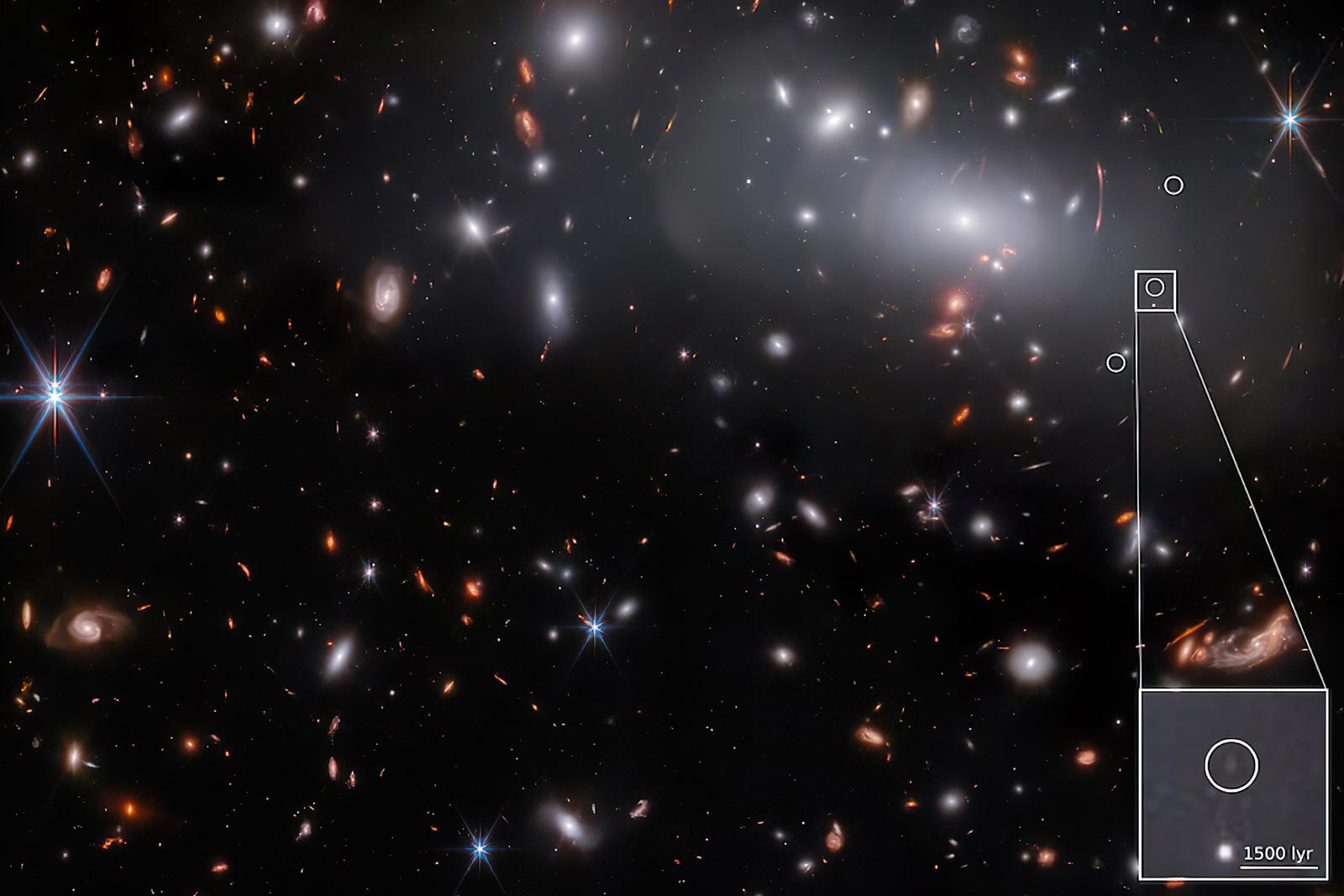
Researchers using the James Webb Space Telescope have discovered a tiny galaxy 13 billion years in the past that generated new stars at an extremely high rate for its size. The groundbreaking discovery could help scientists learn about the early universe and the formation of the first galaxies. The galaxy is one of the smallest ever discovered at this distance—around 500 million years after the Big Bang—and could help astronomers learn more about galaxies that were present shortly after the Universe came into existence.
Topics:science#astronomy#early-universe#galaxy-formation#gravitational-lensing#james-webb-space-telescope#star-formation
- Small but Mighty: James Webb Telescope Unveils a Star-Generating Juggernaut in the Early Universe SciTechDaily
- One of the oldest galaxies ever found with James Webb Space Telescope The Jerusalem Post
- James Webb discoveries are challenging what we know about the universe's evolution BGR
- How do we know how far away and early in the universe galaxies are? Space.com
- Compact galaxy's discovery shows Webb telescope's 'amazing' power Yahoo! Voices
Reading Insights
Total Reads
0
Unique Readers
8
Time Saved
4 min
vs 5 min read
Condensed
90%
827 → 84 words
Want the full story? Read the original article
Read on SciTechDaily