
Microlensing Data Suggests Milky Way Contains 20 Times More Free-Floating Planets Than Stars
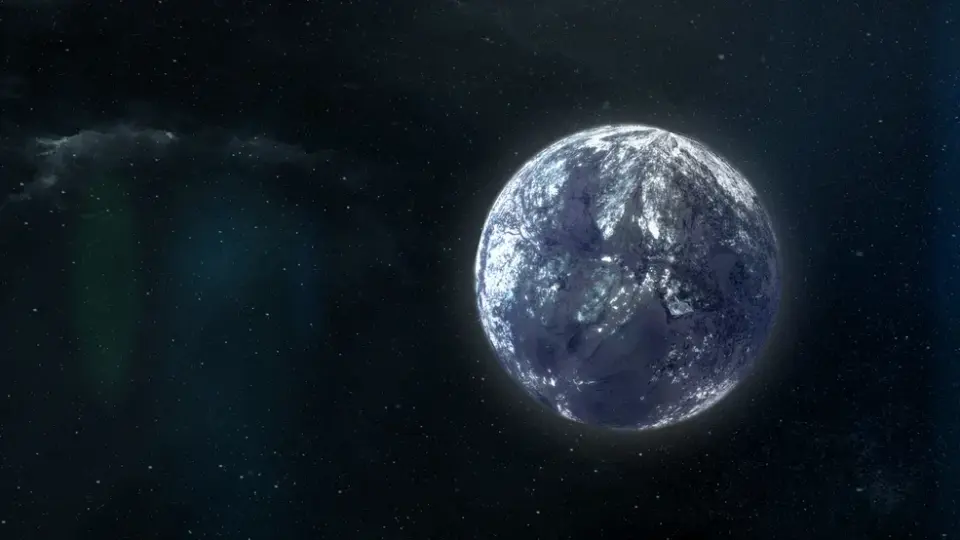
A 2023 analysis of a nine-year microlensing survey estimates that the Milky Way contains approximately 20 free-floating or very wide-orbit planets for every star. This model-based figure implies trillions of such worlds, though it carries significant uncertainty. The estimate relies on six brief gravitational lensing events and suggests a population dominated by low-mass objects rather than gas giants. NASA’s upcoming Roman Space Telescope is expected to test these findings by detecting bodies as small as Mars mass.
Key points
- The estimate of 20 planetary-mass objects per star comes from a 2023 paper analyzing data from the Microlensing Observations in Astrophysics (MOA) survey, which ran from 2006 to 2014.
- The study identified six high-quality single-lens events with crossing times shorter than half a day, likely caused by planetary-mass lenses, out of 3,535 total events.
- The central estimate of 21 objects per star has a one-sigma uncertainty range of 8 to 44, indicating broad statistical variability rather than a precise census.
- The inferred mass distribution ranges from 0.33 to 6,660 Earth masses, suggesting a steep rise in abundance toward lower masses, which contradicts earlier hypotheses favoring Jupiter-mass rogue planets.
- NASA’s Nancy Grace Roman Space Telescope, scheduled for launch on August 30, 2026, aims to verify these numbers by detecting free-floating bodies from Mars mass upward using microlensing parallax.
Background
This finding revises previous assumptions about the population of unbound planets in the galaxy. Earlier analyses suggested a large excess of Jupiter-mass rogues, but the new data points to a dominance of smaller, low-mass worlds likely ejected from young planetary systems. This aligns with broader trends in exoplanet research, such as Kepler data suggesting hundreds of millions of habitable-zone planets, though the current estimate specifically addresses objects not orbiting stars. The uncertainty in the current model highlights the need for larger surveys to confirm whether the steep low-mass distribution is accurate or an artifact of limited detection sensitivity.
Why it matters
Understanding the prevalence of free-floating planets is crucial for modeling the formation and evolution of planetary systems. If trillions of such worlds exist, they represent a significant reservoir of matter in the galaxy that may have been ejected during early system formation. Accurate mass distributions will help determine how many planets form directly from collapsing gas versus being ejected from stellar systems. Furthermore, confirming these numbers will refine our understanding of the galactic environment and the potential for habitability in isolated worlds, which may retain internal heat despite lacking a host star.
What to watch
The primary next step is the launch of the Nancy Grace Roman Space Telescope, targeted for August 30, 2026. This mission will observe dense star fields in the galactic bulge to detect microlensing events from objects as small as Mars mass. By comparing observations from Roman and Earth-based telescopes, scientists can use microlensing parallax to separate mass from distance and motion, providing a more accurate census of free-floating planets. This will test whether the current model’s central estimate of 20 objects per star holds up or if the true number is significantly lower or higher.
Want the full story? Read the original reporting
Read on Space Daily