Tag

Rogue Planets

All articles tagged with #rogue planets

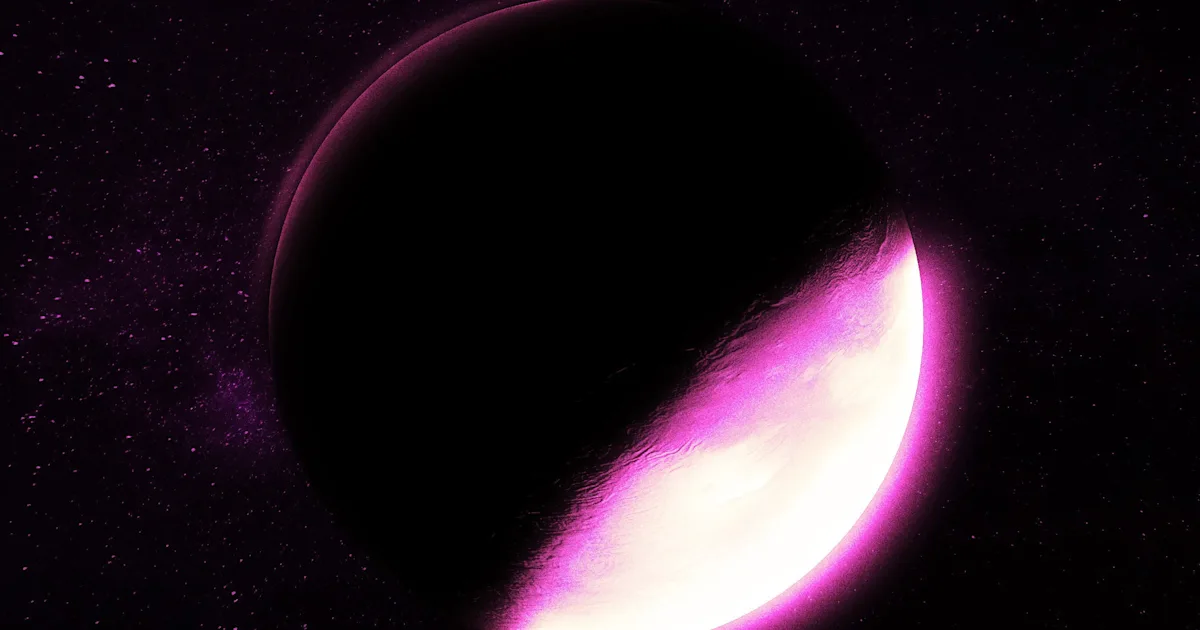
Rogue planets' moons may host billions of years of habitability
space21 days ago

Rogue planets' moons may host billions of years of habitability

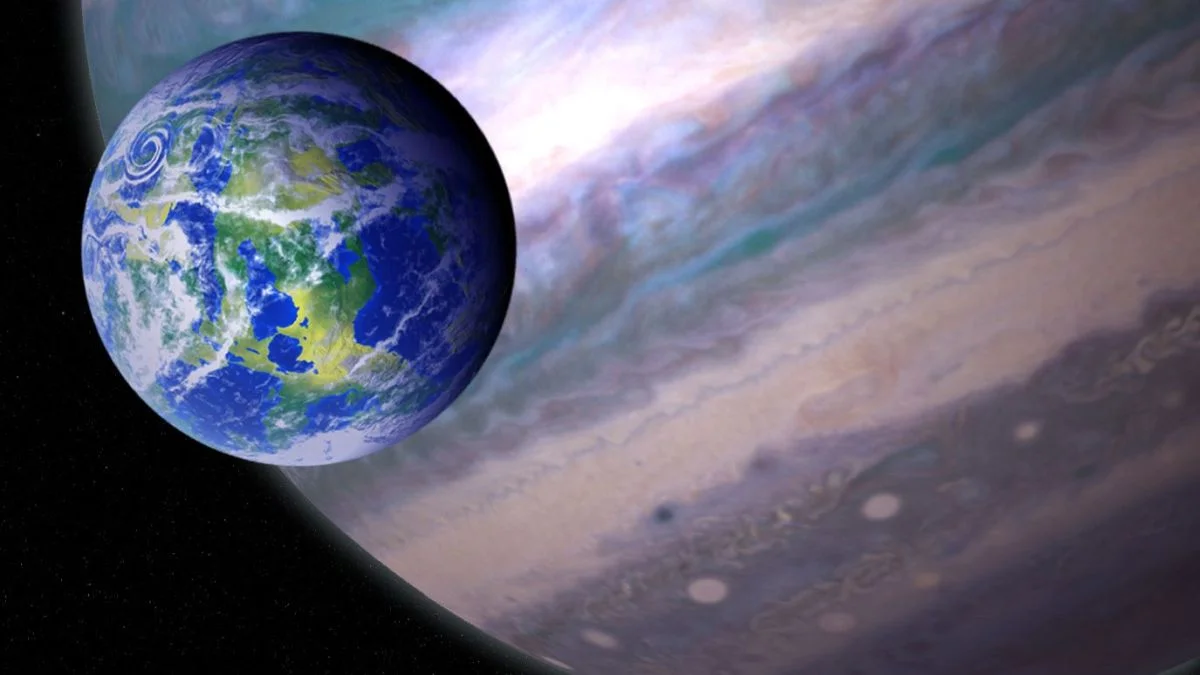
Astronomers propose that moons orbiting free-floating, starless rogue planets could stay warm enough for liquid water for billions of years thanks to tidal heating and hydrogen-dominated atmospheres that trap heat via collision-induced absorption (CIA). Using radiative-transfer (HELIOS) and chemistry (GGchem) codes, the study shows such exomoons could maintain long-term habitability even without a sun, though the models rely on simplifications (e.g., dry atmospheres, constant gravity) and future work will add clouds and water-vapor effects. This expands the search for life beyond traditional, star‑dependent habitable zones.

James Webb Telescope Unveils Water Ice on Mysterious Runaway Planets
science1 year ago

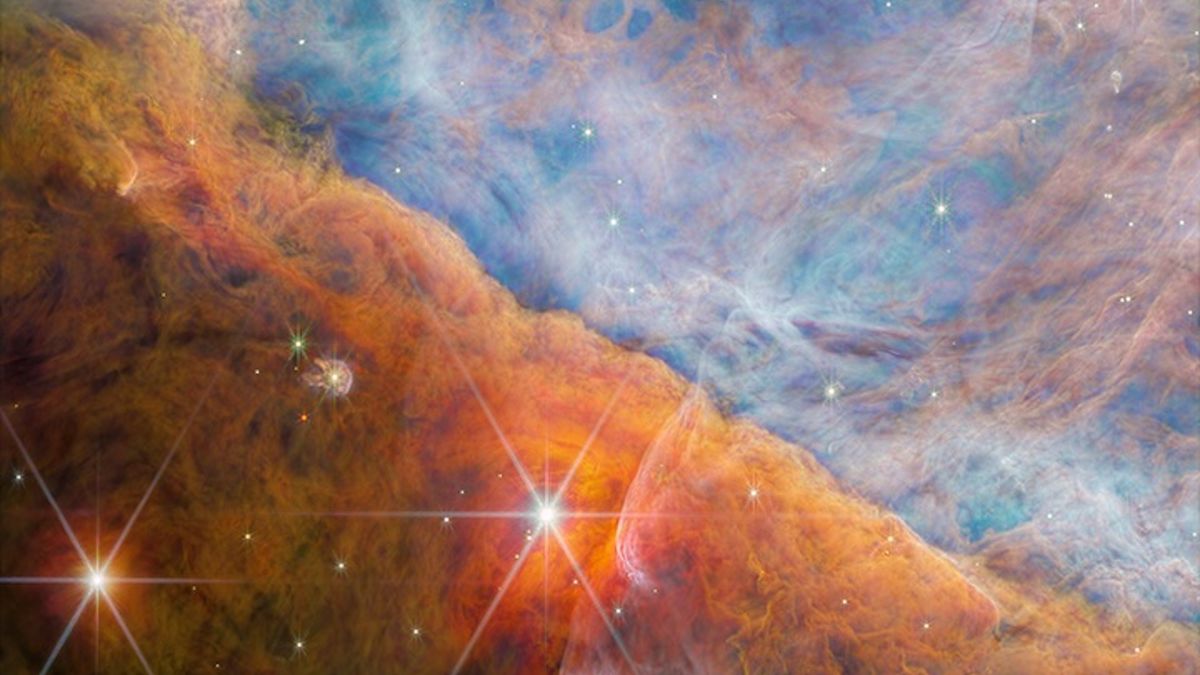
James Webb Telescope Unveils Water Ice on Mysterious Runaway Planets

The James Webb Space Telescope has discovered mysterious Jupiter-sized binary objects, termed JuMBOs, in the Orion Nebula, which may be the remnants of embryonic stars rather than traditional planets. These JuMBOs, found orbiting each other without a parent star, could have formed from pre-stellar cores stripped by high-energy radiation from nearby massive stars, according to a new study. This theory suggests that the JuMBOs are not failed stars but rather products of a unique formation process, though more data is needed to confirm this hypothesis.

Vera Rubin Observatory: Unveiling Hidden Interstellar Objects
science1 year ago

Vera Rubin Observatory: Unveiling Hidden Interstellar Objects

A new study explores how our Solar System could capture interstellar objects (ISOs) or rogue planets, potentially altering its dynamics. The research, published in Celestial Mechanics and Dynamical Astronomy, discusses the concept of phase space, which includes weak and permanent capture points where such objects could become gravitationally bound to the Sun. The study suggests that while rogue planets are likely abundant, their capture into stable orbits is complex and influenced by factors like the galaxy's tidal forces. The Vera Rubin Observatory may soon provide more insights into these phenomena.

"Rogue Planets Linked to Double Star Systems"
science1 year ago

"Rogue Planets Linked to Double Star Systems"

New research suggests that rogue planets, which wander the Milky Way without a parent star, are often ejected from "twisted Tatooine" binary star systems where the stars and planets are misaligned. This discovery could explain the high number of rogue planets in our galaxy, potentially reaching up to a quadrillion. The study highlights that even small planets can be ejected from these systems, contributing significantly to the population of rogue planets.

Astronomers Discover New Rogue Planets Drifting Alone in Space
science-and-space1 year ago

Astronomers Discover New Rogue Planets Drifting Alone in Space

The European Space Agency's Euclid space telescope has discovered seven new rogue planets, which are starless and drift alone through space. These findings highlight the existence of these dark, lonely worlds, which may be more numerous than stars. The discovery comes less than a year after Euclid's launch, showcasing its advanced capabilities in deep space observation.

"Euclid Telescope Unveils More Rogue Planets"
science-and-space1 year ago

"Euclid Telescope Unveils More Rogue Planets"

The Euclid space telescope has discovered seven new rogue planets, adding to the growing evidence that there could be trillions of these starless worlds in the Milky Way. These planets, which exist in perpetual night, may still have the potential to host life. The findings suggest a close connection between star and planet formation, and future missions like NASA's Roman space telescope are expected to uncover even more rogue planets.

Euclid Telescope Unveils Stunning Images of the Dark Universe
science-and-technology1 year ago

Euclid Telescope Unveils Stunning Images of the Dark Universe

The Euclid space telescope has identified dozens of rogue planets in the Orion nebula, marking the first scientific results from its mission. Launched by the European Space Agency, Euclid aims to create a 3D map of the universe and explore dark matter and dark energy. Initial observations have also revealed new star clusters, dwarf galaxies, and distant bright galaxies, showcasing the telescope's wide-field imaging capabilities.