Tag

Microlensing

All articles tagged with #microlensing

Hubble Preps Roman for the Milky Way's Bulge Microlensing Hunt
science15 days ago

Hubble Preps Roman for the Milky Way's Bulge Microlensing Hunt

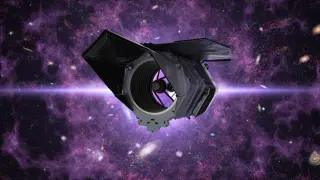
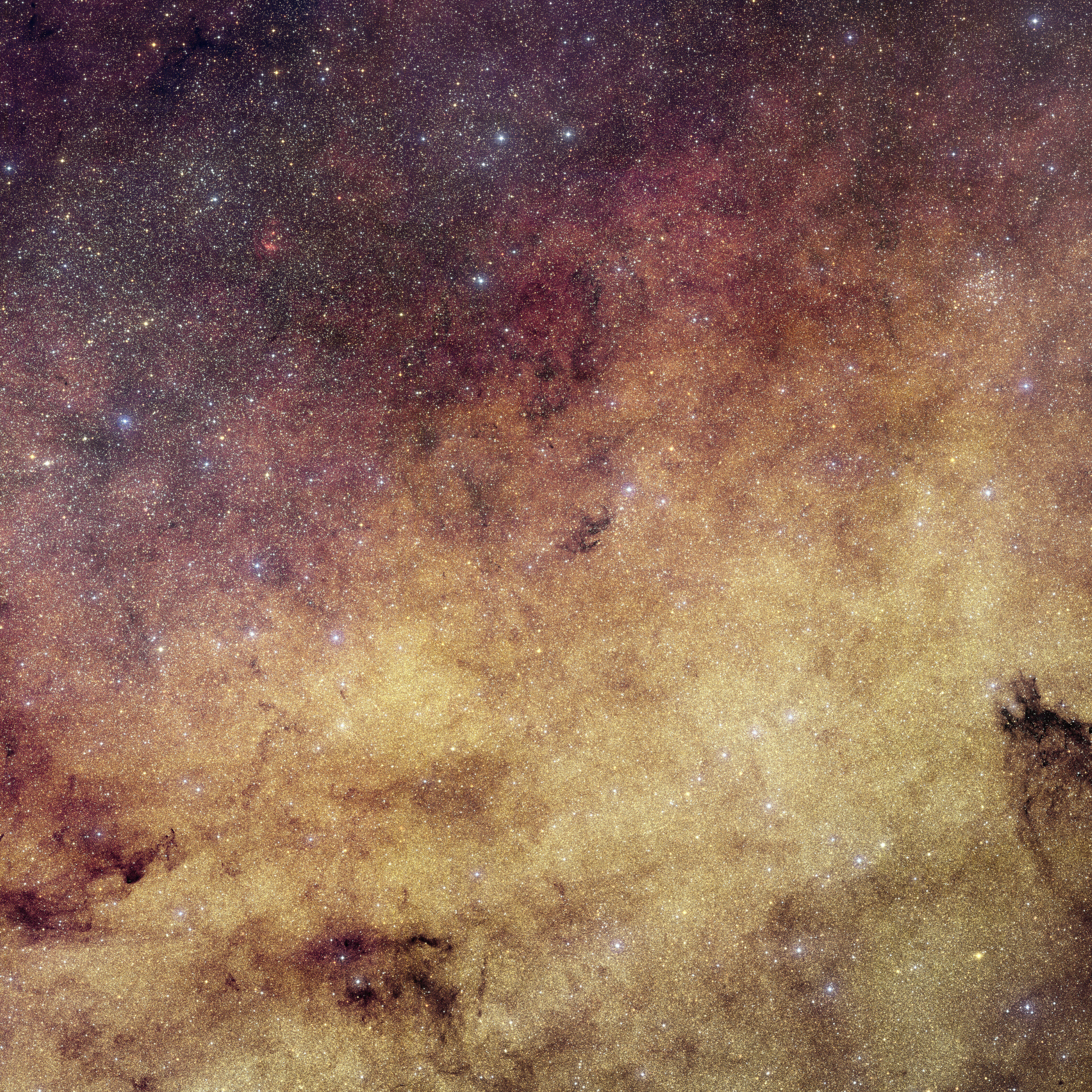
Hubble's precursor imaging of the Milky Way's galactic bulge will calibrate and guide NASA's Nancy Grace Roman Space Telescope’s upcoming Galactic Bulge Time-Domain Survey, enabling precise mass measurements and a census of microlensing events, rogue planets, and compact objects, with six 72‑day seasons and high-cadence observations ahead of Roman's 2026 launch.

Roman Space Telescope Could Weigh Hidden Neutron Stars via Gravitational Microlensing
science20 days ago

Roman Space Telescope Could Weigh Hidden Neutron Stars via Gravitational Microlensing

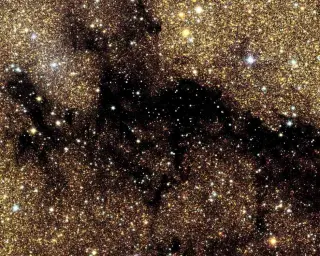
NASA’s Nancy Grace Roman Space Telescope could spot and weigh isolated neutron stars in the Milky Way using astrometric microlensing in its Galactic Bulge Time Domain Survey; by tracking tiny shifts in background starlight as a neutron star passes in front, Roman can directly measure the masses of otherwise invisible remnants, helping map the neutron star–black hole population and shedding light on neutron-star birth kicks, with even a few detections significantly advancing stellar evolution models.

Astronomers Discover Rare Gas Giant Exoplanet Using Unique Microlensing Method
science11 months ago

Astronomers Discover Rare Gas Giant Exoplanet Using Unique Microlensing Method

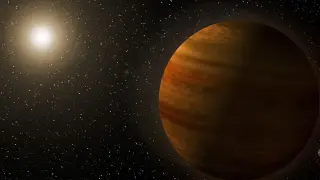
A team of astronomers used gravitational microlensing, a technique based on Einstein's 1936 theory, to discover a rare gas giant exoplanet, AT2021ueyL b, located over 3,200 light-years away in the galactic halo, marking only the third such discovery outside the Milky Way's dense center. This method allows detection of distant, cold planets in wide orbits, providing valuable insights into planetary formation in metal-poor regions. The discovery was facilitated by Gaia satellite alerts and ground-based telescopes, and it highlights the potential of upcoming missions like the Nancy Grace Roman Space Telescope to vastly expand our understanding of exoplanets.

"The Smallest Known Planet: Unveiling the Tiniest Celestial Body"
astronomy2 years ago

"The Smallest Known Planet: Unveiling the Tiniest Celestial Body"

The smallest known planet is Kepler 37-b, discovered in 2013 by scientists using data from the Kepler space telescope. It is smaller than Mercury and about the same size as Earth's moon, orbiting the star Kepler-37. While it shares some similarities with Mercury, its status as a planet is debated due to differences in the definition of a planet for exoplanets. Scientists are now looking to the Nancy Grace Roman Space Telescope, scheduled for launch by May 2027, to find even smaller exoplanets using a technique called microlensing.

"NASA's Advanced Telescope: Discovering Countless Exoplanets and Earth-sized Wanderers"
space-science2 years ago

"NASA's Advanced Telescope: Discovering Countless Exoplanets and Earth-sized Wanderers"

NASA's upcoming Nancy Grace Roman Space Telescope, set to launch between October 2026 and May 2027, could potentially detect 400 Earth-mass rogue planets, shedding light on the formation and evolution of planetary systems. Two new studies suggest that rogue planets are six times more abundant than star-orbiting planets in our galaxy. The telescope's wide field of view and sharp vision will allow for detailed study of these objects, and its improved capabilities are expected to discover around 2,600 exoplanets across the Milky Way. Roman's coronagraph will directly image exoplanets, capturing details of planets that are 10 billion times fainter than their stars.

NASA's Roman mission could discover 400 Earth-mass rogue planets
space2 years ago

NASA's Roman mission could discover 400 Earth-mass rogue planets

A new study by NASA and Osaka University suggests that there are far more rogue planets, which drift through space without orbiting a star, than planets that orbit stars. The study estimates that there could be trillions of rogue planets in our galaxy, with the potential for NASA's upcoming Roman Space Telescope to discover around 400 Earth-mass rogue worlds. The research is based on a nine-year survey using microlensing observations, which revealed the second discovery of an Earth-mass rogue planet. The findings also indicate that Earth-size rogue planets are more common than larger ones, providing insights into planetary formation mechanisms. The Roman Space Telescope, set to launch by May 2027, will significantly expand the search for these hidden worlds.