
Surviving a Nearby Supernova: How Our Infant Solar System Endured
TL;DR
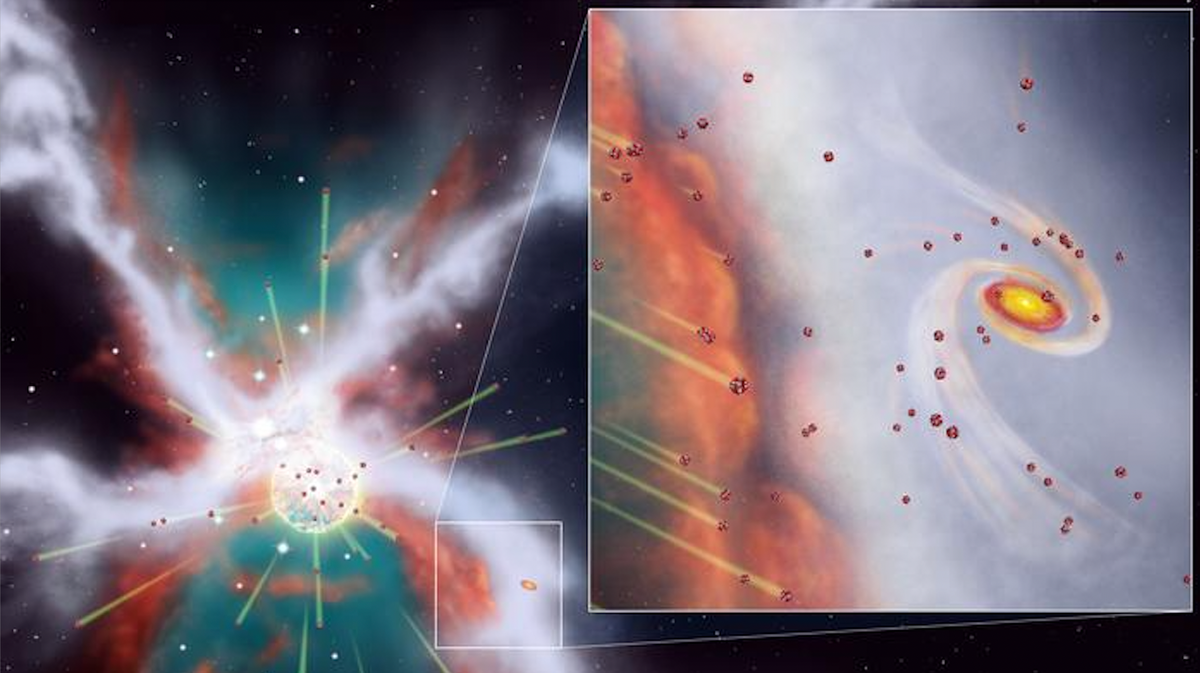
Our solar system may have survived a nearby supernova explosion thanks to a shield of molecular gas, according to a study. Researchers analyzed isotopes of elements found in meteorites and discovered varying concentrations of a radioactive isotope of aluminum, indicating an injection of radioactive material around 4.6 billion years ago. The dense filament of gas surrounding the forming solar system likely acted as a buffer, protecting it from the supernova blast wave. This finding has important implications for understanding the formation and evolution of stars and their planetary systems.
Want the full story? Read the original reporting
Read on Space.com