
Unveiling Ancient Quasars: Starlight and Host Galaxies Discovered
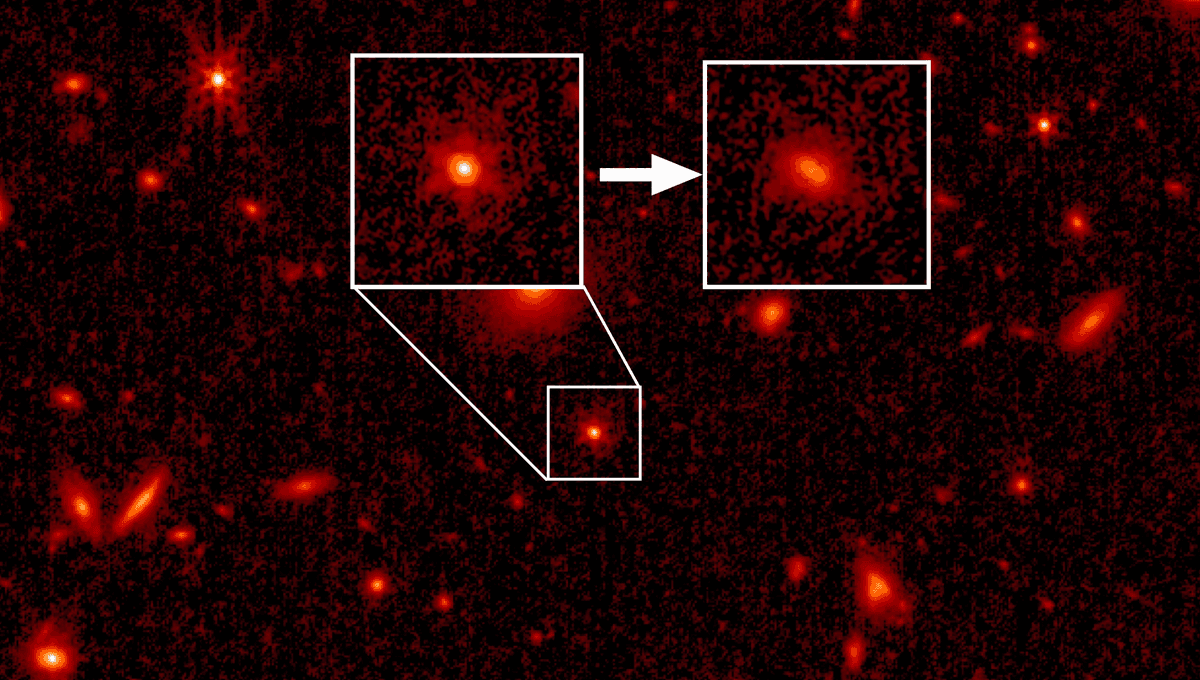
Astronomers using the James Webb Space Telescope (JWST) have observed the surrounding galaxies of two distant quasars, J2236+0032 and J2255+0251, which are among the furthest quasars seen from the early universe. By measuring the starlight from these galaxies, the researchers estimated their stellar mass and found a correlation between the mass of stars and the mass of the supermassive black holes within them, similar to what is observed in the local universe. These findings raise questions about how supermassive black holes grew so quickly and whether this relationship existed even earlier in the universe's history. The study marks the beginning of a more comprehensive investigation into distant sources, with ten more quasars expected to be studied in a similar manner.
- The Starlight Around An Early-Universe Quasar Seen For First Time IFLScience
- James Webb Space Telescope sees 1st starlight from ancient quasars in groundbreaking discovery Space.com
- 860 Million-Year-Old Quasar Had Already Amassed 1.4 Billion Times the Mass of the Sun Universe Today
- Hawaii astronomer detects host galaxies of growing black holes in early universe Hawaii News Now
- Starlight and the first black holes: Researchers detect the host galaxies of quasars in the early universe Phys.org
Reading Insights
0
11
2 min
vs 3 min read
75%
484 → 120 words
Want the full story? Read the original article
Read on IFLScience