
Bacteria-Powered Transistors Create Slow-Mood Living Circuits
TL;DR
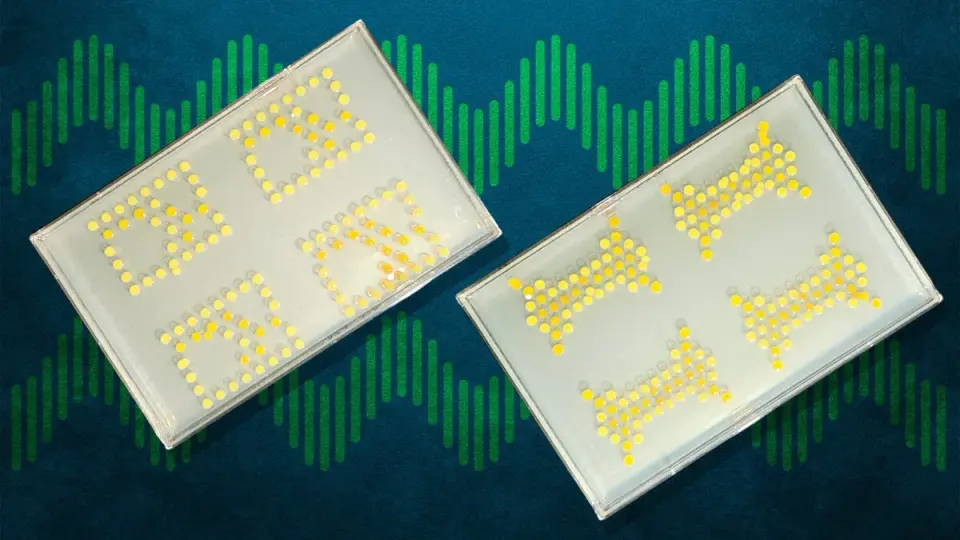
MIT scientists wired three strains of Pantoea agglomerans to act as transistors, forming “living circuit boards” that pass signals via output molecules. The setup can run multiple logic operations, with the largest circuit containing 24 colonies, but each calculation takes about eight hours and the whole system operates for roughly three days due to slow molecular diffusion and growth. Potential uses include monitoring plant roots for stress or pests, illustrating how simple cellular functions can be linked into larger biological circuits—even if not yet a replacement for traditional computers.
- These Transistors Engineered With Bacteria Are Literally Alive, if a Little Slow Gizmodo
- MIT engineers connect bacteria to create living transistors MIT News
- New biological transistors use living bacteria to compute logic inside live plants Interesting Engineering
- MIT researchers engineer bacteria that could program plants for self-defence Dezeen
- MIT Creates Living Transistors, Bacteria Colonies Capable of Switching Signals and Adding Numbers in a Petri Dish TechEBlog -
Want the full story? Read the original reporting
Read on Gizmodo