
Thailand's New 'Devil Flower' Is Critically Endangered
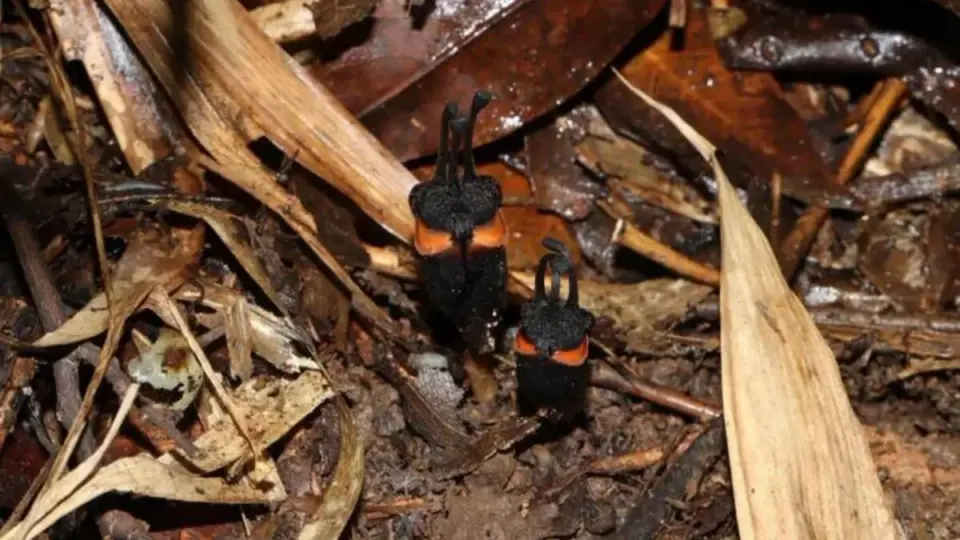
Scientists have formally described a new plant species, Thismia daemona, found in a small forest patch in Thailand's Thong Pha Phum National Park. The leafless, black plant lacks chlorophyll and relies on underground fungi for nutrition, resembling a devil with dark orange lobes and horn-like appendages. Despite its unique appearance, the species is critically endangered, with fewer than 50 individuals known to exist in an area no larger than a football field. Researchers warn that human activity and habitat fragility threaten its survival, highlighting the importance of preserving intact forest ecosystems.
Key points
- The new species Thismia daemona was discovered in Thong Pha Phum National Park, Thailand, at an elevation of nearly 1,000 meters.
- The plant is mycoheterotrophic, meaning it does not photosynthesize but instead derives nutrients from symbiotic fungi connected to other plants.
- Its distinctive morphology includes dark coloration, dark orange outer lobes, and horn-like appendages, leading to its name 'daemona' (devil).
- The species is preliminarily classified as critically endangered by the International Union for Conservation of Nature (IUCN).
- Only one population of fewer than 50 plants has been documented in an area smaller than a football field, making it highly vulnerable to human activity.
Background
Thismia plants, often called 'fairy lanterns,' are a rare genus of small flowering plants typically found in leaf litter. They lack chlorophyll and are mycoheterotrophic, relying on underground fungal networks for sustenance. Previous members of the Thismia section Geomitra were thought to be restricted to lowland rainforests in the Malesian region, such as the Thai-Malay Peninsula, Borneo, and Sumatra. The discovery of T. daemona in a drier, higher-elevation montane forest in western Thailand expands the known geographical range of this lineage.
Why it matters
The discovery of Thismia daemona underscores the fragility of soil ecosystems and the interconnectedness of forest habitats. As a mycoheterotrophic plant, it serves as an indicator of undisturbed, healthy forest ecosystems. Its critically endangered status highlights the urgent need for conservation efforts, including community-led stewardship and habitat protection, to prevent the loss of unique biodiversity in vulnerable environments.
What to watch
Researchers plan to conduct further studies to better understand Thismia daemona and its related species. Conservation efforts will focus on protecting the plant's habitat and promoting sustainable practices to ensure its survival. The team hopes the discovery will raise awareness about the importance of preserving intact forest habitats and mycorrhizal networks that support such peculiar organisms.
Want the full story? Read the original reporting
Read on Gizmodo