Tag

Plants

All articles tagged with #plants

Garlic halts insect reproduction by taste, study finds
plants11 days ago

Garlic halts insect reproduction by taste, study finds

A Yale-led study shows garlic does more than repel pests: when fruit flies and two mosquito species taste the garlic compound diallyl disulfide, it activates the TrpA1 receptor and triggers bitter/ fullness signals that stop feeding and, crucially, reproduction. The effect is taste-based (not smell) and wasps lacking TrpA1 are unaffected. This points to garlic-derived compounds as targeted, safer pest-control tools, and the researchers also introduce phytoscreen as a simple method to screen plant substances for behavioral effects on insects.

Plants Under Stress Emit Ultrasonic Clicks Humans Can’t Hear
science1 month ago

Plants Under Stress Emit Ultrasonic Clicks Humans Can’t Hear

Researchers recorded stressed tomato and tobacco plants and found they emit airborne ultrasonic clicks not audible to humans. Stressed plants produce roughly 30–50 sounds per hour (healthy plants are mostly silent), with sounds varying by stress type (dehydration vs. cutting). A machine-learning model could distinguish healthy vs stressed plants and identify the stress type and plant species. The exact origin may be cavitation, and it’s unclear if these sounds are deliberate signals or byproducts. Ecologically, other organisms might hear and respond to these signals, and there could be agricultural uses for monitoring crop health and irrigation.

Tormentil wildflower offers new angle against antibiotic-resistant superbugs
plants1 month ago

Tormentil wildflower offers new angle against antibiotic-resistant superbugs

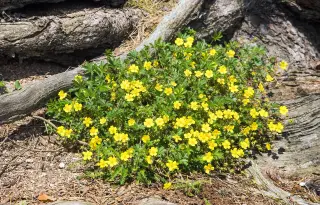
A Southampton-led study finds tormentil, a small yellow bogland wildflower, slows the growth of the drug-resistant bacterium Acinetobacter baumannii and may boost the effectiveness of the last-resort antibiotic colistin. The researchers identified two active compounds, agrimoniin and ellagic acid, that starve bacteria of iron, with consistent antimicrobial activity across three Irish bogs, suggesting potential for plant-based drug development—though translating these findings into safe, effective medicines will require extensive further work.

Storms reveal glowing treetops as corona discharges are captured on camera
plants1 month ago

Storms reveal glowing treetops as corona discharges are captured on camera

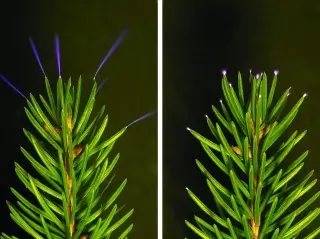
Using a UV camera mounted on a research vehicle, scientists captured hundreds of tiny corona discharges glowing along treetops during thunderstorms, showing that nearly every leaf can glow under a storm’s electric field; each corona carries about a microamp of current and produces hydroxyl radicals that can scrub pollutants but may also damage leaves, with potential implications for forest chemistry and even storm dynamics, observed across multiple storms and tree species and reported in Geophysical Research Letters by Penn State researchers led by P. J. McFarland.

Plant-derived serum prompts rapid hair regrowth in early trial
plants1 month ago

Plant-derived serum prompts rapid hair regrowth in early trial

A Taipei-based randomized, double-blind trial tested a plant-based scalp serum (Centella asiatica–derived vesicles plus caffeine, panthenol, FGF-7, IGF-1) in 60 adults over eight weeks, finding about a 25% increase in hair density and thicker strands versus placebo. While promising, results are from a short study without direct comparison to minoxidil/finasteride, and longer, independent replication is needed to confirm durability and safety.

In Linnaeus's wake: Swedish scientists reveal biodiversity through a striking photo essay
environment1 month ago

In Linnaeus's wake: Swedish scientists reveal biodiversity through a striking photo essay

A Guardian photo essay by Christer Björkman spotlights Swedish scientists, each with a personal object or book, as they explore life from tiny insects to hairy plants. The portraits span entomology, mycology, palaeontology and taxonomy, showcasing researchers continuing Linnaeus’s legacy and highlighting biodiversity and the extinction crisis through a visual record of work across Swedish institutions.

Earth’s green revolution: how land plants transformed the planet
science2 months ago

Earth’s green revolution: how land plants transformed the planet

Plants first evolved from green algae and began colonizing land around 470 million years ago. To survive, they developed a waxy cuticle to reduce water loss, stronger cell walls, and simple anchor structures; by about 420 million years ago, vascular tissue allowed taller growth and the creation of soils, accelerating weathering and increasing atmospheric oxygen. Later, seeds around 380 million years ago improved reproductive success in dry conditions, and flowering plants around 140 million years ago spread with animal pollinators and fruit dispersal, driving widespread biodiversity. This chain of innovations transformed Earth’s atmosphere, soils, and ecosystems, enabling life to flourish on land.

Stressed Plants Emit Ultrasonic Clicks, Hinting at Hidden Sound Language
science2 months ago

Stressed Plants Emit Ultrasonic Clicks, Hinting at Hidden Sound Language

Scientists say stressed plants emit ultrasonic noises—clicks and pops inaudible to humans. A 2023 Cell study led by Lilach Hadany at Tel Aviv University found dehydrated tomato and tobacco plants averaged about 40 clicks per hour, with sounds detectable from over a meter away, suggesting a potential sound-based form of plant communication that could influence nearby insects and animals; cavitation is a likely source, though other mechanisms are being explored, along with how these sounds operate in natural environments.

Pollan probes consciousness: from plant sentience to AI myths in a world of mind
books3 months ago

Pollan probes consciousness: from plant sentience to AI myths in a world of mind

Journalist Michael Pollan discusses his new book A World Appears, which ties together questions about consciousness—what it is, who has it, and why—with explorations of plant sentience, psychedelic experience, and the risk that we mistake chatbots for true consciousness, all while examining how humans relate to mind, self, and technology.

Critique casts doubt on claim that trees anticipate solar eclipses
science3 months ago

Critique casts doubt on claim that trees anticipate solar eclipses

A new critique published in Trends in Plant Science questions the 2025 study that linked synchronized bioelectrical activity in spruce trees to a partial solar eclipse, arguing the small sample size, numerous variables, and lack of alternative explanations undermine the claim; some scientists label the work as pseudoscience, while the original researchers defend the preliminary results and say follow-up studies are ongoing.

Plants click back: moths use plant distress sounds to pick egg sites
science4 months ago

Plants click back: moths use plant distress sounds to pick egg sites

Researchers found female moths (Spodoptera littoralis) can hear ultrasonic sounds emitted by drought-stressed plants and use these cues to decide where to lay eggs. In experiments without real plants, moths preferred locations near a stress sound; when healthy plants were present, they avoided the stressed plants, showing context-based decision-making that integrates sound with smell.

West African plant hints at cross-species gene exchange
science4 months ago

West African plant hints at cross-species gene exchange

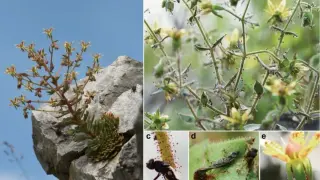
A West African cliff-dwelling plant, Virectaria stellata, exhibits unusual stellate hairs and genetic traits not typical for its Rubiaceae family, suggesting possible horizontal gene transfer from another species. While researchers, including UGANC and RBG Kew, test genomic sequences to confirm gene movement, they note that the mechanism remains uncertain and that the plant is not parasitic. Further sampling in Guinea and genomic analyses will help determine whether real gene transfer occurred and how it shaped the plant’s traits.