
Proteome expanded by microproteins and a new peptidein category
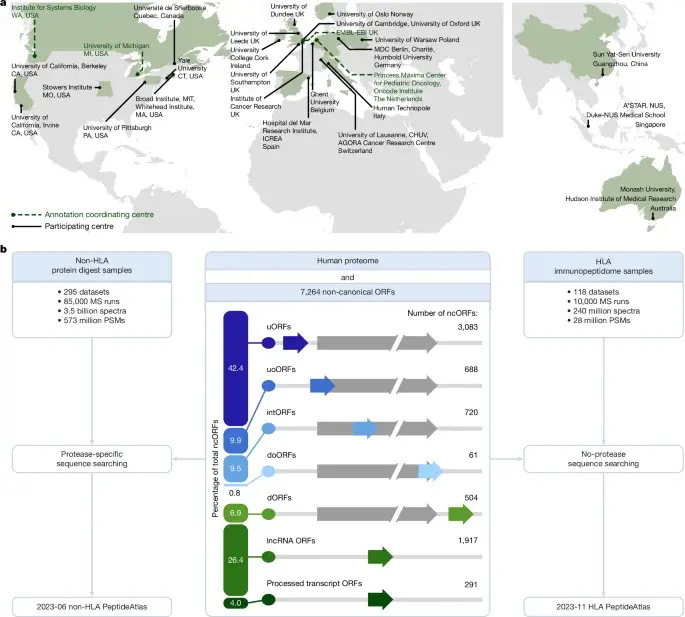
An international study standardizes evidence for thousands of non-canonical ORFs (ncORFs) and introduces the term peptidein for ncORF-encoded microproteins. Analyzing 7,264 ncORFs across 95,520 proteomics experiments, researchers find roughly 25% yield detectable peptides, and they develop an annotation framework using proteomics, immunopeptidomics, and Ribo-seq to classify ncORFs into protein or peptidein status. They also introduce ORBL and ORBLq to measure evolutionary constraint on ORFness, showing detected ncORFs often have higher constraint. The work identifies pan-essential ncORFs that meet criteria for potential protein-coding genes or peptideins and outlines a path to elevate ncORFs toward reference annotation, thereby broadening the recognized human proteome with implications for cancer biology and immunotherapy.
- Expanding the human proteome with microproteins and peptideins Nature
- How a global effort to explore the 'dark proteome' is upending our understanding of human disease statnews.com
- The human genome encodes for a new category of molecule The Economist
- How many genes are in the human genome? For once, it’s more than we thought C&EN
- Dark proteome yields 1,785 new microproteins that could reshape disease research Phys.org
Want the full story? Read the original reporting
Read on Nature