
Study redefines honeybee colonies as mortal lineages, not immortal superorganisms
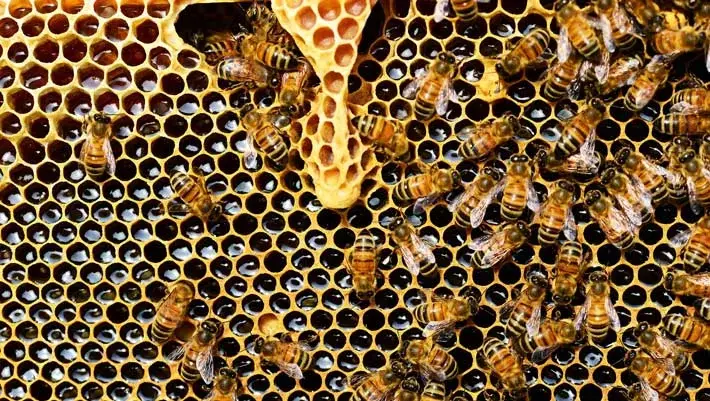
A review paper argues that honeybee colonies are not immortal entities but mortal superorganisms with distinct life cycles. Researchers propose that swarming is a survival mechanism for the parent colony, not reproduction, and that replacing a queen effectively kills the existing colony. This challenges conventional beekeeping practices and interpretations of wild colony longevity.
Key points
- Dr. Hannes Bonhoff (Lund University) and Dr. Heikki Helanterä (University of Oulu) argue that a change in queen signifies a new biological individual, not the continuation of the same colony.
- The authors redefine swarming: the prime swarm is the parent colony moving to survive, while afterswarms carry unmated queens to produce offspring.
- They propose renaming hive roles using cell biology terms: drones as 'sperm bees,' virgin queens as 'egg bees,' laying queens as 'stem bees,' and workers as 'somatic bees.'
- The paper suggests that requeening, a common beekeeping practice, kills the existing superorganism rather than rejuvenating it, potentially harming parasite resistance.
- Published in August 2026 in Insectes Sociaux, the review is based on existing literature and does not include new experimental data.
Background
The concept of the honeybee colony as a 'superorganism' has been central to entomology since the early 20th century, with E.O. Wilson’s 1971 work treating colonies as potentially immortal. This new review challenges that long-standing view by focusing on genetic identity and life cycles, offering a new framework for understanding colony dynamics and beekeeping interventions.
How outlets are covering it
Both Sci.News and Earth.com report on the same review paper, agreeing on the core arguments regarding colony mortality and the redefinition of swarming. Sci.News emphasizes the biological terminology changes (e.g., 'sperm bees') and the analogy to marine worms, while Earth.com highlights the practical implications for beekeeping and the lack of new experimental data in the review. Both sources note that the paper is a synthesis of existing studies rather than new empirical research.
Why it matters
This redefinition could influence how beekeepers manage colonies and how researchers measure wild population health. If requeening is seen as killing a colony rather than rejuvenating it, it may affect strategies for honey production and pollination services. Additionally, it suggests that previous studies on colony lifespan may have misinterpreted nest occupancy as the life of a single superorganism.
What to watch
The authors call for better methods to track wild colonies to test these hypotheses. Future research may need to develop genetic sampling techniques that can distinguish between successive superorganisms in the same nest, particularly in the context of Varroa mite infestations.
- Honeybee Swarms Have Been Misread for Centuries, Biologists Say Sci.News
- Viewing honey bee colonies as superorganisms could reshape beekeeping practices Phys.org
- The Superorganism: How Honey Bees Redefine What It Means To Be Alive Luxurious Magazine
- Replacing a queen may mean the death of a bee colony Earth.com
Want the full story? Read the original reporting
Read on Sci.News