
Polar Ice Sheets Shed 11.3 Trillion Tons Since 1979, Driven by Faster Glaciers
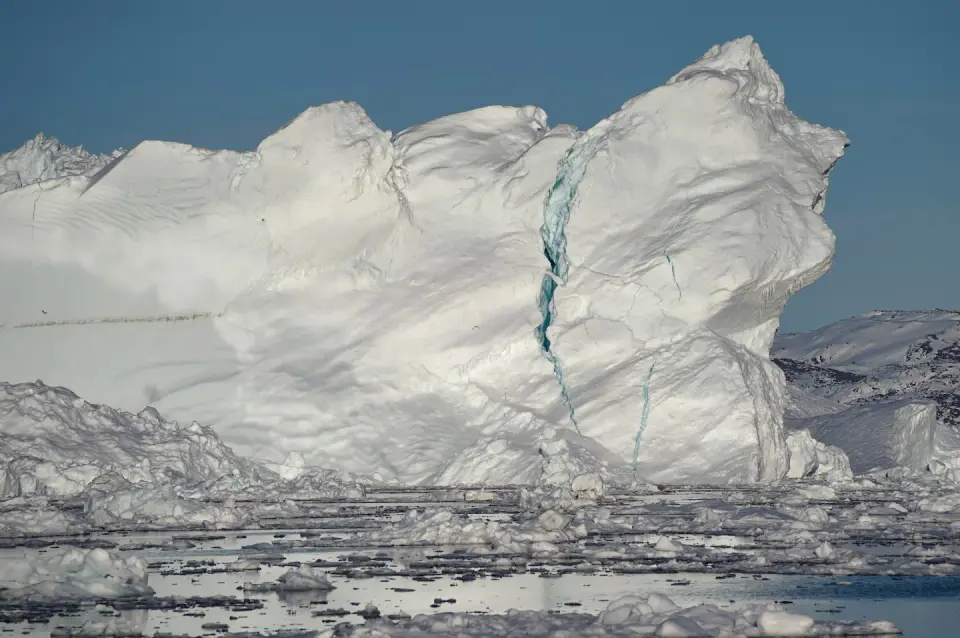
A new study reveals that Greenland and Antarctica have lost 11.3 trillion tonnes of ice since the late 1970s, contributing 3.14 centimeters to global sea-level rise. The research highlights that 84% of this loss is driven by glaciers flowing faster into the ocean, rather than surface melting. While a temporary slowdown occurred between 2020 and 2023 due to weather variations, the long-term trend of accelerating ice loss continues, posing significant risks to coastal communities.
Key points
- The Ice Sheet Mass Balance Intercomparison Exercise (IMBIE) analyzed 42 independent satellite surveys to track ice loss from 1972/1979 to 2023.
- Greenland and Antarctica combined lost 11,309 billion tonnes of ice, with Greenland accounting for 1.81 cm of sea-level rise and Antarctica for 1.33 cm.
- Dynamic processes, such as glaciers accelerating and discharging ice into the ocean, caused 84% of the total mass loss, while surface melting accounted for only 16%.
- A temporary pause in ice loss between 2020 and 2023 was attributed to high snowfall in East Antarctica and mild summers in Greenland, not a reversal of the long-term trend.
- The Jakobshavn Glacier in Greenland is currently retreating at a rate of up to 50 meters per day, illustrating the rapid pace of dynamic ice loss.
Background
This study builds on previous IMBIE assessments that focused on the 1990s to 2020 period. Recent archive coverage has highlighted specific events, such as the 2026 Petermann Glacier calving and record-breaking calving events documented by the Extreme Ice Survey, which visually confirm the rapid ice loss quantified in this new dataset. The findings align with earlier reports noting that dynamic glacier processes are increasingly dominating ice sheet mass balance.
How outlets are covering it
The Washington Post emphasizes the visual scale of ice loss, noting that the Jakobshavn Glacier generates 41 billion metric tons of icebergs annually. NBC News highlights the human impact, stating that every 0.3 inch of sea-level rise floods 2-3 million people annually. The European Space Agency (ESA) focuses on the methodological breakthrough, noting that combining 27 satellite missions allows for a 50-year record that distinguishes dynamic loss from surface melting. All sources agree that the 2020-2023 slowdown was temporary and driven by weather, not a change in the underlying climate trend.
Why it matters
The study provides the most robust long-term record of ice sheet mass balance, reducing uncertainty in future sea-level projections. Since dynamic ice loss is more prone to tipping points, understanding its dominance over surface melting is critical for predicting coastal flooding risks. The data confirms that even if global warming were halted, the momentum of faster-flowing glaciers would continue to raise sea levels for decades.
What to watch
Scientists expect the accelerating trend to resume, as recent measurements beyond 2023 show ice loss picking up again. Future satellite missions, such as ESA’s CRISTAL and ROSE-L, will be critical for monitoring these rapid changes. Policymakers and coastal communities will use these refined projections to update infrastructure planning and adaptation strategies for the coming decades.
- See how polar glaciers have lost trillions of tons of ice The Washington Post
- Satellite data shows major ice losses for Greenland and Antarctica reuters.com
- Mass balance of the Greenland and Antarctic ice sheets from the 1970s to 2023 | Scientific Data Nature
- Satellites show Earth lost more than 12 trillion tons of ice from Greenland, Antarctica in 47 years NBC News
- Faster-flowing glaciers fuel decades of polar ice loss European Space Agency
Want the full story? Read the original reporting
Read on The Washington Post