Tag

Antarctic Ice Sheet

All articles tagged with #antarctic ice sheet

Study confirms Antarctic ice loss is inevitable this century, with high emissions driving up to 25 cm sea-level rise
climate-and-environment1 month ago

Study confirms Antarctic ice loss is inevitable this century, with high emissions driving up to 25 cm sea-level rise

A new study in Nature concludes that the Antarctic Ice Sheet is committed to mass loss by 2100, even under aggressive emissions cuts. Using machine learning to analyze ice-sheet models, researchers found that higher emissions significantly increase projected sea-level rise, potentially reaching 25.4 cm by 2100 under worst-case scenarios. The study highlights that physical assumptions in models, not just emissions, drive uncertainty, and that satellite data confirms the inevitability of ice loss.
Polar Ice Sheets Shed 11.3 Trillion Tons Since 1979, Driven by Faster Glaciers
climate-and-environment2 months ago

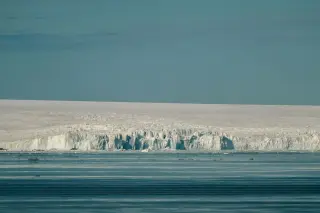
Polar Ice Sheets Shed 11.3 Trillion Tons Since 1979, Driven by Faster Glaciers

A new study reveals that Greenland and Antarctica have lost 11.3 trillion tonnes of ice since the late 1970s, contributing 3.14 centimeters to global sea-level rise. The research highlights that 84% of this loss is driven by glaciers flowing faster into the ocean, rather than surface melting. While a temporary slowdown occurred between 2020 and 2023 due to weather variations, the long-term trend of accelerating ice loss continues, posing significant risks to coastal communities.

Physics, Not Magic: How Pressure and Geothermal Heat Keep Lake Vostok Liquid
science4 months ago

Physics, Not Magic: How Pressure and Geothermal Heat Keep Lake Vostok Liquid

Lake Vostok, a subglacial body of water beneath East Antarctica, remains liquid despite being sealed under four kilometers of ice for approximately 15 million years. This persistence is driven by a combination of immense pressure, which lowers the freezing point of water, and continuous geothermal heat from Earth’s interior. The lake’s surface area is roughly 14,000 square kilometers, comparable to Lake Ontario, though its volume is likely larger due to greater depth. While the lake is isolated from sunlight, it is not static; ice melts and freezes at its roof, creating a slow circulation system. Although microbial life has been detected in accretion ice, contamination concerns from the 2012 drilling expedition mean that definitive evidence of a thriving ecosystem remains elusive. This environment serves as a critical analogue for assessing the potential of life on icy moons like Europa.

Warming Oceans and Ice Melt Confirmed as Primary Drivers of Global Sea-Level Rise
science6 months ago

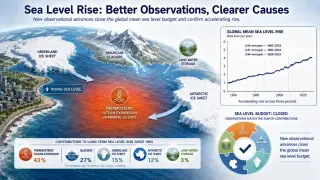
Warming Oceans and Ice Melt Confirmed as Primary Drivers of Global Sea-Level Rise

A new Science Advances study shows global mean sea level has risen about 2.06 mm/year since 1960 and accelerated to 3.94 mm/year from 2005–2023, with ocean warming accounting for about 43% of the rise and ice melt from glaciers (27%), Greenland (15%), and Antarctica (12%) becoming larger contributors over time; corrections to satellite data and tide gauges resolve a long-standing measurement gap, and scientists warn sea level will keep rising for centuries even if emissions stabilize.

Scientists Discover a Hidden Ancient World Beneath Antarctica's Ice
science1 year ago

Scientists Discover a Hidden Ancient World Beneath Antarctica's Ice

Scientists using satellite imagery discovered a 34-million-year-old landscape beneath the East Antarctic Ice Sheet, offering insights into past climate cycles and potential future ice melt impacts, including significant sea level rise. The find provides a rare glimpse into Earth's geological history and emphasizes the importance of understanding ice dynamics in the context of global warming.

"Preventing Antarctic Ice Sheet Melt: New Modeling and Climate Engineering Solutions"
earth-and-environment3 years ago

"Preventing Antarctic Ice Sheet Melt: New Modeling and Climate Engineering Solutions"

Researchers have developed a more accurate prediction of past Antarctic ice sheet melt, providing a realistic forecast of future sea level rise. By studying historical records and fossilized sea-level markers in Australia, the team determined that the Antarctic ice sheet contributed 9.8 meters to sea level during the Mid-Pliocene era, reducing previous estimates of global mean sea level rise by 2100 to between 5 and 9cm. The improved modeling will help inform policy and aid in the protection of coastal and low-lying communities vulnerable to even small changes in sea level.

Seals Uncover Antarctic Secrets with Style
science3 years ago

Seals Uncover Antarctic Secrets with Style

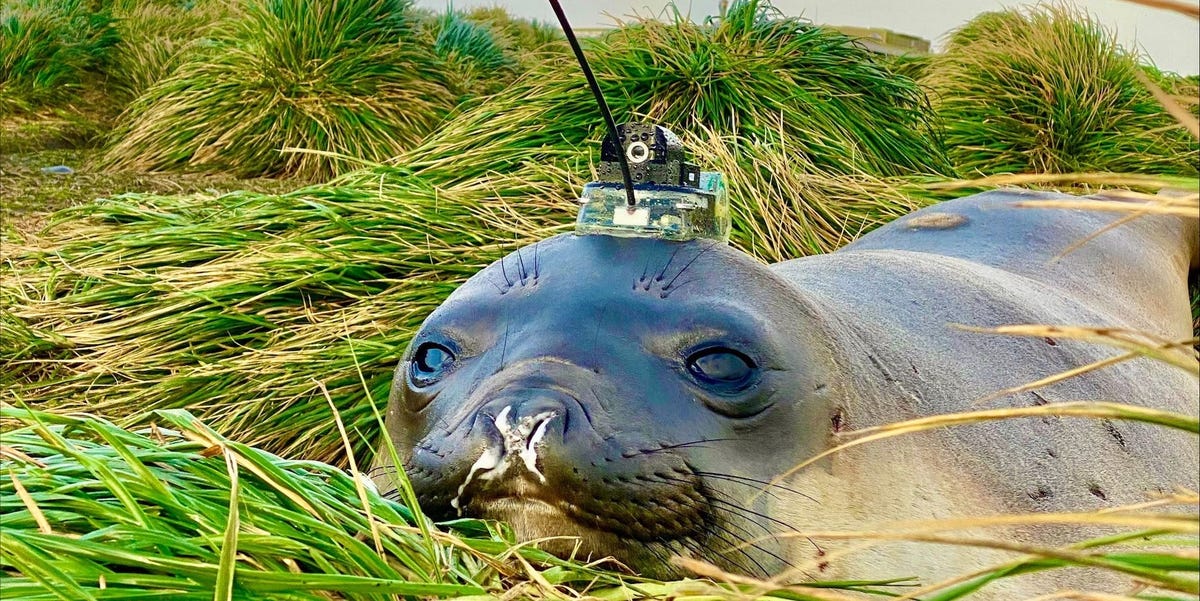
Scientists have utilized Antarctic seals as "heroes" in mapping the ocean floor by attaching trackers to their heads. The deep-diving seals have revealed a massive underwater canyon over a mile deep in Vincennes Bay, Antarctica. This discovery may aid in predicting the response of the Antarctic ice sheet to climate change. Understanding the ocean geography and underwater features helps scientists understand past and future changes in the ice sheet and identify areas at higher risk of melting. The seals' annual shedding of fur ensures their well-being during the study.

Uncovering Surprising Antarctic Secrets through Rock Mapping.
climate-science3 years ago

Uncovering Surprising Antarctic Secrets through Rock Mapping.

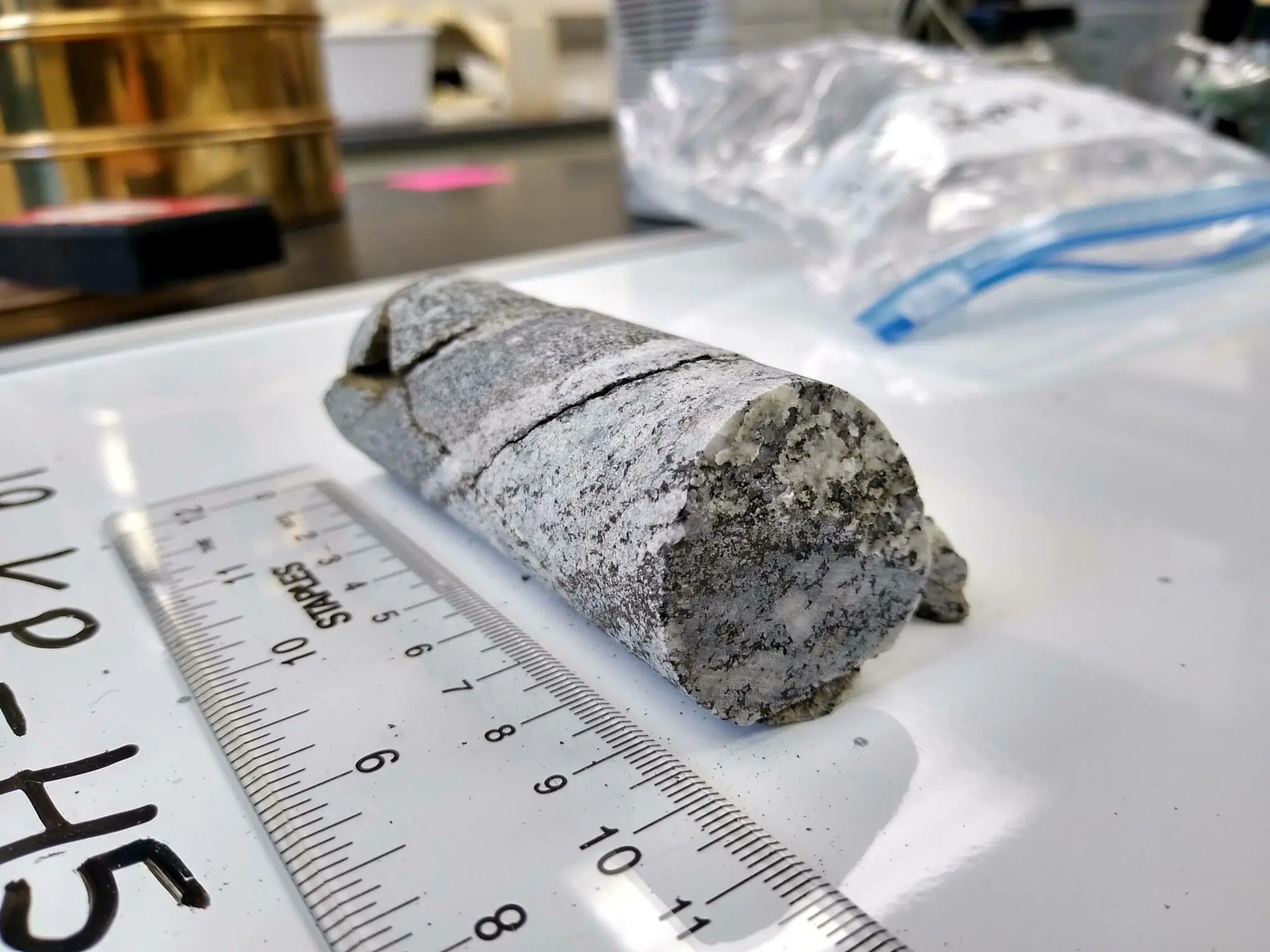
Researchers from the International Thwaites Glacier Collaboration found that the West Antarctic Ice Sheet had been thinner in the past and had regrown, suggesting that glacial retreat could be reversed. The study used rock samples to show that ice near Thwaites Glacier was at least 35 meters thinner in the last 5000 years and took a minimum of 3000 years to reach its current size. However, this recovery timeframe poses concerns given the expected impact of sea level rise due to imminent climate change.