
Satellite Data Reveals 12.5 Trillion Tons of Ice Lost in Polar Regions Since 1979
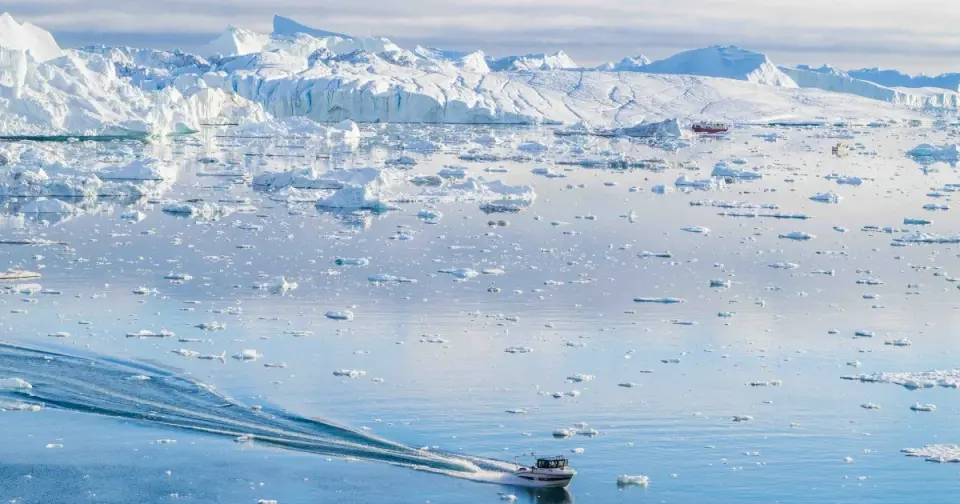
A major scientific study published in Scientific Data confirms that Earth’s polar ice sheets have lost approximately 12.5 trillion tons of ice since 1979. This massive loss, equivalent to covering the continental United States in five feet of ice, has contributed to a global sea level rise of about 3.1 centimeters. The research, led by the European Space Agency and incorporating NASA data, highlights that ocean warming, rather than air temperature, is the primary driver of this accelerated melting.
Key points
- The study, published in Scientific Data, documents a loss of 12.5 trillion tons (11.3 trillion metric tons) of ice from Greenland and Antarctica between 1979 and 2023.
- This ice melt has generated nearly 3 quadrillion gallons of water, contributing to a global sea level rise of approximately 3.1 centimeters.
- Researchers found that five-sixths of the ice loss is driven by warmer ocean waters eroding ice from below and the sides, rather than atmospheric heating.
- The Jakobshavn glacier in Greenland is currently retreating at a rate of up to 50 meters per day, according to lead author Ines Otosaka.
- While a temporary pause in melting occurred between 2020 and 2023 due to record snowfall in East Antarctica, the long-term trend of accelerating loss has resumed.
- The study utilized 45 independent surveys and 27 different satellites to track ice volumes back to 1972 in Greenland and 1979 in Antarctica.
Background
Recent satellite imagery from August 2026 documented a significant calving event at Greenland’s Petermann Glacier, where a 29-square-mile ice island broke away, marking the largest such event in the Arctic since 2012. Additionally, a September 2026 report noted that a temporary record gain in East Antarctic ice, driven by tropical warm pool circulation, did not reverse the continent’s long-term annual loss of approximately 140.5 billion tons. These events underscore the ongoing instability of polar ice sheets.
Why it matters
The findings indicate that polar ice loss is accelerating and is primarily driven by oceanic warming, which poses a higher risk of triggering abrupt 'tipping points' in ice sheet stability. As sea levels rise, an estimated 2 to 3 million additional people are flooded annually for every centimeter of increase, exacerbating vulnerabilities in coastal regions worldwide.
What to watch
Scientists warn that the current trend of accelerating ice loss is likely to continue for decades, even if global heating is halted, due to the lag between warming and ice melt. The focus will remain on monitoring dynamic processes in Antarctica, which are prone to instability, and assessing the long-term impacts on global sea levels and coastal infrastructure.
Want the full story? Read the original reporting
Read on NBC News