
Santorini’s Akrotiri: The Bronze Age City Preserved by Volcanic Ash
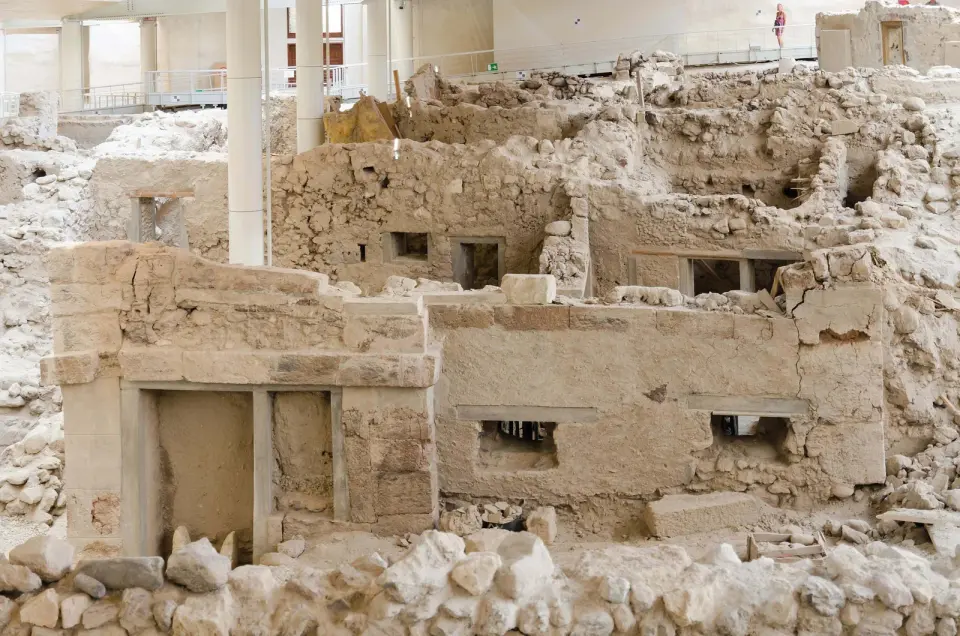
On this day in 1967, archaeologist Spyridon Marinatos identified the ruins of Akrotiri on the Greek island of Santorini. Often called 'Greece’s Pompeii,' the site was preserved by ash from the Minoan eruption around 1600 BCE, offering a detailed snapshot of Bronze Age urban life, including multi-story buildings, advanced plumbing, and vibrant frescoes.
Key points
- The site of Akrotiri was discovered in 1967 by archaeologist Spyridon Marinatos on the southern coast of Santorini.
- Buried by volcanic ash from the Minoan eruption approximately 3,600 years ago, the city remained remarkably intact, similar to Pompeii in Italy.
- Excavations revealed a sophisticated Bronze Age settlement featuring multi-story structures, advanced drainage systems, and intricate wall paintings.
- The discovery provided crucial insights into Minoan culture, trade networks, and daily life in the Aegean region during the 16th century BCE.
Background
This historical discovery stands in contrast to recent tragic events in Greece, such as the 2026 murder case involving a Scottish aid worker found in a suitcase, which highlighted modern security and migration issues. While the archive focuses on contemporary legal and social crises, the Akrotiri site serves as a foundational element of Greek cultural heritage, illustrating the advanced societal structures that existed millennia before modern geopolitical challenges.
Why it matters
Akrotiri is vital for understanding the Minoan civilization and the impact of natural disasters on ancient societies. Its preservation allows researchers to study urban planning, artistic expression, and technological advancements of the Bronze Age without the distortions of later historical periods, offering a unique window into pre-classical Greek history.
What to watch
Ongoing conservation efforts and further archaeological studies at Akrotiri aim to uncover more details about the site's destruction and the lives of its inhabitants. Researchers continue to analyze the frescoes and structural remains to refine timelines of the Minoan eruption and its broader impact on Aegean trade and culture.
Want the full story? Read the original reporting
Read on greekreporter.com