
Gravity scans reveal 1.5 million cubic meters of hidden ice in Utah’s Mount Timpanogos
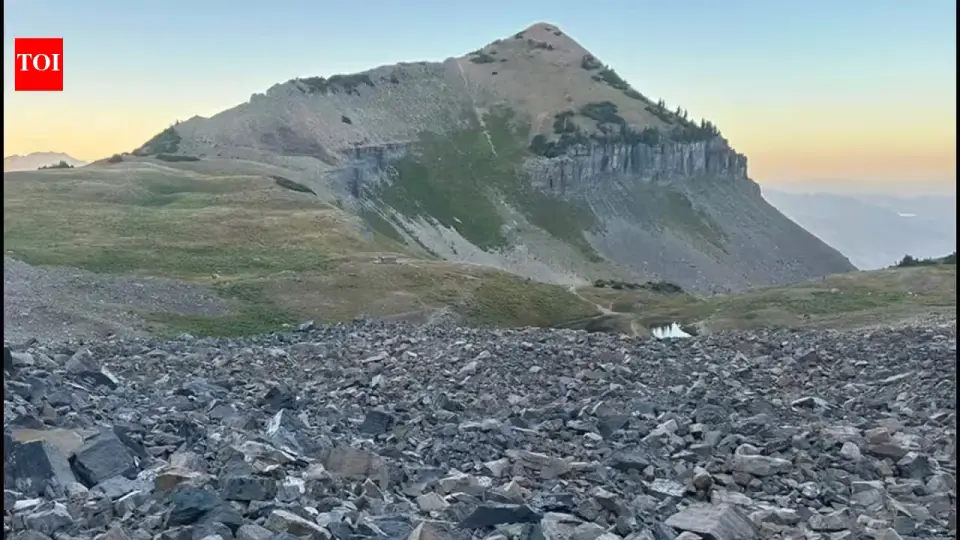
University of Utah researchers used gravity measurements to map a massive ice reservoir beneath Mount Timpanogos, finding 1.55 million cubic meters of ice hidden under rock. This discovery suggests Utah’s rock glaciers may hold billions of tons of water, offering potential relief for the state’s arid climate while raising concerns about flood hazards.
Key points
- Researchers mapped the Timpanogos Rock Glacier using 232 gravity readings, revealing 1.55 million cubic meters of ice, equivalent to 600 Olympic pools.
- The ice is up to 150 feet thick and composed of 83% ice and 17% rock, formed by debris burying persistent snow over millennia.
- Utah’s 836 rock glaciers may collectively store about 1 gigaton of water, potentially supporting 1.6 million households annually.
- While the ice provides a slow-melting water source for dry regions, it also poses flood risks, especially as climate change destabilizes glacial structures.
- The study, published in the Journal of Geophysical Research, highlights rock glaciers as dynamic systems rather than just ancient relics.
Background
This discovery builds on earlier reports from August 2026 that estimated Utah’s rock glaciers hold approximately 1 billion tons of ice. Previous coverage noted that while these formations could become vital water sources for the arid state, scientists still needed to quantify their contribution to urban water supplies. The current findings provide the first detailed 3D mapping of a specific rock glacier, moving beyond general estimates to precise measurements of internal ice volume.
How outlets are covering it
The Times of India and Science Daily emphasize the technical breakthrough of using gravity readings to visualize the ice, highlighting the 83% ice composition. KSL News focuses on the practical implications for Utah’s water supply and the potential flood hazards, noting the connection to recent catastrophic events in Nepal. The Salt Lake Tribune frames the discovery within the broader context of a 'water crisis' in the arid West, stressing the potential for these reserves to support 1.6 million households. All sources agree on the volume of ice found but differ in emphasis: some highlight the scientific method, while others focus on the environmental and societal impacts.
Why it matters
As climate change intensifies droughts in the American West, understanding hidden water reserves is critical for resource management. The discovery that rock glaciers can store vast amounts of ice, insulated by rock, suggests they may persist longer than exposed glaciers, offering a potential buffer against water scarcity. However, the instability of these formations also raises concerns about sudden floods, making their study essential for both water security and disaster preparedness.
What to watch
Researchers plan to apply the gravity measurement techniques to other rock glaciers in Utah, particularly in Little Cottonwood Canyon, to map more hidden ice. They also aim to quantify how much melt from these glaciers contributes to local streams and groundwater, which could inform future water policy and infrastructure planning in the region.
- Scientists took 232 gravity readings across a Utah mountain and discovered 1.55 million cubic metres of ice hidden beneath loose rock, enough frozen water to fill about 600 Olympic swimming pools The Times of India
- U. researchers find possible water source in Mount Timpanogos rock glacier KSL News
- Utah’s mountains may be hiding a billion tons of ice The Salt Lake Tribune
- Scientists find a huge hidden ice reservoir beneath Utah’s mountains Science Daily
- Utah mountain ranges may store a billion tons of hidden ice Phys.org
Want the full story? Read the original reporting
Read on The Times of India