
Thwaites Glacier Melting Rate Doubled in New Model, Threatening Global Sea Levels
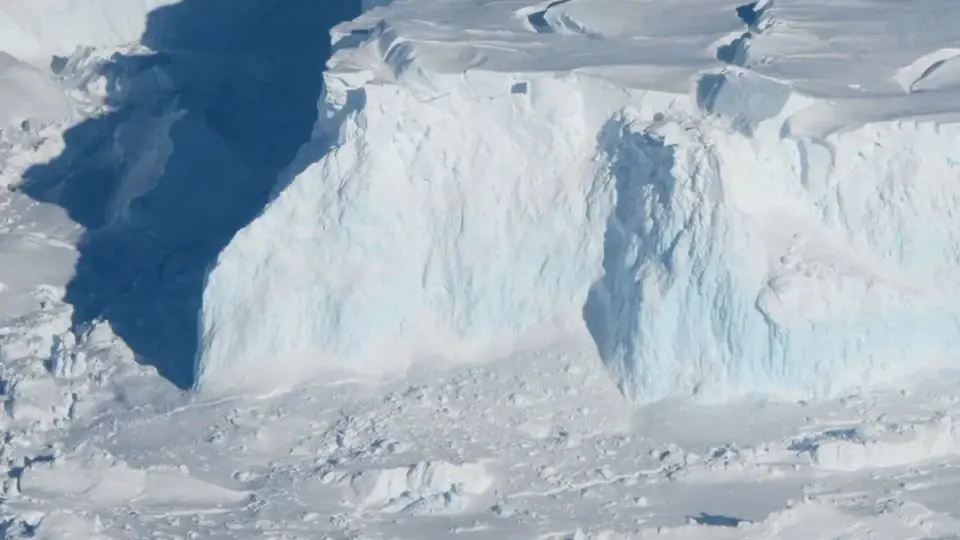
A new study reveals that the Thwaites Glacier, often called the 'Doomsday Glacier,' is melting significantly faster than previously estimated. By accounting for dynamic 'grounding zones' where warm ocean water penetrates under the ice, researchers project the glacier could contribute up to 1.2 inches to global sea-level rise by 2100, doubling earlier forecasts.
Key points
- The Thwaites Glacier in West Antarctica is melting more aggressively than previous models predicted.
- Satellite data indicates the 'grounding line' is actually a wide 'grounding zone' allowing warm water to reach deep under the ice.
- New models estimate the glacier could add 1.2 inches to sea levels by 2100, double the prior estimates.
- This accelerated melting raises concerns for coastal cities like Miami and Manila.
Background
This development follows recent reports of accelerated glacial loss in other regions, including Swiss glaciers losing a record 5.5% of ice in 2026 and Himalayan glaciers melting 65% faster than a decade ago. These trends highlight a global pattern of rapid ice loss driven by warming temperatures and changing ocean currents.
How outlets are covering it
Both Yahoo News and WPTA/CNN report on the same new study, agreeing that the Thwaites Glacier is melting more aggressively than previously thought. The key insight from the research is the redefinition of the 'grounding line' as a 'grounding zone,' which allows warm water to penetrate further under the ice. This finding doubles the projected sea-level rise contribution by 2100 to 1.2 inches. There is no disagreement between the sources, but the emphasis on the 'grounding zone' mechanism is a critical detail that updates previous understanding of the glacier's vulnerability.
Why it matters
The Thwaites Glacier is a major contributor to potential sea-level rise. If it collapses, it could trigger a cascade of ice loss in Antarctica, significantly impacting global sea levels. The updated projections suggest that coastal cities and low-lying areas may face more severe flooding and displacement than previously anticipated, necessitating urgent adaptation strategies.
What to watch
Researchers will continue to monitor the Thwaites Glacier using satellite data and new ice sheet models to refine predictions. Policy makers and coastal communities may need to reassess their adaptation plans in light of the doubled sea-level rise projections. Further studies may explore the long-term stability of the glacier and its potential to trigger broader ice sheet collapse.
Want the full story? Read the original reporting
Read on Yahoo