
Rare 11,000-Year-Old Mastodon Molar Discovered in San Mateo County Creek
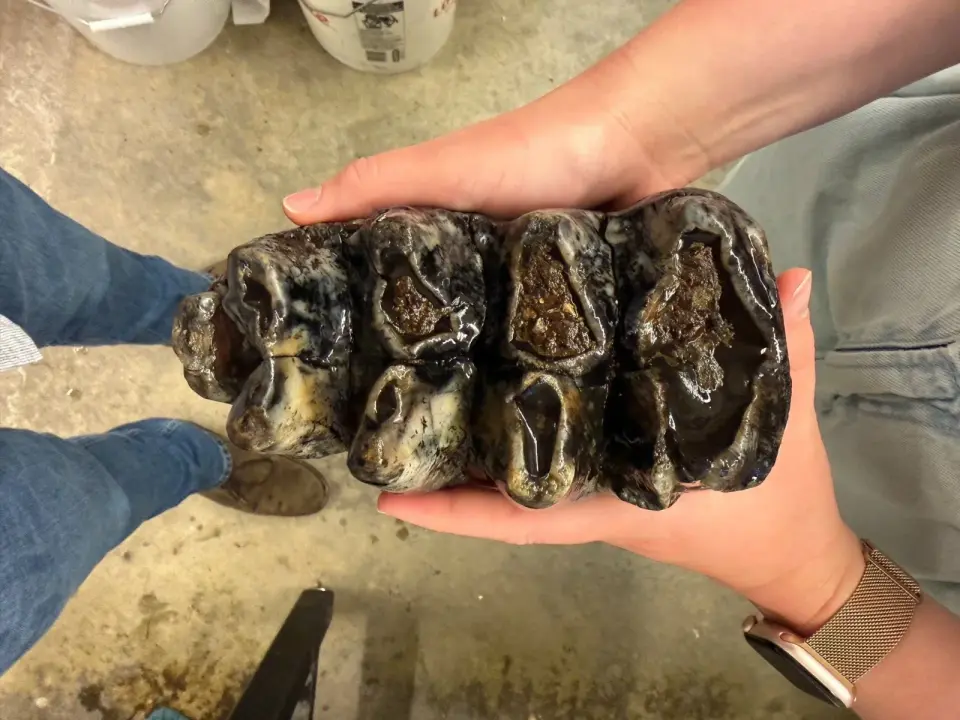
A geomorphologist discovered a remarkably preserved Pacific mastodon molar in a San Mateo County creek during a red-legged frog restoration project. The 11,000-year-old fossil, described as the most complete mastodon molar found in the Bay Area, is now housed at Stanford University for analysis. Experts note the find highlights the Ice Age landscape of the region, which featured lower sea levels and diverse wildlife like saber-tooth tigers.
Key points
- Brigid Lynch, a geomorphologist, found the molar in March 2026 while conducting research for the Midpeninsula Regional Open Space District.
- The fossil is identified as a molar from a Pacific mastodon, an extinct elephant-like species that lived in the region from 2.5 million to 11,000 years ago.
- Paleontologist Wayne Thompson described the specimen as being in 'immaculate condition' and the most complete mastodon molar ever found in the local area.
- The fossil is currently stored in a temperature-controlled room at Stanford University’s Doerr School of Sustainability, where it is slowly drying without chemical preservatives to allow for initial research.
- Researchers plan to use carbon dating to determine the exact age, diet, and climate conditions of the mastodon’s environment.
- The Midpeninsula Regional Open Space District has not disclosed the specific location of the find to prevent public digging for other fossils.
Background
The discovery adds to a history of significant paleontological finds in California, such as the 2013 excavation at Calaveras Reservoir which uncovered Miocene-era fossils. While the archive contains unrelated reports on human remains found in creeks, this event is a scientific discovery of a prehistoric animal, not a criminal or safety incident. The mastodon find contrasts with the more recent Ice Age timeline, distinguishing it from dinosaur-era discoveries.
Why it matters
This discovery provides tangible evidence of the Ice Age ecosystem in the Bay Area, illustrating how the landscape differed significantly from today, with lower sea levels and different wildlife. It underscores the potential for significant scientific finds in local waterways and highlights the importance of careful observation during environmental restoration projects.
What to watch
Researchers at Stanford University will conduct carbon dating and other analyses to determine the precise age of the molar, the diet of the mastodon, and the local climate conditions during the Ice Age. The fossil will remain in storage for research purposes and is not currently on public display.
- ‘Immaculate condition:’ Rare mastodon fossil found in San Mateo County creek The Mercury News
- Scientist makes jaw-dropping fossil discovery in Bay Area KRON4
- 'Oddly shaped rock' found in San Mateo County turns out to be huge ice age tooth SFGATE
- She was looking for frogs in the San Mateo hills. Then she stumbled upon an Ice Age mystery San Francisco Chronicle
- Massive Ice Age-era mastodon tooth found in California creek KTLA
Want the full story? Read the original reporting
Read on The Mercury News