
July's Buck Moon Peaks Globally, Preceding August Eclipse Season
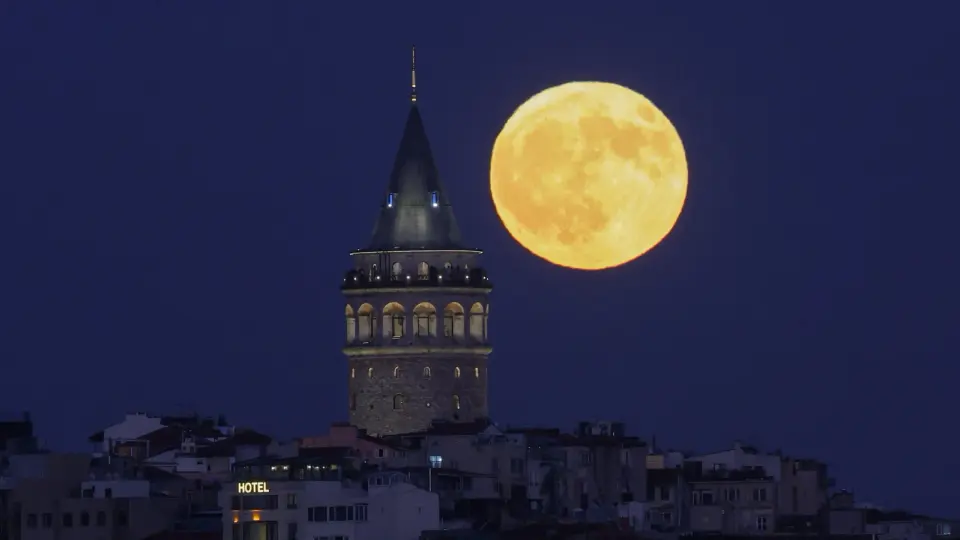
The July full moon, known as the Buck Moon, reached its peak on July 29, 2026, at 10:36 a.m. ET. This event marked the second full moon of the Northern Hemisphere summer. While the moon was visible globally, its appearance varied due to local atmospheric conditions. The event precedes a partial lunar eclipse in late August.
Key points
- The Buck Moon reached fullness on July 29, 2026, at 10:36 a.m. ET, according to the Farmer's Almanac.
- In the UK, the moon peaked at 15:36 BST, illuminating landmarks like Windsor Castle.
- The moon appeared orange in parts of North America due to smoke from Canadian wildfires.
- The next full moon, the Sturgeon Moon, is scheduled for August 28, 2026.
- A partial lunar eclipse will occur during the Sturgeon Moon phase, visible across North America.
Background
This event follows earlier July celestial activities, including visible planets and the Southern Delta Aquarids meteor shower. Previous coverage noted that the Buck Moon is one of the lowest-hanging full moons of the year in the Northern Hemisphere. It also serves as a precursor to a busy eclipse season that includes a total solar eclipse on August 12.
How outlets are covering it
USA TODAY emphasized the global visual spectacle, highlighting photos from Istanbul, Paris, and Cape Town, while noting the orange hue caused by wildfire smoke in Canada. Space.com focused on the astronomical context, describing the Buck Moon as part of a 'mini planet parade' and linking it to upcoming eclipse events. BBC News concentrated on the UK experience, detailing the peak time in BST and explaining the name's origin in deer antler growth. All sources agree on the peak date but differ in emphasis: USA TODAY on photography, Space.com on future events, and BBC on local timing and naming conventions.
Why it matters
The Buck Moon serves as a key marker for the summer season and a precursor to significant astronomical events. Its visibility was affected by environmental factors like wildfire smoke, highlighting the intersection of natural phenomena and human impact. The upcoming partial lunar eclipse in August offers another opportunity for public stargazing.
What to watch
The next full moon, the Sturgeon Moon, will occur on August 28, 2026. This event will coincide with a partial lunar eclipse visible throughout North America. Meteorological autumn begins on September 1, 2026.
- Buck moon crowns the sky in midsummer brilliance USA Today
- July's full Buck Moon leads a mini planet parade through the summer sky tonight Space
- Midsummer moonrise over Sonoma County shows off 'Buck Moon' The Press Democrat
- Buck Moon 2026: Why July's full moon has that name and when to look up this week WTHR
- Stunning photos capture July's Buck Moon over the UK BBC
Want the full story? Read the original reporting
Read on USA Today