
Texas Bat Colony Study Confirms Brazilian Free-Tailed Bats Are Fastest in Level Flight
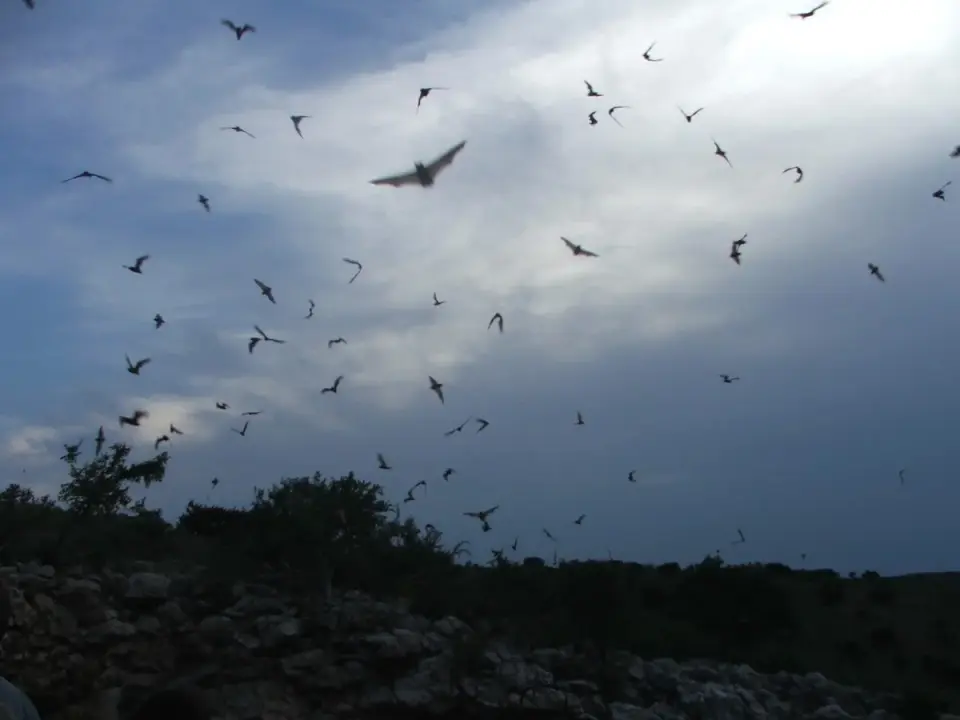
A 2016 study involving a 10 million-strong colony in Texas proved that Brazilian free-tailed bats are the fastest animals in level flight, reaching 100 mph and outpacing birds like swifts and albatrosses.
Key points
- Brazilian free-tailed bats (Tadarida brasiliensis) are the fastest living creatures in horizontal flight, reaching speeds of up to 100 mph.
- The record-holding species weighs approximately the same as a walnut and forms massive roosts, with a 15 million population in Texas.
- Previous scientific assumptions underestimated bat flight efficiency, incorrectly believing their echolocation features hindered aerodynamics.
- Researchers tracked individual bats using radio transmitters and a Cessna 172 plane to gather data on flight patterns and speed.
- Bats adjust their speed based on wind conditions, gliding more frequently at higher velocities to conserve energy.
Background
Recent scientific advancements in animal biology have highlighted complex sensory and structural adaptations in various species. For instance, a 2026 study revealed that duck-billed dinosaurs possessed bird-like beaks with complex vascular networks for cooling and sensing, while MIT engineers developed a robot that mimics the flight and swimming transitions of diving birds. These developments underscore a broader trend in understanding the sophisticated aerodynamics and biological mechanisms of animals, challenging previous simplistic views of their capabilities. The bat study fits into this narrative by correcting long-held misconceptions about mammalian flight efficiency.
Why it matters
This finding corrects a significant scientific misconception regarding mammalian aerodynamics. By proving that bats can outperform birds in level flight, the study highlights the evolutionary success of echolocation and wing structure in small mammals. It also emphasizes the importance of direct, high-tech observation in validating biological assumptions, as previous estimates relied on flawed theoretical models rather than empirical data from large-scale populations.
What to watch
Further research may explore the specific aerodynamic mechanisms that allow bats to achieve such high speeds in level flight, potentially informing advancements in drone technology and bio-inspired engineering. Additionally, continued monitoring of the Texas bat colonies could provide insights into how environmental factors, such as wind and temperature, influence the flight behavior and energy conservation strategies of these massive mammal gatherings.
Want the full story? Read the original reporting
Read on BBC Wildlife Magazine