
NASA Aborts Swift Rescue as LINK Spacecraft Fails to Stabilize
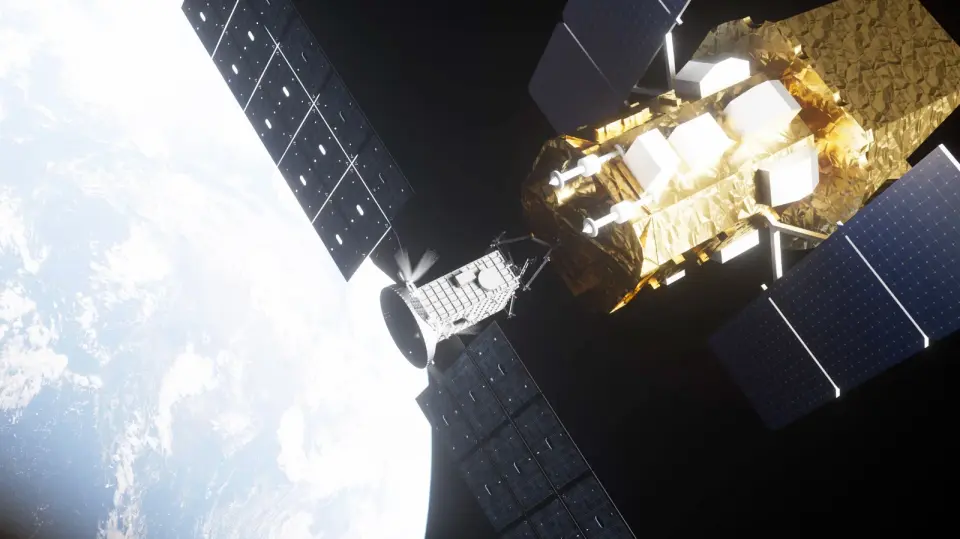
NASA has officially canceled the 'Swift Boost' mission, which aimed to rescue the aging Neil Gehrels Swift Observatory from atmospheric reentry. The rescue vehicle, LINK, built by Katalyst Space, suffered persistent attitude-control failures that prevented it from grappling the telescope. While the rescue is off, LINK will still attempt a proximity rendezvous to gather data for future servicing missions. Swift is expected to burn up in Earth's atmosphere later this year.
Key points
- NASA and Katalyst Space have terminated the plan to boost the Swift Observatory to a higher orbit due to unresolved technical issues with the LINK spacecraft.
- LINK, which launched on July 3, 2026, experienced attitude-control problems in late July, causing it to spin and lose thruster functionality.
- The Neil Gehrels Swift Observatory, launched in 2004, is currently decaying due to increased solar activity and is expected to reenter Earth's atmosphere later in 2026.
- Although the rescue is canceled, LINK will still attempt a rendezvous with Swift to demonstrate proximity operations and gather data for future satellite servicing missions.
- NASA Administrator Jared Isaacman stated that while the outcome was not desired, the mission was a worthwhile risk to advance commercial satellite servicing capabilities.
Background
The Swift Observatory has been a critical tool for astrophysics since 2004, primarily used to detect gamma-ray bursts and other cosmic events. Its orbit began decaying rapidly after fall 2024 due to heightened solar activity. Previous coverage indicated that LINK had reduced its spin rate to 1.5 degrees per second in August, but the attitude-control issues ultimately proved insurmountable for the rescue objective. The mission was designed to extend Swift's life by approximately a decade and serve as a first-of-its-kind test for servicing satellites not originally designed for in-space maintenance.
How outlets are covering it
Engadget and CNN both emphasize that the mission's failure is due to 'ongoing attitude control issues' that began in late July. CNN highlights that the rendezvous will now serve as a demonstration rather than a rescue, focusing on the lessons learned for future in-space servicing. USA Today provides specific technical details, noting that LINK is an 880-pound spacecraft with 20 feet of solar panels, and that the $30 million contract was for a mission that would have raised Swift to nearly 370 miles. All three sources quote NASA Administrator Jared Isaacman, who framed the failure as a necessary risk to advance American capabilities in satellite servicing, despite the loss of the observatory.
Why it matters
The failure of the Swift Boost mission marks a significant setback for the commercial satellite servicing industry, which aims to extend the life of aging space assets. While the loss of Swift is a blow to astrophysics, the data gathered from LINK's attempted rendezvous will inform future missions. The incident highlights the technical challenges of servicing satellites not designed for in-space maintenance, such as Swift, and underscores the risks involved in rapid-response space missions.
What to watch
LINK will continue its mission to rendezvous with the Swift Observatory, though without the intent to boost it. The goal is to gather data on proximity operations and grappling techniques to inform future satellite servicing missions. NASA will rely on its current fleet of observatories to fill the gap left by Swift's loss and will continue to prioritize finding new options to react rapidly to cosmic events. Swift is expected to reenter Earth's atmosphere and burn up later in 2026.
- NASA Calls Off Mission To Rescue The Falling Swift Observatory Engadget
- Rescue mission can’t prevent NASA observatory from falling to Earth CNN
- NASA's mission to save Swift Observatory fails. Here's what went wrong USA Today
- NASA’s Attempt to Save Its Falling Telescope Has Failed The New York Times
- NASA Updates Next Steps for Commercial Swift Boost Mission NASA (.gov)
Want the full story? Read the original reporting
Read on Engadget